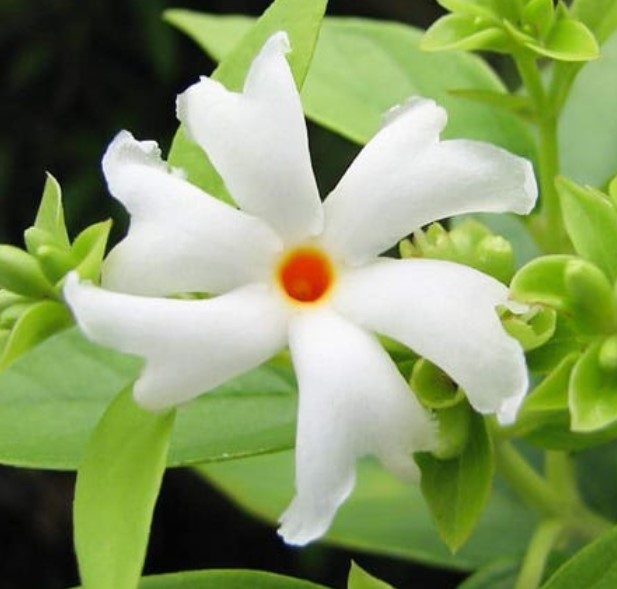
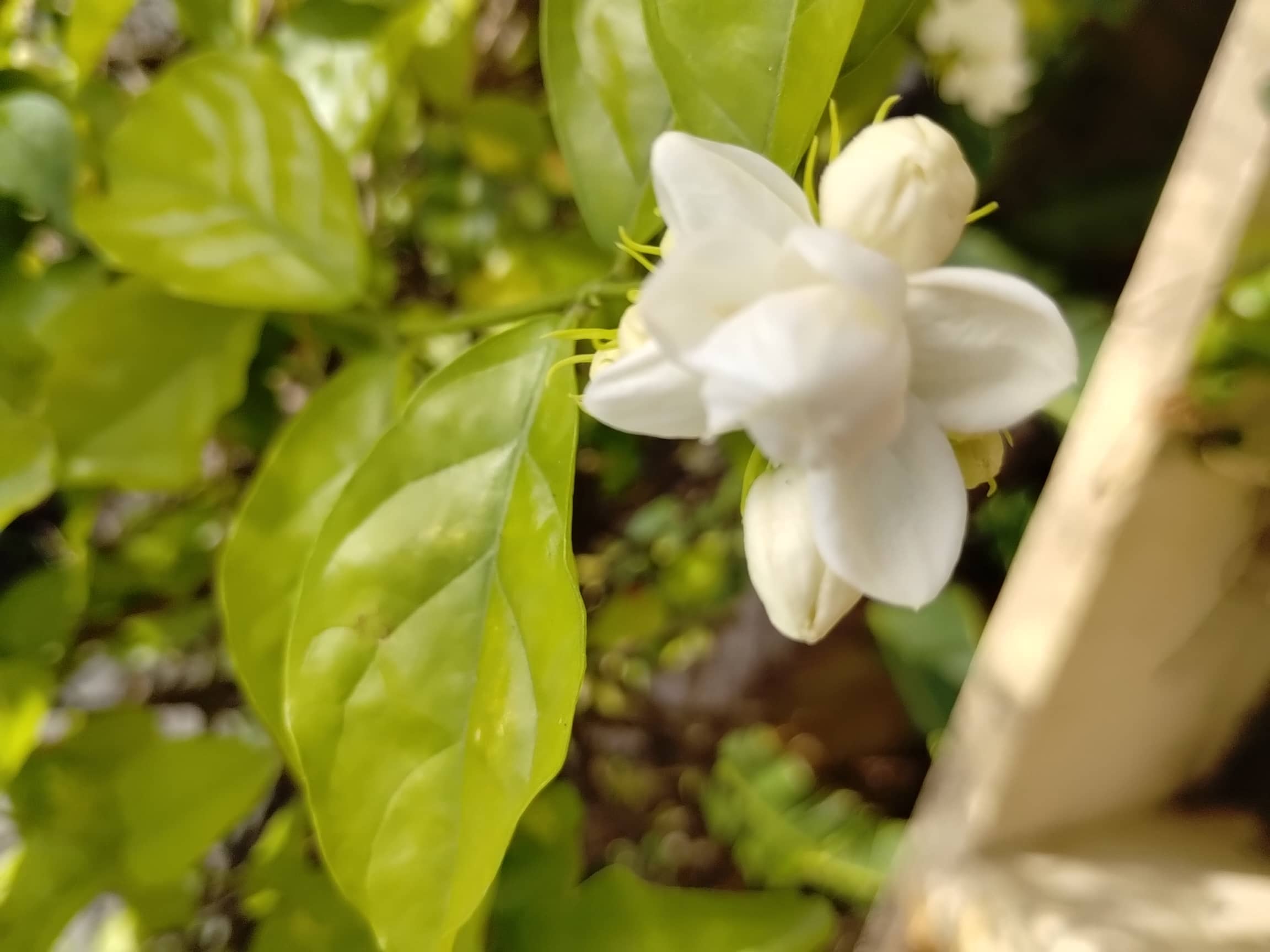
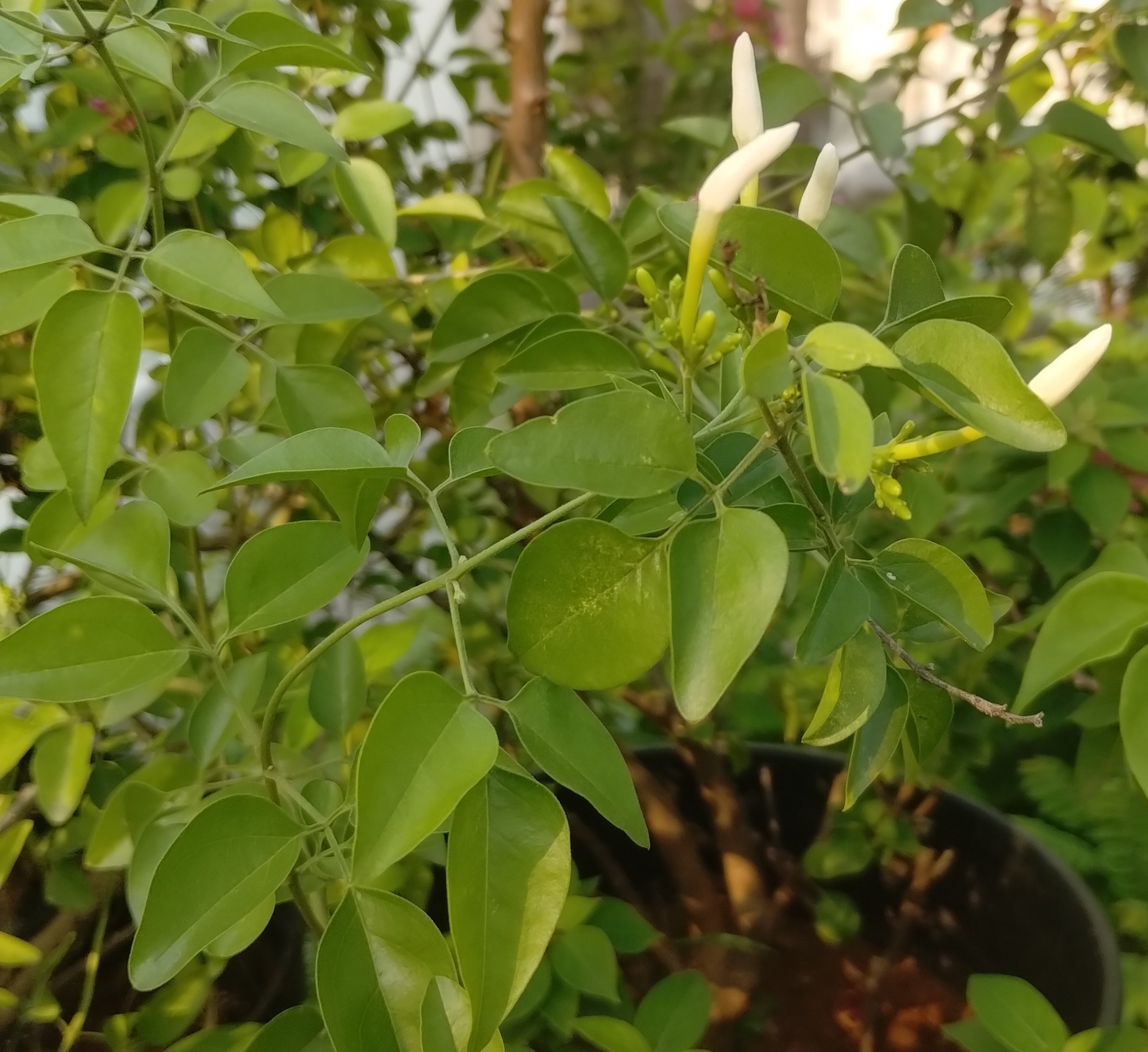
Arabian jasmine
Jasminum sambac
Basic Details
Floral Formula & Features
Epicalyx present, Radially symmetrical, bisexual, 5 free sepals, 5 fused petals, numerous fused stamens, numerous fused carpels with superior ovary
- Jasminum is from the Persian word 'Yasmin' which means fragrant flower and Sambac is from Arabic word Zambaq which refers to scented oil.
- Jasmine flowers are part of an inflorescence known as cymose inflorescence. They bloom in clusters of minimum 3 and generally between 8 to 12. Their can also be a single solitary flower.
- It is a small to medium evergreen shrub flowering through out the year
- Grows to a height of 1 - 5 feet and with lifespan of 15 - 25 years
- Native to the Indian Subcontinent and South East Asia. It is the national flower of Philipines.
- Best suited for warm climates and blooms well in direct sunlight. Can tolerate shade but with less blooms. Needs regular pruning
Names in Different Languages
What is Floral Formula?
A floral formula is a symbolic representation of a flower's structure using letters, numbers, and special symbols. It provides a concise way to describe the arrangement and number of floral parts.
This formula describes the flower's symmetry, sepals, petals, stamens, and carpels in a standardized format.
Formula Sequence
- Bract: Br or Ebr
- Bracteole: Brl or Ebrl
- Symmetry: % (Radial) or ⊕ (Bilateral)
- Sex: ♀ (Female), ♂ (Male), or ⚥ (Bisexual)
- Calyx/Sepal: K<number> (Free or Fused)
- Corolla/Petal: C<number> (Free or Fused)
- Androecium: A<number> (Free or Fused)
- Gynaecium: G<number> (Superior or Inferior Ovary)
Symbol Meanings
- Numbers: Indicate quantity of parts
- Parentheses (): Parts are fused together
- Plus (+): Parts in different whorls
- Underline: Superior ovary position
- Overline: Inferior ovary position
- ∞: Numerous parts (too many to count)
Understanding floral formulas helps botanists quickly identify and classify flowers based on their structural characteristics.
Similar Flowers
Discover flowers that share botanical characteristics
Same Genus
4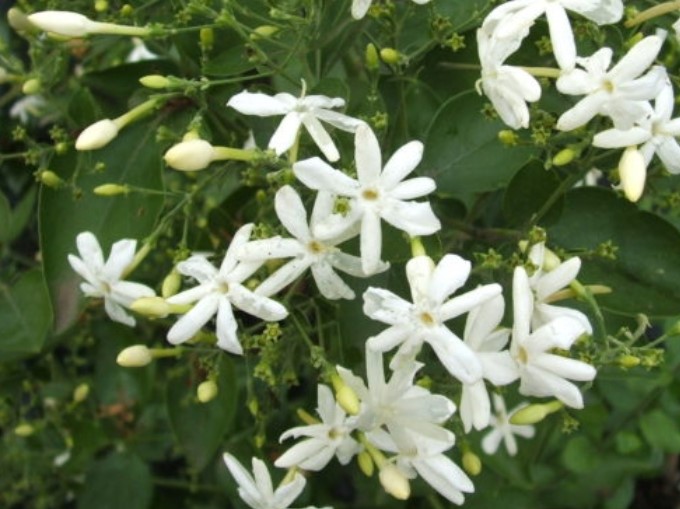
Jasminum Auriculatum
Jasminum
Fragrant evergreen climbing shrub native to Indian subcontinent, beloved for int...
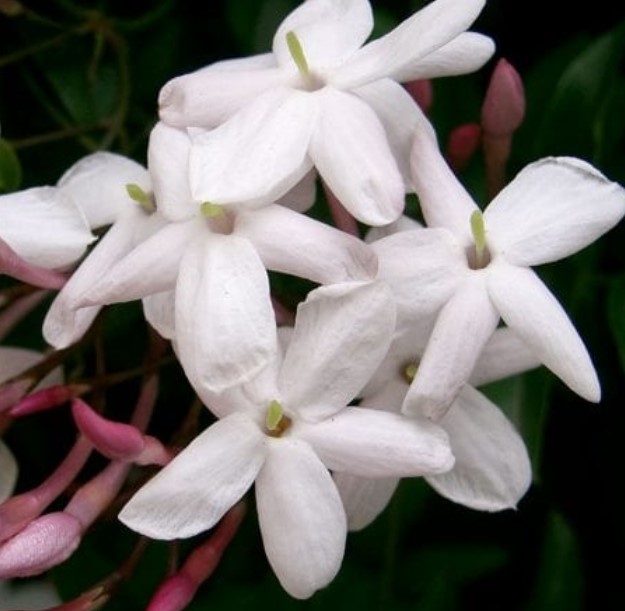
Spanish Jasmine (Royal Jasmine)
Jasminum grandiflorum
Highly fragrant jasmine with pure white star-shaped flowers used in world's fine...
River Jasmine (Fluminense)
Jasminum fluminense
Vigorous evergreen climbing vine producing clusters of small, white, star-shaped...
AngelWing Jasmine (Star Jasmine)
Jasminum laurifolium, Jasminum nitidum
Unique jasmine with spectacular star or pinwheel-shaped flowers having 10-12 nar...