
Anthurium
Anthurium andraeanum
Basic Details
Floral Formula & Features
Radially symmetrical, bisexual, perianth of 4 fused tepals (no distinction between sepals and petals), 4 stamens, 2-3 fused carpels with superior ovary. This formula describes individual tiny flowers on the spadix, not the showy spathe
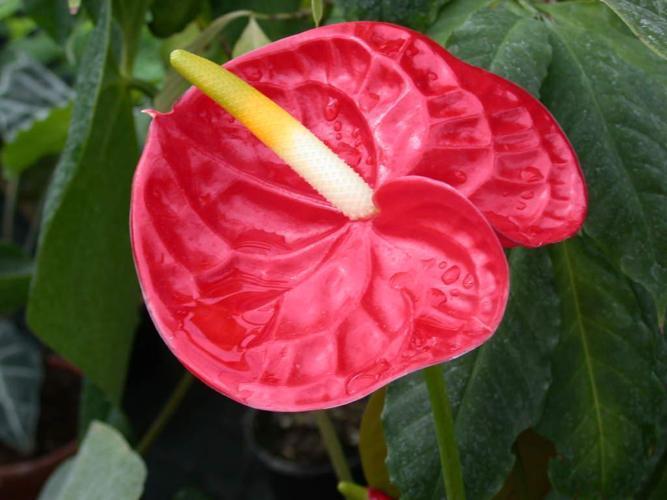
- Name 'Anthurium' derives from Greek 'anthos' (flower) and 'oura' (tail), referring to the tail-like spadix that emerges from the colorful spathe. The common name 'Flamingo Flower' comes from the curved spadix resembling a flamingo's neck
- What appears to be the flower is actually a modified leaf called a spathe, while the true flowers are tiny and densely packed on the protruding spadix. Spathes have a waxy, glossy texture and can last 6-8 weeks on the plant or 2-3 weeks as cut flowers
- Evergreen perennial that can be epiphytic (growing on trees) or terrestrial. Blooms year-round in ideal conditions, with each plant producing new flowers every few months. Some species grown primarily for ornamental foliage
- Grows 1-3 feet (30-90 cm) tall and wide, depending on variety. Can live 5-10 years or more as houseplant with proper care. Propagated by division or from seed, though seed-grown plants take 2-3 years to bloom
- Native to tropical rainforests of Colombia, Ecuador, and northern South America, where they grow as epiphytes in tree canopies or on forest floors in deep shade
- Thrives in bright, indirect light but tolerates low light conditions. Prefers warm temperatures (65-80°F) and high humidity (60-80%). Requires well-draining, porous potting mix. Sensitive to overwatering and cold drafts
- Excellent air-purifying plant that removes formaldehyde, ammonia, and xylene from indoor air. All parts contain calcium oxalate crystals that are toxic if ingested by pets or humans, causing mouth irritation
Names in Different Languages
What is Floral Formula?
A floral formula is a symbolic representation of a flower's structure using letters, numbers, and special symbols. It provides a concise way to describe the arrangement and number of floral parts.
This formula describes the flower's symmetry, sepals, petals, stamens, and carpels in a standardized format.
Formula Sequence
- Bract: Br or Ebr
- Bracteole: Brl or Ebrl
- Symmetry: % (Radial) or ⊕ (Bilateral)
- Sex: ♀ (Female), ♂ (Male), or ⚥ (Bisexual)
- Calyx/Sepal: K<number> (Free or Fused)
- Corolla/Petal: C<number> (Free or Fused)
- Androecium: A<number> (Free or Fused)
- Gynaecium: G<number> (Superior or Inferior Ovary)
Symbol Meanings
- Numbers: Indicate quantity of parts
- Parentheses (): Parts are fused together
- Plus (+): Parts in different whorls
- Underline: Superior ovary position
- Overline: Inferior ovary position
- ∞: Numerous parts (too many to count)
Understanding floral formulas helps botanists quickly identify and classify flowers based on their structural characteristics.
Similar Flowers
Discover flowers that share botanical characteristics
Similar Characteristics
4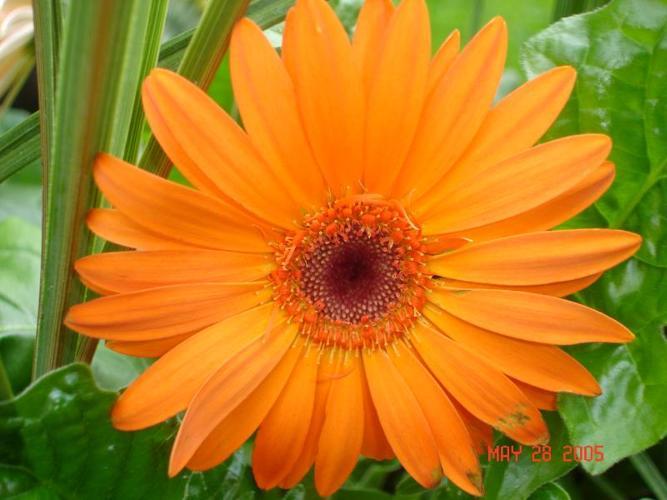
Barberton Daisy
Gerbera jamesonii
Cheerful composite flower featuring large, daisy-like blooms with vibrant ray pe...
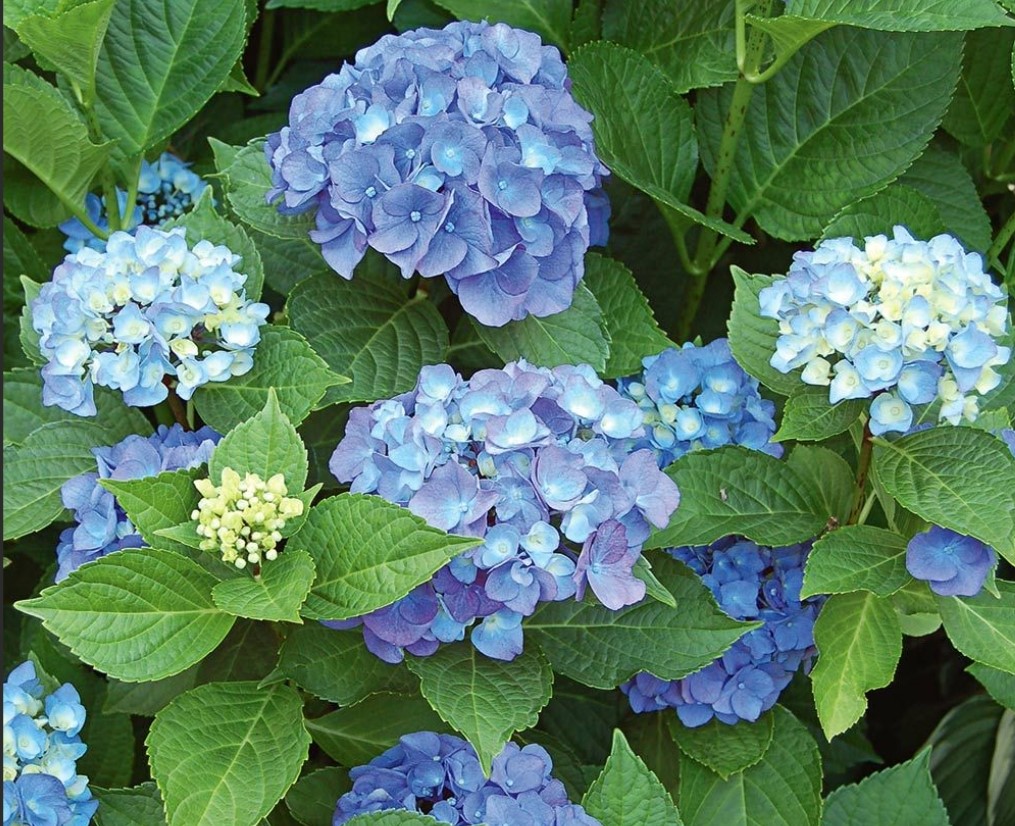
Hydrangea
Hydrangea
Beloved flowering shrub producing spectacular large, rounded or conical clusters...
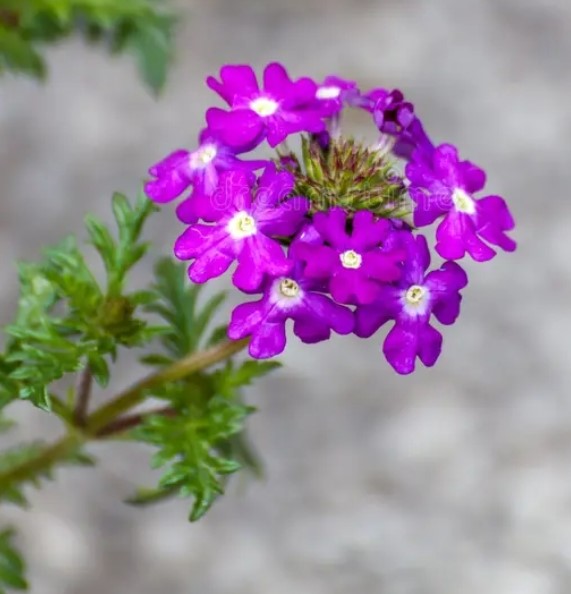
Verbena
Verbena
Versatile and colorful flowering plant producing dense clusters of small, five-p...
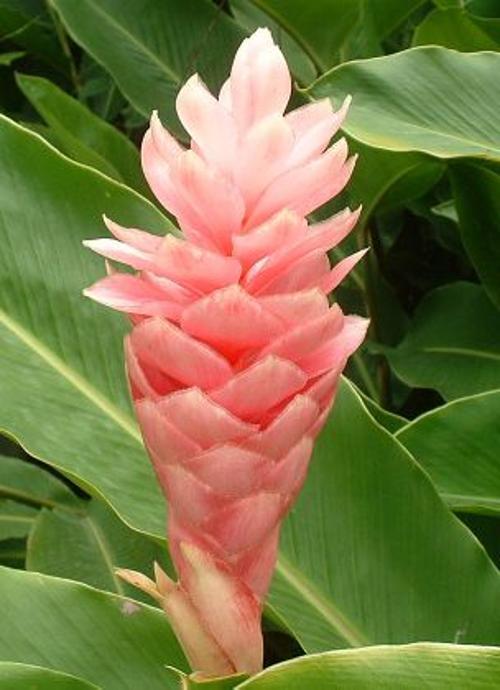
Red Ginger (Ostrich Plume)
Alpinia purpurata
Stunning tropical plant with brilliant red or pink cone-shaped flower spikes res...