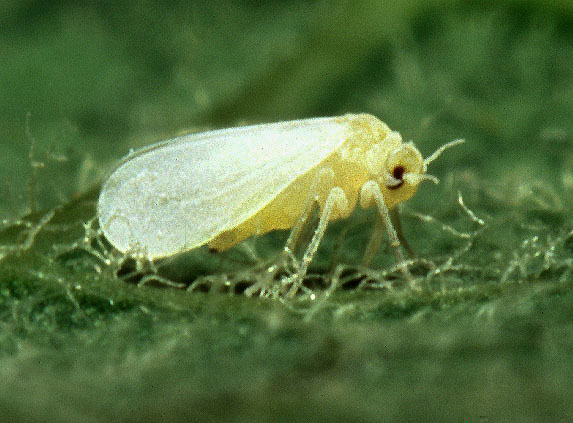
Whitefly Pest
Bemisia tabaci, Trialeurodes vaporariorum
Basic Details
Description
Taxonomy
Features
Translations
Basic Details
NameWhitefly Pest
DescriptionWhiteflies are tiny, powdery white insects that suck plant sap and transmit viruses. Learn to identify infestations and implement effective organic control.
TypeInsect
FamilyAleyrodidae
GenusBemisia
Taxonomy & Features
PhylumArthropoda
SubphylumHexapoda
ClassInsecta
OrderHemiptera
Features
- Named 'whitefly' because their bodies and wings are covered in white, powdery wax giving them a floury appearance. Family name Aleyrodidae comes from Greek 'aleurodes' meaning floury
- Very small insects measuring 1-2 mm long with four powdery white wings. Bodies are pale yellow to white. Hold wings flat or tent-like over body. Nymphs are flat, scale-like, and translucent
- Feed on plant sap by piercing leaf undersides with needle-like mouthparts. Suck phloem sap from leaves, weakening plants. Both adults and nymphs feed on plants
- Cause yellowing, wilting, and stunted growth. Produce sticky honeydew that promotes black sooty mold growth. Transmit serious plant viruses causing mottled leaves and reduced yields
- Females lay eggs on leaf undersides in circular patterns. Eggs hatch in 6-10 days. Nymphs go through 4 stages before becoming adults. Complete lifecycle in 3 weeks in warm weather
- Adults measure 1-2 mm (1/16 to 1/10 inch) long. Eggs are tiny, about 0.2 mm. Barely visible to naked eye but fly up in clouds when plants are disturbed
- Thrive in warm, protected environments. Most active in temperatures between 20-30°C (68-86°F). Year-round pests in greenhouses. Cannot survive freezing temperatures
- Attack tomatoes, peppers, cucumbers, eggplants, beans, potatoes, cabbage, sweet potatoes, poinsettias, hibiscus, roses, citrus, and over 500 other plant species
- Prevent by inspecting new plants before purchase, using reflective mulches, maintaining good air circulation, removing infested leaves, and using insect screening on greenhouse vents
- Natural predators include ladybugs, lacewings, minute pirate bugs, and parasitic wasps (Encarsia formosa). Use yellow sticky traps. Treat with insecticidal soap, neem oil, horticultural oil, or strong water spray
Names in Different Languages
Latin / ScientificBemisia tabaci, Trialeurodes vaporariorum
English (Alternate)Greenhouse whitefly, Silverleaf whitefly, Sweetpotato whitefly, Cabbage whitefly, Citrus blackfly
Hindiಸಫೇದ್ ಮಕ್ಕಿ (Safed Makkhi), ಶ್ವೇತ್ ಮಕ್ಷಿ (Shwet Makshi)
Tamilವೆಳ್ಳೈ ಈ (Vellai Ee)
Teluguತೆಲ್ಲದೋಮ (Tella Doma)
Malayalamವೆಳುತ್ತ ಈಚ (Veḷutta īcca)
Kannadaಬಿಳಿ ನೊಣ (Bili noṇa)
Sanskritಶ್ವೇತ ಮಕ್ಷಿಕ (Shveta Makshika)
Bengaliಸಾದಾ ಮಾಚಿ (Sada Machi)
Frenchmouche blanche, aleurode
Russianಬೆಲೋಕ್ರಿಲ್ಕಾ (belokrylka)
Spanishmosca blanca
GermanWeiße Fliege, Mottenschildlaus