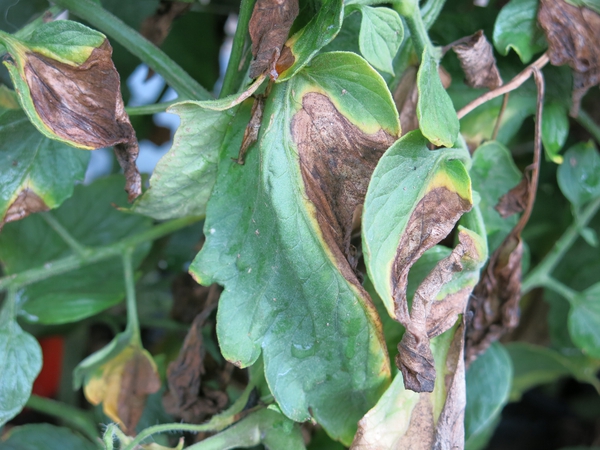
Verticillium Wilt
Verticillium dahliae, Verticillium albo-atrum
Basic Details
Description
Taxonomy
Features
Translations
Basic Details
NameVerticillium Wilt
DescriptionVerticillium wilt is a persistent soil-borne fungus that clogs a plant's water transport system. Identify the characteristic V-shaped leaf yellowing to manage your soil health.
TypeFungus
FamilyPlectosphaerellaceae
GenusVerticillium
Taxonomy & Features
PhylumAscomycota
SubphylumPezizomycotina
ClassSordariomycetes
OrderHypocreales
Features
- Named for the 'verticillate' (whorled) arrangement of the fungal spores. A destructive vascular disease that affects over 350 species of plants worldwide
- Initial symptoms often appear as V-shaped yellowing (chlorosis) at leaf tips and margins. Unlike Fusarium, it often affects the entire plant uniformly rather than just one side
- The fungus enters through root hairs and colonizes the xylem (water-conducting tissue). It produces toxins and physical blockages that prevent water from reaching the leaves
- Leaves turn yellow, then brown and dry. Plants are often stunted and produce fewer, smaller fruits. Cutting the stem reveals dark brown streaks in the vascular tissue
- Produces microscopic resting structures called 'microsclerotia' that can survive in the soil for 10-15 years without a host plant, making it very difficult to eradicate
- The fungus is microscopic. External signs like wilting and V-shaped leaf lesions are the primary diagnostic indicators
- Thrives in cool to moderate soil temperatures (21-24°C). Symptoms often become most severe when warm, dry weather follows a cool, wet spring
- Attack tomatoes, potatoes, eggplants, strawberries, raspberries, mint, maples, and many ornamental flowers. Does not affect grasses or corn
- The best prevention is planting resistant varieties (look for 'V' on labels). Practice long crop rotations with non-host crops like corn or wheat
- No chemical cure once infected. Remove and destroy infected plants (do not compost). Maintain healthy soil with balanced nutrients and improve drainage to reduce stress
Names in Different Languages
Latin / ScientificVerticillium dahliae, Verticillium albo-atrum
English (Alternate)Vascular wilt, Sleepy disease
Hindiवर्तिसिल्लियम विल्ट (Verticillium wilt)
Tamilவாடல் நோய் (Vadal noy)
Teluguవడలు తెగులు (Vadalu tegulu)
Malayalamവാട്ടം (Vāṭṭaṁ)
Kannadaಬಾಡು ರೋಗ (Bāḍu rōga)
Sanskritम्लानि-रोग (Mlāni-roga)
Bengaliভার্টিসিলিয়াম উইল্ট (Verticillium wilt)
Frenchverticilliose
Russianвертициллезное увядание (vertitsilleznoe uvyadanie)
Spanishmarchitez por verticillium
GermanVerticillium-Welke