Sooty Mold
Capnodium spp.
Basic Details
Description
Taxonomy
Features
Translations
Basic Details
NameSooty Mold
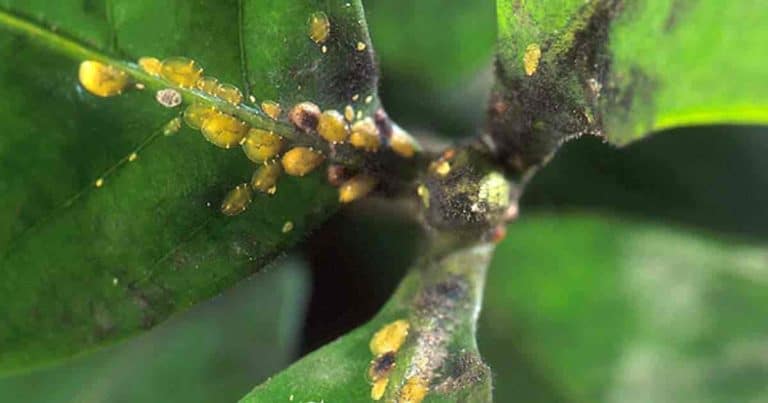
DescriptionSooty mold is a black, crusty fungus that grows on the sticky waste of insects. Identify the pests producing 'honeydew' to clear the black coating from your leaves.
TypeFungus
FamilyCapnodiaceae
GenusCapnodium
Taxonomy & Features
PhylumAscomycota
SubphylumPezizomycotina
ClassDothideomycetes
OrderCapnodiales
Features
- Named for its appearance, which looks like a layer of black soot or charcoal dust covering the surfaces of leaves, stems, and fruit
- Unlike most fungi, sooty mold is NOT a plant parasite; it does not infect the plant tissue. It lives entirely on the 'honeydew' (sugary waste) produced by sap-sucking insects
- Forms a black, felt-like or crusty coating. While it doesn't 'eat' the plant, a thick layer can block sunlight, reducing photosynthesis and weakening the plant's growth
- Sticky surfaces are the first sign. As the mold grows, the plant appears dirty or blackened. The fungus can be easily rubbed off the leaf with a moist finger
- The fungus spreads as sticky spores carried by wind and rain. It persists as long as there is a supply of honeydew from insects like aphids or whiteflies
- The fungus is a collection of dark-walled filaments (hyphae). Large areas can be covered quickly if insect populations are high
- Thrives in any environment where honeydew-producing insects are present. In hot, dry weather, honeydew hardens, providing a stable base for the mold
- Can appear on almost any plant, but is most common on citrus, roses, hibiscus, gardenias, and trees like crepe myrtle and maple
- The only effective way to prevent sooty mold is to manage the insects producing the honeydew: control aphids, scale, whiteflies, and mealybugs
- Wash the black coating off with a strong stream of water or a mild soap solution. Once the insects are controlled, the mold will eventually dry up and flake off
Names in Different Languages
Latin / ScientificCapnodium spp.
English (Alternate)Black mold, Honeydew fungus
Hindiकाली फफूंदी (Kaali phaphundi)
Tamilகரும்பூஞ்சை நோய் (Karumpoonjai noy)
Teluguమసి తెగులు (Masi tegulu)
Malayalamകരിംപൂപ്പൽ (Karimpūppal)
Kannadaಮಸಿ ರೋಗ (Masi rōga)
Sanskritमसी-रोग (Masī-roga)
Bengaliশুটি মোল্ড (Sooty mold)
Frenchfumagine
Russianчернь (chern')
Spanishfumagina, negrilla
GermanRußtau