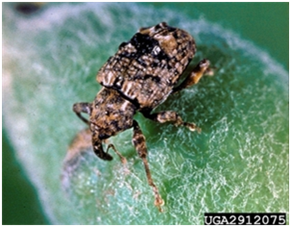
Plum Curculio
Conotrachelus nenuphar
Basic Details
Description
Taxonomy
Features
Translations
Basic Details
NamePlum Curculio
DescriptionPlum curculios are snout beetles that leave distinctive crescent-shaped scars on young fruit. Identify these 'half-moon' marks to prevent misshapen fruit and premature drop.
TypeInsect
FamilyCurculionidae
GenusConotrachelus
TribeConotrachelini
Taxonomy & Features
PhylumArthropoda
SubphylumHexapoda
ClassInsecta
OrderColeoptera
SubfamilyBrachycerinae
Features
- A snout beetle or weevil (Conotrachelus nenuphar) that is a major pest of plum, peach, cherry, and apple trees in eastern North America
- Adults are small (6 mm), brownish-grey, mottled beetles with a long, characteristic 'elephant-trunk' snout and four humps on their wing covers
- Females create a unique egg-laying wound: they cut a small circular hole, lay an egg, and then cut a crescent-shaped slit beneath it to protect the egg from being crushed by growing fruit
- The resulting 'half-moon' or crescent-shaped scar is the primary diagnostic sign. These scars remain on the fruit as it grows, causing it to become lumpy and misshapen
- Larvae are yellowish-white, legless, C-shaped grubs with a brown head. They tunnel into the fruit to feed, often causing 'June drop' (premature fruit fall)
- Adults also cause damage by feeding on fruit and blossoms, creating small, round holes. This 'cat-facing' injury severely deforms the developing fruit
- Overwinters as adults in leaf litter or wooded areas near orchards. They move into trees in spring when temperatures consistently exceed 15°C
- They have a habit of 'playing dead' (thanatosis) when disturbed, dropping from the tree and remaining motionless for several minutes
- Control by shaking the tree over a white tarp in the early morning to collect and destroy the dormant beetles
- Rake and destroy all 'June drop' fruit daily to kill the larvae before they crawl into the soil to pupate. Apply organic neem oil or kaolin clay at petal fall
Names in Different Languages
Latin / ScientificConotrachelus nenuphar
English (Alternate)Fruit weevil
Hindiबेर का घुन (Ber ka ghun)
Tamilபிளம் வண்டு (Plum vandu)
Teluguప్లమ్ వీవిల్ (Plum weevil)
Malayalamപ്ലം വീവിൽ (Plum vīvil)
Kannadaಪ್ಲಮ್ ವೀವಿಲ್ (Plum vīvil)
Sanskritबदरी-घूण (Badarī-ghūṇa)
Bengaliপ্লাম উইভিল (Plum weevil)
Frenchcharançon de la prune
Russianсливовый слоник (slivovyy slonik)
Spanishpicudo de la ciruela
GermanPflaumenrüssler