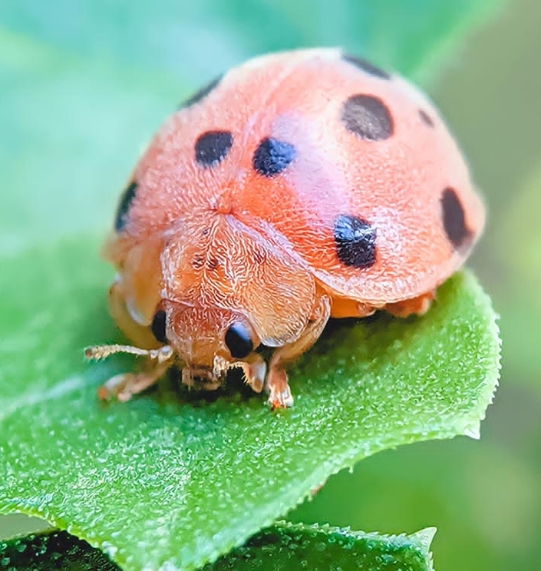
Bean Beetle
Epilachna varivestis Mulsant
Basic Details
Description
Taxonomy
Features
Translations
Basic Details
NameBean Beetle
DescriptionMexican bean beetles are destructive pests that skeletonize leaf tissue. Identify adults and larvae to protect your bean crops with effective organic methods.
TypeInsect
FamilyCoccinellidae
GenusEpilachna
TribeEpilachnini
Taxonomy & Features
PhylumArthropoda
SubphylumHexapoda
ClassInsecta
OrderColeoptera
SubfamilyEpilachninae
Features
- Named for its origin in Mexico and preference for bean plants. One of the few harmful members of the ladybug family (Coccinellidae)
- Oval-shaped beetles with copper, orange, or yellow color. Have exactly 16 black spots arranged in 3 rows (8 spots per wing cover). Larvae are yellow with spines
- Both adults and larvae feed on bean leaves by skeletonizing them from the underside. Leave only leaf veins intact. Also attack pods and stems
- Create lace-like skeletonized leaves. Heavy feeding causes complete defoliation. Plants become weakened and produce fewer beans. Damaged pods are unmarketable
- Adults overwinter in plant debris. Emerge in spring to lay yellow eggs in clusters on leaf undersides. Complete lifecycle in 6-8 weeks. Multiple generations per year
- Adults measure 6-8 mm in length. Larvae grow to 8-9 mm. Easily distinguished from beneficial ladybugs by copper color and exact spot pattern
- Most active in warm weather. Prefer hot, dry conditions. Common in southern and eastern United States, Mexico, and Central America
- Attack all types of beans including snap beans, lima beans, soybeans, cowpeas, and sometimes peanuts, clover, and alfalfa
- Prevent by planting early, using row covers, handpicking adults and egg masses, removing plant debris in fall, and rotating crops. Plant resistant varieties
- Natural predators include spined soldier bugs and parasitic wasps. Handpick beetles and crush egg masses. Treat with neem oil, spinosad, or insecticidal soap
Names in Different Languages
Latin / ScientificEpilachna varivestis Mulsant
English (Alternate)Bean Lady Beetle, Bean Ladybird, Bean Bug, Spotted Bean Beetle
Hindiಮೆಕ್ಸಿಕನ್ ಬೀನ್ ಬೀಟಲ್ (Mexican Bean Beetle)
Tamilನೋ ಡೈರೆಕ್ಟ್ ಟ್ರಾನ್ಸ್ಲೇಶನ್ - ಬೀನ್ ವಂಡು (Bean Vandu), ಪರುಪ್ಪು ವಂಡು (Paruppu Vandu),ಪಚ್ಚೈ ಪಯಱು ವಂಡು (Pachai Payaru Vandu)
Teluguಬಬೀನ್ಸ್ ಬೀಟಿಲ್ (Bins bīṭil)
Malayalamಮೆಕ್ಸಿಕನ್ ಬೀನ್ ಬೀಟಲ್ (Mexican Bean Beetle), ಪಯರ್ ವಂಡ್ / ಪಯಱ್ ವಂಡ್ (Payar Vandu)
Kannadaಜೀರುಂಡೆ (jeerunḍe means beetle), ಹುರುಳಿ ಜೀರುಂಡೆ (Huruḷi jīruṇḍe)
Sanskritಭಭೃಂಗ (Bhringa),ಬುಸಪ್ಲಾವಿ( (busaplāvī) are general terms for beetle in sanskrit
Bengaliಬೀಟ್ಲ್ (Beetle), ಶಿಮ್ ಭಕ್ಷಕ್ ಗುಬ್ರೇ ಪೋಕಾ (Shim Bhokkhok Gubrey Poka), meaning bean-eating beetle
Frenchcoccinelle mexicaine des haricots
Russianಮೆಕ್ಸಿಕಾನ್ಸ್ಕಿ ಬೋಬೋವಿ ಜುಕ್ (Meksikanskiy bobovyy zhuk), ಬೋಬೋವಾಯ ಬೋಝ್ಯಾ ಕೊರೊವ್ಕಾ (Bobovaya bozhya korovka)
Spanishconchuela del frijol, escarabajo mexicana del frijol, tortuguilla del frijol
GermanMexikanischer Bohnenkäfer