Late Blight
Phytophthora infestans
Basic Details
Description
Taxonomy
Features
Translations
Basic Details
NameLate Blight
DescriptionLate blight is a devastating disease causing dark spots and rapid rot of plants. Our guide helps you identify symptoms early and protect your valuable crops.
TypeOomycete
FamilyPeronosporaceae
GenusPhytophthora
Taxonomy & Features
PhylumOomycota
ClassOomycetes
OrderPeronosporales
Features
- Named 'late blight' because symptoms typically appear later in the growing season than early blight. Caused by Phytophthora infestans, meaning 'plant destroyer' in Greek
- Creates large, dark brown to black water-soaked blotches on leaves with green-gray edges. White fuzzy growth (sporangia) appears on leaf undersides in humid conditions. Stems develop dark firm lesions
- Oomycete (water mold) penetrates plant tissue through natural openings or wounds. Produces mobile zoospores that swim in water films to infect new tissue. Grows rapidly through leaves and stems
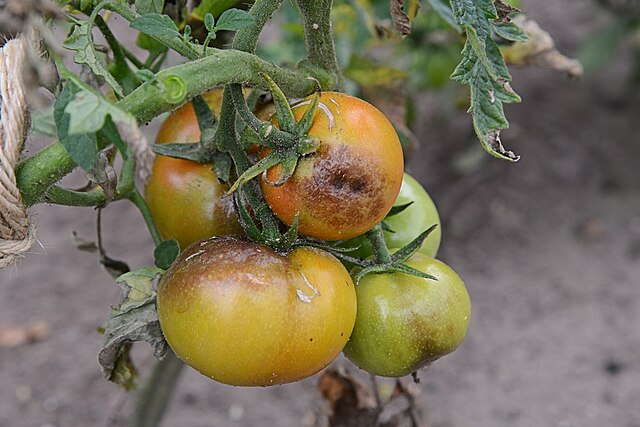
- Leaves develop dark oily-looking blotches that expand rapidly. Plants appear frost-damaged with brown dry foliage. Potato tubers show reddish-brown decay. Tomato fruits develop firm dark spots. Entire plants can die within 7-10 days
- Overwinters in infected potato tubers and plant debris. Produces spores in spring during cool wet weather. Spreads by wind and rain splash. Can complete infection cycle in 3-5 days under ideal conditions
- Lesions can cover entire leaves. Individual sporangia are microscopic but visible as white fuzzy masses. Zoospores are 10-15 micrometers
- Thrives in cool, wet conditions with temperatures between 10-25°C (50-77°F) and humidity above 75-80%. Most destructive during rainy periods. Cannot survive freezing
- Attacks potatoes, tomatoes, eggplants, peppers, petunias, and other nightshade family plants
- Prevent by planting resistant varieties, destroying cull piles and volunteers, spacing plants for air circulation, watering at base, rotating crops for 3-4 years, and using certified disease-free seed potatoes
- Treat with copper-based fungicides applied preventatively. Use biological fungicides with Bacillus subtilis. Remove and destroy infected plants immediately. Do not compost diseased material
Names in Different Languages
Latin / ScientificPhytophthora infestans
English (Alternate)Potato blight, Tomato blight, Irish potato famine disease
Hindiಲೇಟ್ ಬ್ಲೈಟ್ (Late Blight), ಪಚೇತಿ ಅಂಗಮಾರಿ (Pachheti Angamari)
Tamilಪಿರ್ಕಾಲ ವಾಟ್ಟಂ (Piṟkāla vāṭṭam)
Teluguಆಲಸ್ಯಪು ವಾಡಿಪೋವು ವ್ಯಾಧಿ (Ālasyapu vāḍipōvu vyādhi)
Malayalamವೈಕಿಯ ವಾಟ್ಟಂ (Vaikiya vāṭṭaṁ)
Kannadaತಡವಾದ ಬ್ಲೈಟ್ (Taḍavāda blaiṭ)
Sanskritವಿಲಂಬಿತ-ಮ್ಲಾನಿ-ರೋಗಃ (Vilambita-mlāni-rogaḥ)
Bengaliದೇರಿ ಝಲ್ಸಾನೋ (Deri jholsano)
Frenchmildiou
Russianಫಿಟೋಫ್ಟೊರೊಜ್ (fitoftoroz)
Spanishtizón tardío
GermanKraut- und Knollenfäule