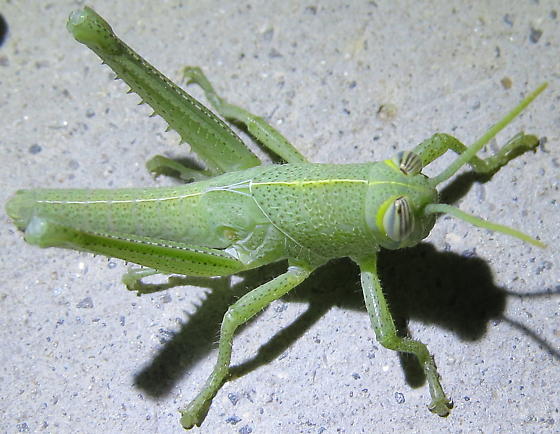
Grasshopper
Schistocerca spp.
Basic Details
Description
Taxonomy
Features
Translations
Basic Details
NameGrasshopper
DescriptionGrasshoppers and locusts are voracious eaters that chew through plants. Learn to manage these jumping pests and protect your garden from defoliation today.
TypeInsect
FamilyAcrididae
GenusSchistocerca
TribeCyrtacanthacridini
Taxonomy & Features
PhylumArthropoda
SubphylumHexapoda
ClassInsecta
OrderOrthoptera
SubfamilyCyrtacanthacridinae
Features
- Named for their ability to hop through grass. 'Locust' refers to the migratory phase of certain grasshopper species that form massive swarms
- Large hind legs designed for jumping. Usually green or brown for camouflage. Have large compound eyes and chewing mouthparts
- Eat almost any green plant matter including leaves, stems, and fruits. Can consume their own body weight in food every day
- Leave large, ragged holes in leaves. Swarms can strip entire fields of crops and trees in hours, leaving only woody stems
- Eggs are laid in pods in the soil. Nymphs look like miniature adults without wings. Some species change behavior and color when crowded (locust phase)
- Sizes range from 1 to 7 cm depending on species. Locust swarms can cover hundreds of square kilometers
- Most active during hot, dry weather. Swarming behavior is often triggered by specific environmental cues
- Generalist feeders attacking cereals, grasses, vegetables, and fruit trees
- Monitor soil for egg pods. Use physical barriers like netting for small gardens. Encourage natural predators like birds
- Nosema locustae (biological control) affects them specifically. Neem oil can deter feeding. Large swarms require coordinated government-led control
Names in Different Languages
Latin / ScientificSchistocerca spp.
English (Alternate)Locust, Short-horned grasshopper
Hindiಟಿಡ್ಡಾ (Tidda), ಟಿಡ್ಡಿ (Tiddi - Locust)
Tamilವೆಟ್ಟುಕ್ಕಿಳಿ (Vettukkili)
Teluguಮಿಡತ (Midatha)
Malayalamಪಚಕ್ಕುತಿರ (Pachakkuthira), ವೆಟ್ಟುಕ್ಕಿಳಿ (Vettukkili - Locust)
Kannadaಮಿಡತೆ (Midathe)
Sanskritಶಲಭ (Shalabha)
Bengaliಘಾಸ್ಫೋರಿಂಗ್ (Ghasphoring), ಪೊಂಗೋಪಾಲ್ (Pongopal - Locust swarms)
Frenchsauterelle, criquet (locust)
Russianಕುಜ್ನೆಚಿಕ್ (kuznechik), ಸಾರಂಚಾ (sarancha - locust)
Spanishsaltamontes, langosta (locust)
GermanGrashüpfer, Heuschrecke