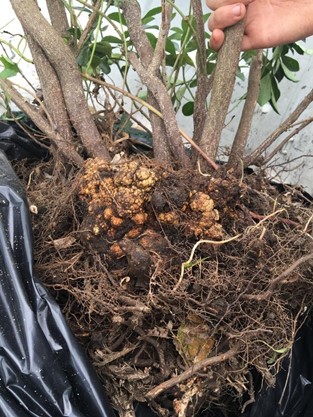
Crown Gall Disease
Agrobacterium tumefaciens
Basic Details
Description
Taxonomy
Features
Translations
Basic Details
NameCrown Gall Disease
DescriptionCrown gall causes rough, woody swellings (tumors) on stems and roots, often near the soil line. Identify these galls early to prevent weakening of your trees and shrubs.
TypeBacteria
FamilyRhizobiaceae
GenusAgrobacterium
Taxonomy & Features
PhylumProteobacteria
ClassAlphaproteobacteria
OrderRhizobiales
Features
- Named for the large, gnarled growths (galls) it causes, most often at the 'crown' of the plant where the stem meets the soil. Caused by the bacterium Agrobacterium tumefaciens
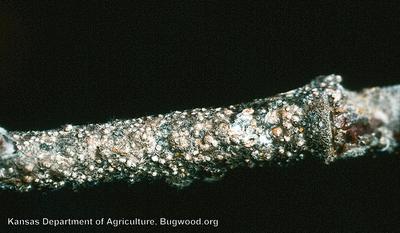
- Starts as small, light-colored swellings that rapidly grow into large, rough, dark brown or black woody tumors. Galls can range from 1 cm to over 10 cm in diameter
- The bacteria 'genetically engineer' the plant by inserting a piece of their own DNA (the Ti plasmid) into plant cells, forcing them to produce food for the bacteria and grow uncontrollably
- Infected plants may show stunted growth, yellowing leaves, and increased susceptibility to drought and winter injury because the galls disrupt the flow of water and nutrients
- Survives in the soil for several years. Enters plants through wounds caused by pruning, grafting, insects, or lawn mowers. Highly contagious through contaminated soil and water
- Bacteria are microscopic. The resulting woody galls are permanent and can eventually encircle and girdle the entire stem, leading to branch or plant death
- Thrives in warm weather and is most active in moist, alkaline soils. Spread rapidly during rainy periods and through improper sanitation of gardening tools
- Broad host range affecting over 600 species, including roses, grapes, raspberries, apples, stone fruits, and many ornamental trees like maples and elms
- Prevent by inspecting new plants carefully for galls at the soil line. Avoid wounding the base of plants during cultivation. Disinfect pruning tools with 70% alcohol
- No chemical cure for existing galls. Prune out galled branches if possible, or remove the entire plant if the main trunk is infected. Some biological controls like K84 bacteria can prevent new infections
Names in Different Languages
Latin / ScientificAgrobacterium tumefaciens
English (Alternate)Bacterial gall, Plant tumor
Hindiक्राउन गॉल (Crown gall)
Tamilதண்டு முடிச்சு நோய் (Thandu mudichu noy)
Teluguక్రౌన్ గాల్ (Crown gall)
Malayalamക്രൗൺ ഗോൾ (Krauṇ gōḷ)
Kannadaಕಿರೀಟ ಗಂಟು ರೋಗ (Kirīṭa gaṇṭu rōga)
Sanskritशिखा-ग्रन्थि-रोग (Śikhā-granthi-roga)
Bengaliক্রাউন গল (Crown gall)
Frenchgalle du collet
Russianкорневой рак (kornevoy rak)
Spanishagalla de corona
GermanWurzelkropf