Codling Moth
Cydia pomonella
Basic Details
Description
Taxonomy
Features
Translations
Basic Details
NameCodling Moth
DescriptionCodling moth larvae are the classic 'worms' in apples, tunneling directly to the core. Identify reddish-brown frass on the fruit surface to catch this pest before harvest.
TypeInsect
FamilyTortricidae
GenusCydia
TribeGrapholitini
Taxonomy & Features
PhylumArthropoda
SubphylumHexapoda
ClassInsecta
OrderLepidoptera
SubfamilyOlethreutinae
Features
- The most significant pest of apples and pears worldwide. The larvae bore into the fruit and feed on the seeds and core, making the fruit unmarketable
- Infested fruit displays a small entry hole often surrounded by a pile of reddish-brown, sawdust-like droppings called 'frass'
- Larvae are white-to-light-pink caterpillars with a dark brown head. They grow to about 15-20 mm long before leaving the fruit to pupate
- Apples attacked by codling moths often ripen prematurely and drop from the tree. Internal tunneling leads to rot and contamination with excrement
- Overwinters as mature larvae in thick silk cocoons hidden under bark scales or in debris on the ground. Moths emerge in spring around bloom time
- Adult moths are small (10-12 mm), greyish-brown with a distinctive copper-colored patch at the tip of each forewing. They are active primarily at dusk
- Females lay individual eggs on leaves or fruit. Once hatched, the tiny larvae crawl to a fruit and begin boring inside within 24 hours
- Can have 2 to 3 generations per year. The second generation is often larger and causes more damage as fruit is larger and more attractive
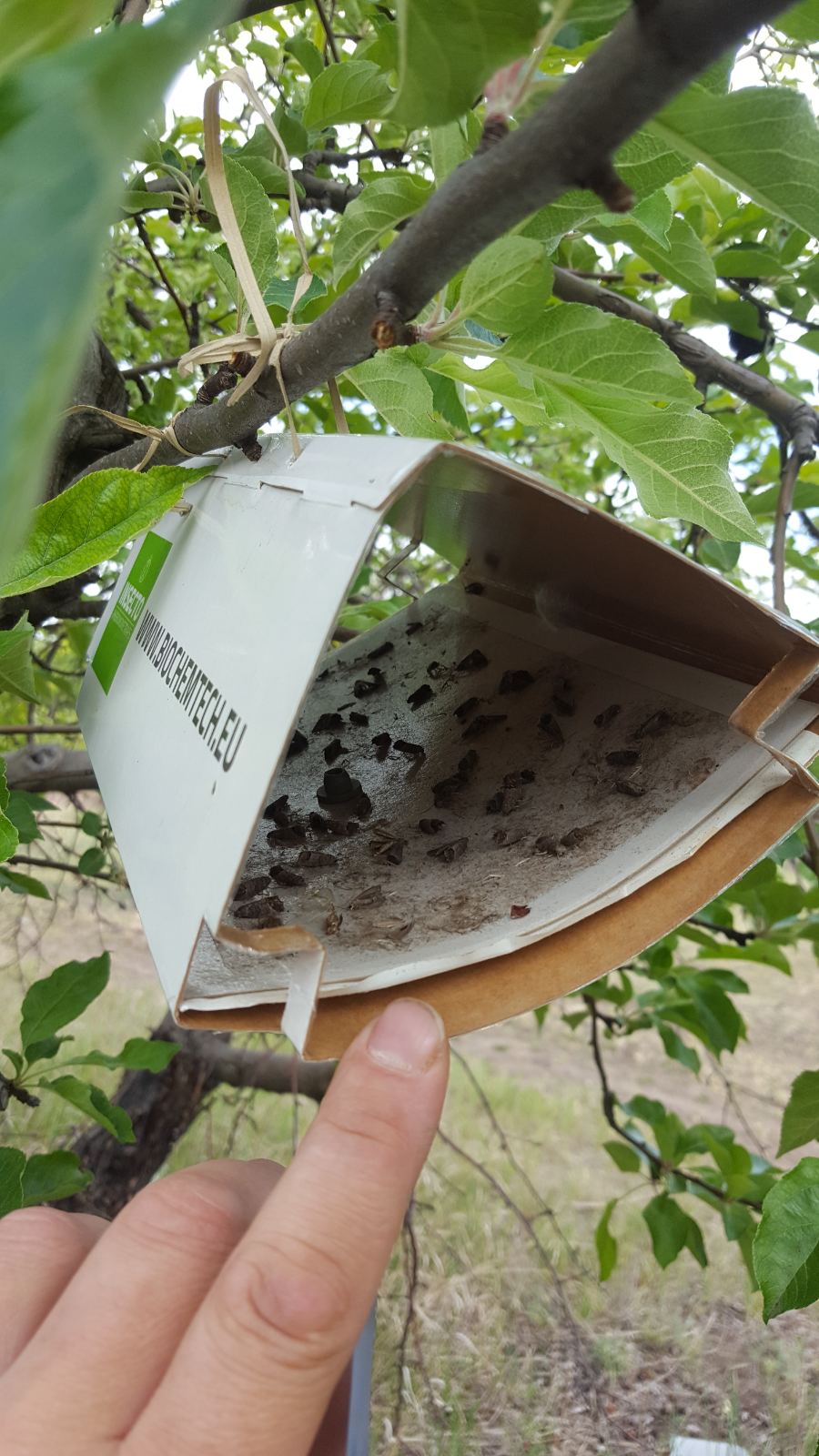
- Monitor populations using pheromone traps. Bagging individual young fruits on the tree is a tedious but highly effective chemical-free control method
- Control by applying neem oil, spinosad, or Bt (Bacillus thuringiensis) shortly after petal fall. Rake up and destroy dropped fruit daily to kill larvae inside
Names in Different Languages
Latin / ScientificCydia pomonella
English (Alternate)Apple worm
Hindiकोडलिंग मोथ (Codling moth)
Tamilகோட்லிங் அந்துப்பூச்சி (Codling andhppuchi)
Teluguకోడ్లింగ్ పురుగు (Codling purugu)
Malayalamകോഡ്ലിംഗ് മോത്ത് (Kōḍliṅg mōth)
Kannadaಸೇಬಿನ ಹುಳು (Sēbina huḷu)
Sanskritसेब-कोष-कीट (Seba-koṣa-kīṭa)
Bengaliকডলিং মথ (Codling moth)
Frenchcarpocapse des pommes
Russianяблонная плодожорка (yablonnaya plodozhorka)
Spanishcarpocapsa, polilla de la manzana
GermanApfelwickler