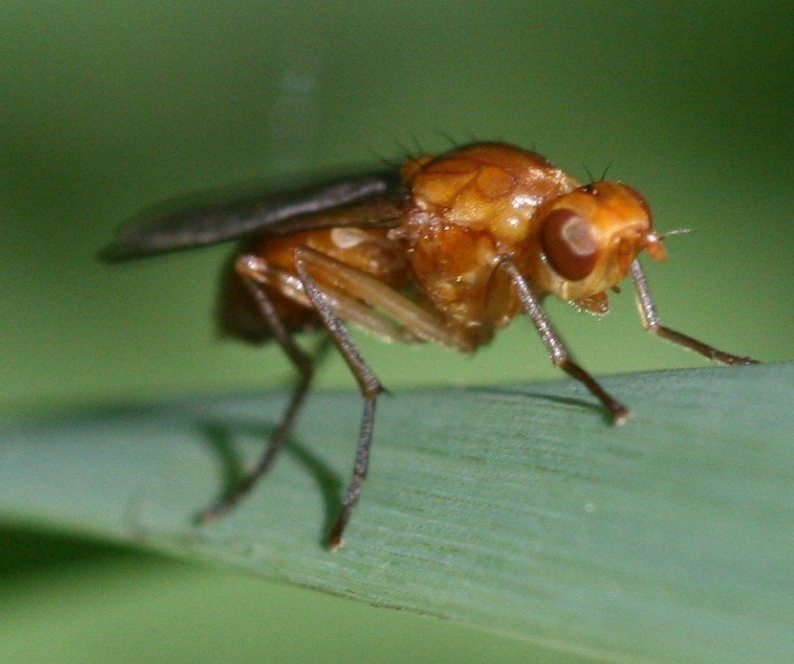
Carrot Rust Fly
Psila rosae
Basic Details
Description
Taxonomy
Features
Translations
Basic Details
NameCarrot Rust Fly
DescriptionCarrot rust fly larvae tunnel into roots, leaving rusty scars and causing plant rot. Identify symptoms and protect your carrots with row covers and timing.
TypeInsect
FamilyPsilidae
GenusChamaepsila
TribePsilini
Taxonomy & Features
PhylumArthropoda
SubphylumHexapoda
ClassInsecta
OrderDiptera
SubfamilyPsilinae
Features
- Named 'rust fly' because larvae create rusty-brown tunnels and scars in root vegetables, giving them a rust-colored appearance
- Adults are slender, shiny black flies with yellow-orange heads and yellow legs. Wings are clear with slight iridescence. Larvae are cream-colored maggots with brown heads
- Larvae burrow into roots of carrots, parsnips, celery, and parsley. Tunnel through roots creating brown channels. Adults don't damage plants
- Roots develop rusty-brown tunnels and scars. Damaged areas become mushy and rot. Secondary bacterial and fungal infections follow. Roots become inedible
- Adults lay eggs in soil near plant bases. Larvae hatch and burrow into roots. Two generations per year in most regions. Overwinter as pupae in soil
- Adults measure 5-8 mm long with 12 mm wingspan. Larvae grow to 8-9 mm long
- Most active in cool, moist conditions. First generation emerges in late spring, second in late summer. Attracted to smell of carrots
- Attack carrots, parsnips, celery, parsley, celeriac, and other plants in the carrot family (Apiaceae)
- Prevent by using row covers, delaying planting until June, harvesting early, rotating crops, and avoiding thinning which releases carrot scent. Plant in well-drained soil
- Natural predators include ground beetles, rove beetles, and parasitic wasps. Treat soil with beneficial nematodes. Use neem oil or spinosad for adults
Names in Different Languages
Latin / ScientificPsila rosae
English (Alternate)Carrot Fly, Carrot Root Fly
Hindiಗಾಜರ್ ಮಕ್ಕಿ (Gaajar Makkhi)
Tamilಕ್ಯಾರೆಟ್ ವೇಱ್ಪೂಚ್ಚಿ (Carrot Root Worm)
Teluguಕ್ಯಾರೆಟ್ ವೇರು ಪುರುಗು (Carrot root worm)
Malayalamಕ್ಯಾರಟ್ ತುರುಂಬ್ ಈಚ (Kyaratt Thurumb Eecha)
Kannadaಕ್ಯಾರೆಟ್ ತುಕ್ಕು ನೊಣ (kyāreṭṭu tukku noṇa)
Sanskritಕೃಷ್ಣದಾರ್ವೀ-ಕೀಟ (Kṛṣṇadārvī-kīṭa), ದಾರ್ವೀ-ಕೀಟ (Dārvī-kīṭa)
Bengaliಗಾಜರೋರ್ ಪೋಕಾ (Gajorer Poka)
Frenchmouche de la carotte
Russianಮೋರ್ಕೋವ್ನಾಯ ಮುಖ (pronounced morkovnaya mukha)
Spanishmosca de la zanahoria
GermanMöhrenfliege, Möhrenrostfliege