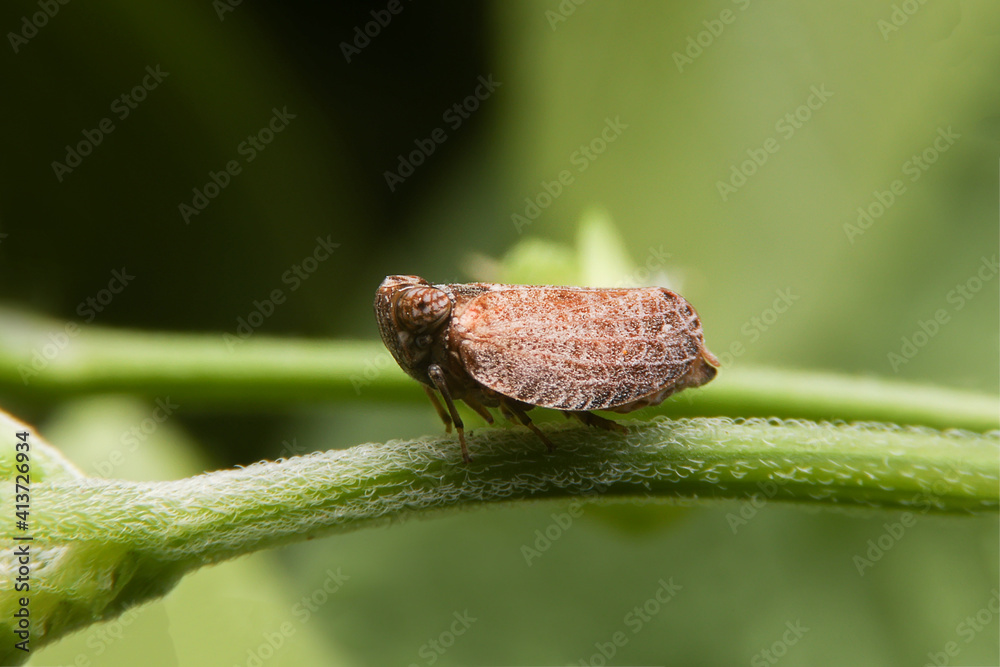
Brown Planthopper (Rice)
Nilaparvata lugens
Basic Details
Description
Taxonomy
Features
Translations
Basic Details
NameBrown Planthopper (Rice)
DescriptionBrown planthoppers cause 'hopperburn' where circular patches of rice plants dry up and turn brown. Identify sooty mold at the plant base to stop this sap-sucking pest.
TypeInsect
FamilyDelphacidae
GenusNilaparvata
TribeDelphacini
Taxonomy & Features
PhylumArthropoda
SubphylumHexapoda
ClassInsecta
OrderHemiptera
SubfamilyDelphacinae
Features
- One of the most economically important rice pests in Asia. It is a highly specialized sap-sucker (Nilaparvata lugens)
- Adults and nymphs cluster at the base of the rice plant, feeding on the phloem sap of the leaf sheaths
- Initial symptoms include yellowing and drooping of the leaves. In large numbers, they cause 'hopperburn'—circular patches of the field where plants rapidly turn brown and die
- The insects excrete large amounts of sticky honeydew, which leads to the growth of black sooty mold on the stems and lower leaves
- Beyond direct feeding damage, BPH is the primary vector for several destructive viral diseases, including Rice Ragged Stunt and Rice Grassy Stunt
- Dense planting, high nitrogen fertilizer use, and the indiscriminate use of certain insecticides can lead to massive 'resurgence' outbreaks by killing natural enemies
- Infected plants show reduced tillering and poor grain filling. Severe infestations late in the season can cause total crop lodging (falling over)
- Adults have two forms: long-winged (macropterous) for migration and short-winged (brachypterous) for rapid population buildup within a field
- Manage by planting resistant varieties (like IR64) and practicing 'synchronous planting' to break the lifecycle in a region
- Control by draining the field for 3-4 days during early infestation and using selective insecticides like pymetrozine to protect natural predators like spiders
Names in Different Languages
Latin / ScientificNilaparvata lugens
English (Alternate)Rice BPH
Hindiचावल का भूरा फुदका (Chawal ka bhura phudka)
Tamilநெல் புகையான் (Nel pugaiyan)
Teluguవరి ఆకు త్రిప్ప తెగులు (Vari aku trippa tegulu)
Malayalamനെല്ലിലെ തവിട്ടു ചാഴി (Nellile taviṭṭu cāḻi)
Kannadaಭತ್ತದ ಕಂದು ಬೆನ್ನು ಜಿಗಿ ಹುಳು (Bhattada kandu bennu jigi huḷu)
Sanskritतण्डुल-कटि-कीट (Taṇḍula-kaṭi-kīṭa)
Bengaliধানের বাদামী গাছ ফড়িং (Dhaner badami gach phoring)
Frenchcicadelle brune du riz
Russianкоричневая рисовая цикадка (korichnevaya risovaya tsikadka)
Spanishsaltahojas café del arroz
GermanBraune Reiszikade