Bean Weevil
Acanthoscelides obtectus
Basic Details
Description
Taxonomy
Features
Translations
Basic Details
NameBean Weevil
DescriptionBean weevils tunnel inside dried beans and leave behind large, circular exit holes. Identify these 'windows' early to save your stored harvest from turning to dust.
TypeInsect
FamilyChrysomelidae
GenusAcanthoscelides
TribeBruchini
Taxonomy & Features
PhylumArthropoda
SubphylumHexapoda
ClassInsecta
OrderColeoptera
SubfamilyBruchinae
Features
- A major pest of stored beans and legumes (Acanthoscelides obtectus). Known as a 'seed beetle' as it completes its typical life cycle inside the seed
- Unlike many storage pests, bean weevil infestations often begin in the field when eggs are laid in the cracks of maturing bean pods
- Tiny larvae bore into the developing bean seeds. Initially, the entrance hole is so small it is almost invisible to the naked eye
- The larvae hollow out the inside of the bean as they feed. Before pupating, they eat a thin circular layer of the skin, creating a 'window'
- The most obvious sign is round, clean-cut exit holes (2 mm) left when the adult beetle emerges from the dried bean
- Infestations can continue inside a storage container, as adults do not need to feed and can immediately mate and lay eggs on the dried seeds
- Heavily infested beans have reduced nutritional value and very low germination rates. In severe cases, the beans are reduced to useless dust
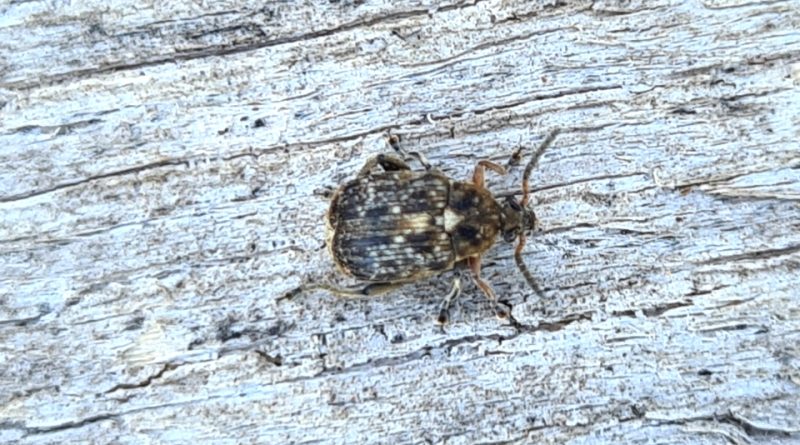
- Adults are small (3-4 mm), pear-shaped beetles, grayish-brown with reddish-brown legs and antenna. They are very active and good fliers
- Control by freezing harvested beans at -18°C (0°F) for four days to kill all life stages. Store beans in airtight glass or metal containers
- Inspect seeds before storage. Do not plant infested seeds as they may carry the weevils directly back into the field
Names in Different Languages
Latin / ScientificAcanthoscelides obtectus
English (Alternate)Dried bean beetle
Hindiफली की घुन (Phali ki ghun)
Tamilபயறு வண்டு (Payaru vandu)
Teluguఅలచంద పురుగు (Alachanda purugu)
Malayalamപയർ വണ്ട് (Payar vaṇḍ)
Kannadaಅವರೆಕಾಳು ನುಸಿ (Avarekāḷu nusi)
Sanskritशिम्बा-कीट (Śimbā-kīṭa)
Bengaliসীম এর উইভিল (Shim er weevil)
Frenchbruche du haricot
Russianфасолевая зерновка (fasolevaya zernovka)
Spanishgorgojo de la alubia
GermanSpeisebohnenkäfer