Yam Safety Inspection
Detect artificial dyes (Rhodamine B) and bleaching agents in Elephant Yam and Purple Yam
Inspection Guide
Click to enlarge
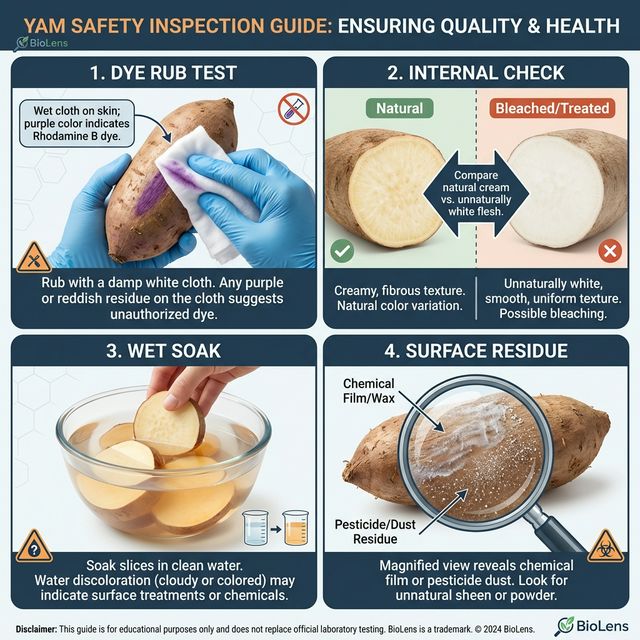
Yam Purity & Dye Detection Guide
Yams are sometimes dyed with toxic colors to mimic premium varieties or bleached to look clean.
1. The Dye Rub Test: Use a wet tissue to rub the outer skin and cut surface. Purple yams should not bleed color onto the tissue. Pink/Purple transfer indicates Rhodamine B dye.
2. Internal Purity Check: Natural yam flesh should have a consistent earthy tone. If the center is significantly different in color from the edges, it may have been soaked in colorants.
3. Wet Soak Test: Place yam slices in clear water. Natural yam water stays clear. If the water turns pink, purple, or reddish, artificial dyes are present.
4. Surface Residue: Look for a white chalky film or unnaturally clean skin. This can indicate the use of bleaching agents like sodium hypochlorite to remove dirt and make it look "fresh."
Quick Safety Tips
- Rub purple yam with wet tissue to check for pink dye
- Soak slices in water - check for color leaching
- Reject yams with an unnaturally bright or bleeding color profile
- Wash thoroughly to remove potential bleaching residues
What CANNOT be Verified (Lab-Only)
Invisible Risks (Lab-Only):
* Bleaching Agent Residue: Trace amounts of chlorates from industrial bleaching require specialized chemical testing.
* Soil Contaminants: Heavy metals like Lead or Arsenic absorbed from soil require ICP-MS analysis.
Chemical Concerns
Step 1: AI Visual Scan
New to BioLens? Try a sample test