
Wheat Flour (Atta) Safety Inspection
Detect chalk powder, sawdust, and harmful adulterants in wheat flour
Inspection Guide
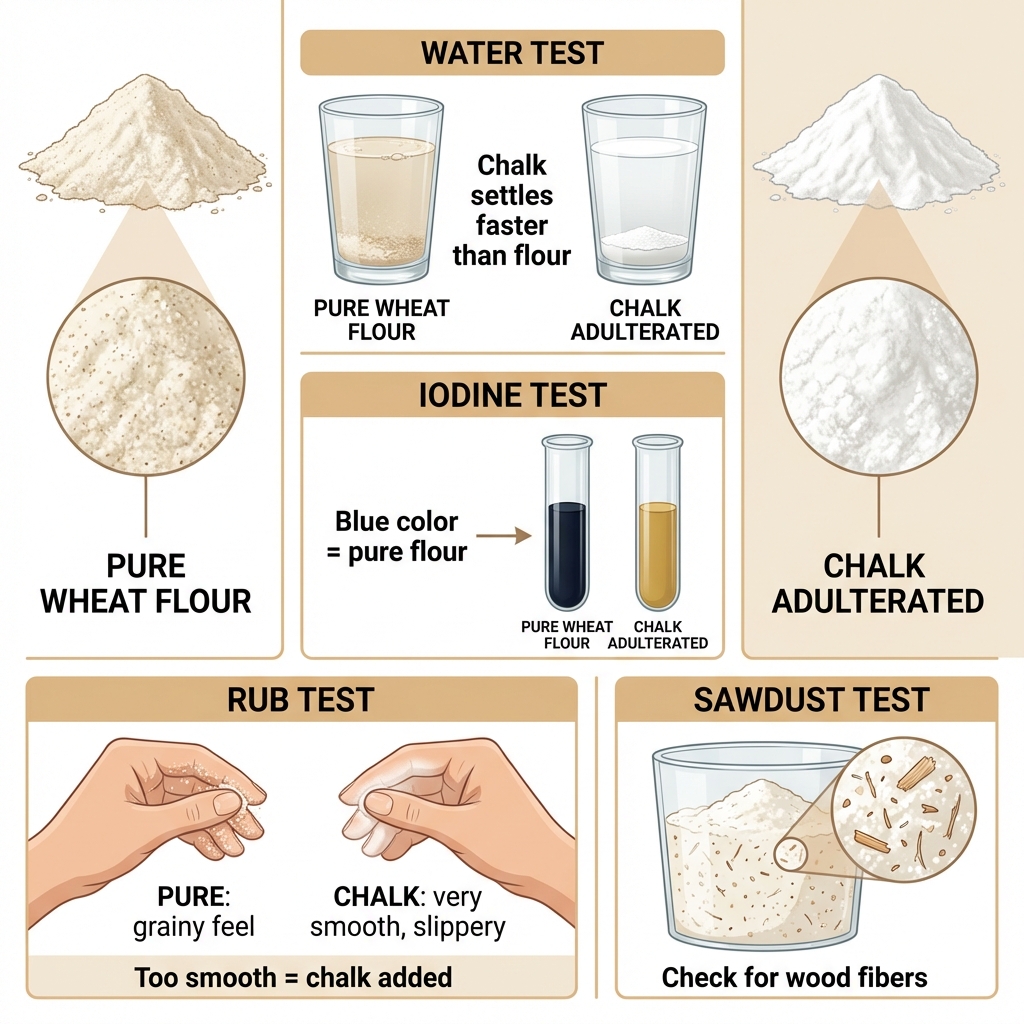
Click to enlarge
Wheat Flour Adulteration Detection
Wheat flour (Atta) is commonly adulterated with chalk powder, talc, sawdust, and other cheap fillers to increase weight and reduce costs.
1. The Iodine Test (For Sawdust):
Take a small amount of flour and sprinkle a few drops of iodine solution on it. Pure wheat flour will turn blue-black (due to starch). If the color turns brown or light brown, it indicates sawdust presence (which contains cellulose, not starch).
2. The Water Dough Test:
Take flour and make dough with water. Pure wheat flour forms smooth, elastic dough that's easy to knead. Adulterated flour with chalk will feel gritty and rough. Sawdust makes the dough crumbly and non-elastic.
3. The Hydrochloric Acid Test (For Chalk/Baking Powder):
Put a spoonful of flour in a bowl and add a few drops of diluted HCl (hydrochloric acid). If you see fizzing or bubbling, it indicates chalk powder or baking powder presence (calcium carbonate reacts with acid). Pure flour won't fizz.
4. The Visual Particle Check:
Spread a thin layer of flour on a dark surface. Pure wheat flour is uniform in texture and color (slightly off-white to tan). Look for:
- White particles (chalk/talc)
- Brown/woody particles (sawdust)
- Excessive whiteness (bleaching)
5. The Texture Test:
Rub flour between your fingers. Pure wheat flour feels slightly coarse and grainy but smooth. Chalk-adulterated flour feels chalky and excessively fine. Sawdust makes it feel rough and scratchy.
Quick Safety Tips
- Iodine test - blue-black is pure, brown indicates sawdust
- HCl test - no fizzing = pure flour
- Check texture - should be smooth, not gritty or chalky
- Buy from certified mills
Chemical Concerns
Step 1: AI Visual Scan
New to BioLens? Try a sample test