
Watermelon Safety Inspection
Detect Oxytocin injection for accelerated growth in watermelons
Inspection Guide
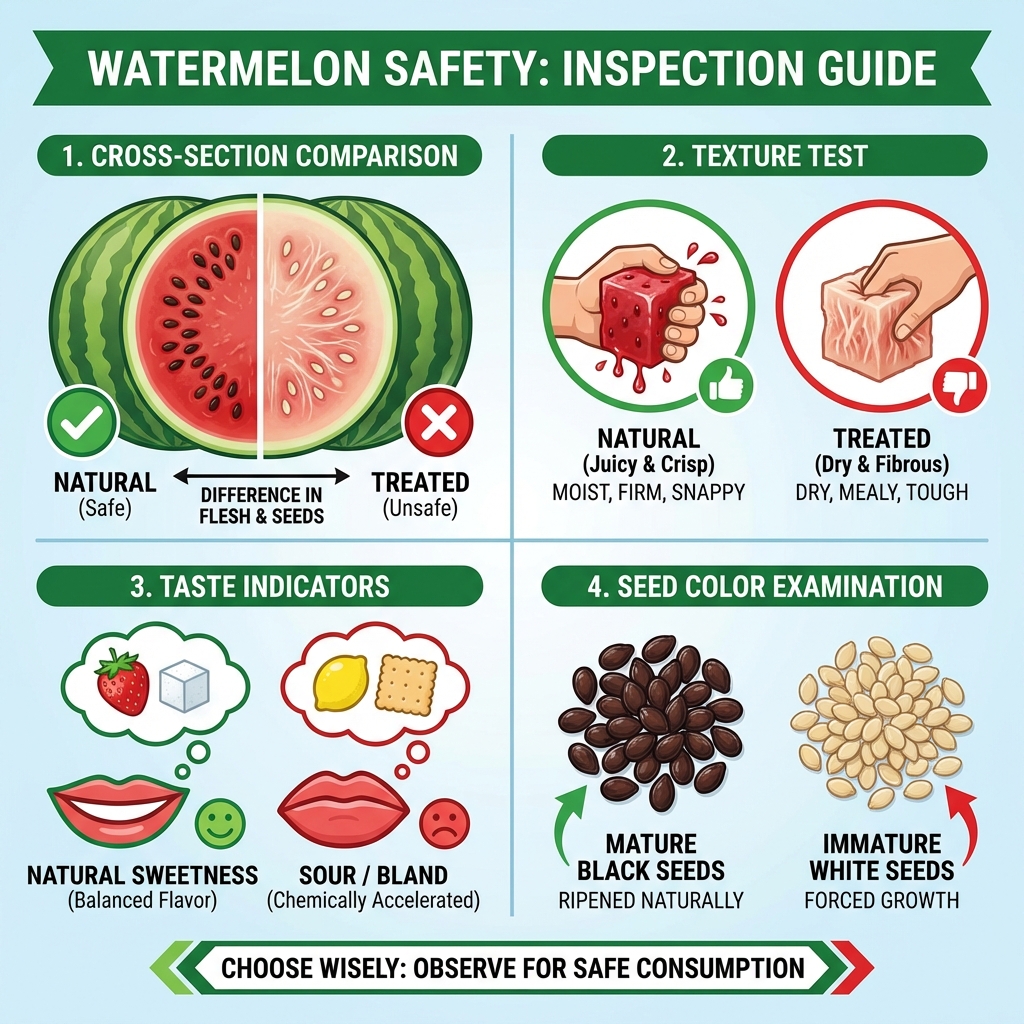
Click to enlarge
Watermelon Forced Growth Detection
Watermelons are illegally injected with Oxytocin (a banned growth hormone) to accelerate growth and increase size, leading to premature harvesting.
1. The Seed Color Test (Most Reliable):
Cut the watermelon open and examine the seeds. Naturally ripened watermelons have black or dark brown mature seeds. Oxytocin-injected watermelons have white or pale seeds because they're harvested prematurely before seeds mature. This is the strongest indicator.
2. The Texture Test:
Naturally ripe watermelon flesh is firm, crisp, and juicy. Press it with your fingers - it should be moist and spring back. Chemically accelerated watermelons have a fibrous, dry, or mealy texture despite being red. The flesh may feel cottony or spongy.
3. The Taste Test:
Natural watermelons are sweet with balanced flavor. Oxytocin-injected watermelons taste sour, bland, or completely flavorless despite having red flesh. The sweetness is absent even though it looks ripe.
4. The Flesh Appearance:
Cut and observe the flesh. Natural watermelon has uniform, deep red to pink color throughout. Chemically grown watermelons often have white streaks, fibrous strands running through the flesh, or uneven coloring with pale patches.
5. The Sound Test (Pre-purchase):
Tap the watermelon. Natural ripe watermelons produce a deep, hollow sound. Chemically accelerated ones often sound flat or dull because the internal structure is not properly developed.
Quick Safety Tips
- Check seed color - white seeds indicate forced growth
- Test texture - should be crisp and juicy, not fibrous
- Natural watermelons are sweet, not bland or sour
- Look for white fibrous streaks in flesh
Chemical Concerns
Step 1: AI Visual Scan
New to BioLens? Try a sample test