
Walnuts Safety Inspection
Detect bleaching and chemical treatment in walnut kernels
Inspection Guide
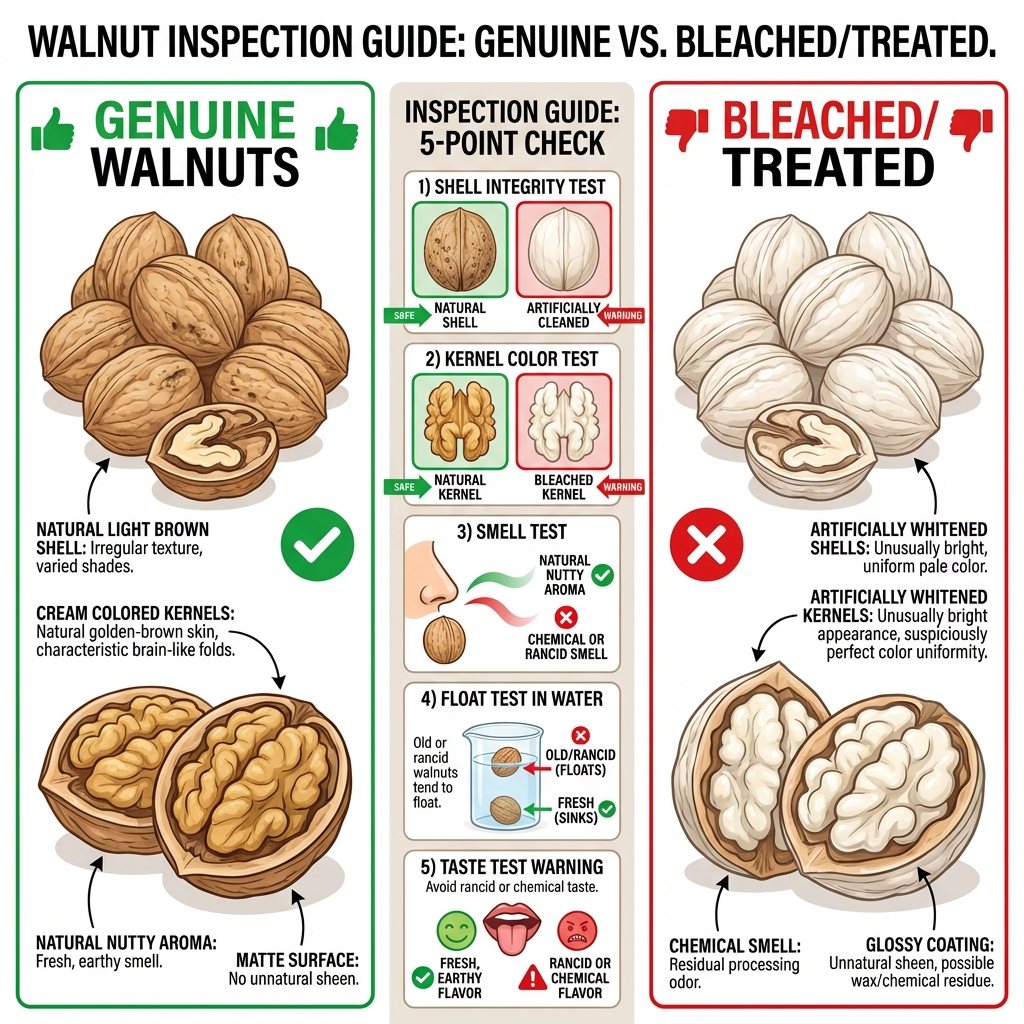
Click to enlarge
Walnut Chemical Treatment Detection
Walnut kernels are bleached to appear whiter and more attractive, especially to hide rancidity or age.
1. The Shell Integrity Test:
Examine the shell (if buying with shell). Natural walnuts have:
- Natural light brown color with variations
- Irregular texture
- Some minor cracks or marks
Artificially cleaned shells may be:
- Unnaturally uniform color
- Excessively clean
- Suspiciously perfect appearance
2. The Kernel Color Test:
Crack open and examine kernel. Natural walnut kernels are:
- Cream colored with natural golden-brown skin
- Slight variations in color
- Characteristic brain-like folds visible
Bleached kernels are:
- Artificially white or pale
- Uniform color throughout
- Suspicious bright appearance
- May lack natural brown skin
3. The Smell Test:
Natural walnuts have a pleasant, mild, nutty aroma. Chemically treated walnuts smell:
- Chemical or like sulfur
- Rancid (if bleached to hide age)
- Lack of natural aroma
- Unpleasant chemical odor
4. The Float Test (For Freshness):
Drop shelled walnuts in water. Fresh natural walnuts sink. If they float:
- May be old/rancid
- Dried out from age
- Potentially hollow from pest damage
This doesn't indicate chemical treatment directly but indicates poor quality often masked by bleaching.
5. The Taste Test (Small Piece):
Natural fresh walnuts taste:
- Mild, pleasant, slightly sweet
- Natural nutty flavor
- No aftertaste
Rancid or chemically treated walnuts taste:
- Bitter or metallic
- Chemical aftertaste
- Sour or off-flavor
- Paint-like taste
Quick Safety Tips
- Natural kernels are cream colored, not bright white
- Check for chemical or sulfur smell
- Buy with shells when possible for better quality control
- Taste test small piece for bitterness/rancidity
Chemical Concerns
Step 1: AI Visual Scan
New to BioLens? Try a sample test