
Turnip (Khol Khol) Safety Inspection
Detect Malachite Green dye and chemical fresheners in Turnips
Inspection Guide
Click to enlarge
Turnip (Khol Khol) Dye Check
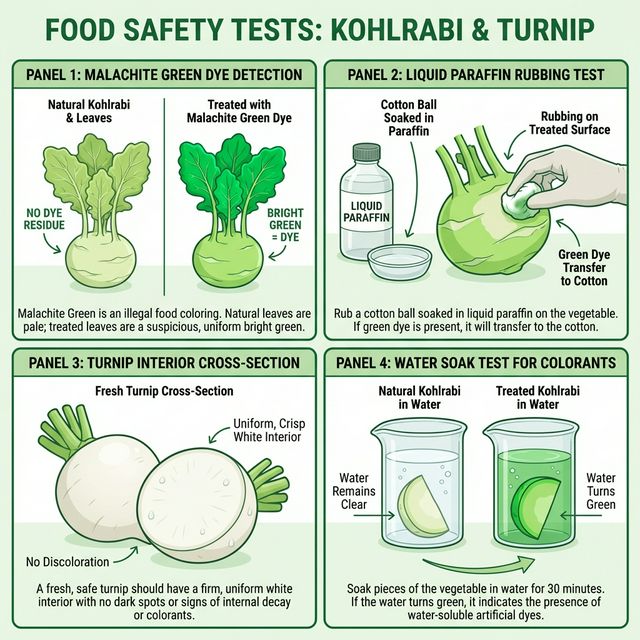
Turnips and Kohlrabi (Khol Khol) are sometimes rubbed with Malachite Green dye to look vibrant and fresh, hiding old, withered stock.
1. The Cotton Rub Test:
Take a cotton ball soaked in liquid paraffin or water and rub the outer skin of the turnip vigorously. If the cotton turns green, it's a confirmed sign of Malachite Green, a toxic carcinogenic dye.
2. The Water Soak:
Soak the whole turnip in a bowl of warm water for 15 minutes. Pure turnips won't color the water. If the water gets a green tint, it indicates artificial coloring.
3. The Texture Check:
Naturally fresh turnips are firm and heavy. If the turnip feels light or spongy despite the bright green skin, suspect it is old stock "refreshed" with dyes.
4. The Root Integrity:
Examine where the leaves were trimmed. If the trimmed area is bright green instead of pale/white, it shows the dye has soaked into the trimmed wounds.
Quick Safety Tips
- Perform the wet cotton rub test for dye detection
- Avoid turnips that look "too green" or neon-colored
- Check if the trimmed stem ends are dyed green
- Peel deeply to remove most surface chemical residues
Multilingual Local Names
Hindiशलजम (Shaljam)
Tamilநூக்கோல் (Noolkol)
Teluguనూకోల్ (Nukol)
Kannadaನವಿಲು ಕೋಸು (Navilu Kosu)
Malayalamനൂൽക്കോൽ (Noolkol)
Bengaliওলকপি (Olkopi)
Gujaratiનવલકોલ (Navalkol)
Marathiनवलकोल (Navalkol)
FrenchNavet
ItalianRapa
RussianРепа
SpanishNabo
GermanRübe
Chinese芜菁
Japaneseカブ
Chemical Concerns
Step 1: AI Visual Scan
New to BioLens? Try a sample test