
Turkey Berry (Sundakkai) Safety Inspection
Detect pesticide residues and chemical preservatives in Turkey Berry
Inspection Guide
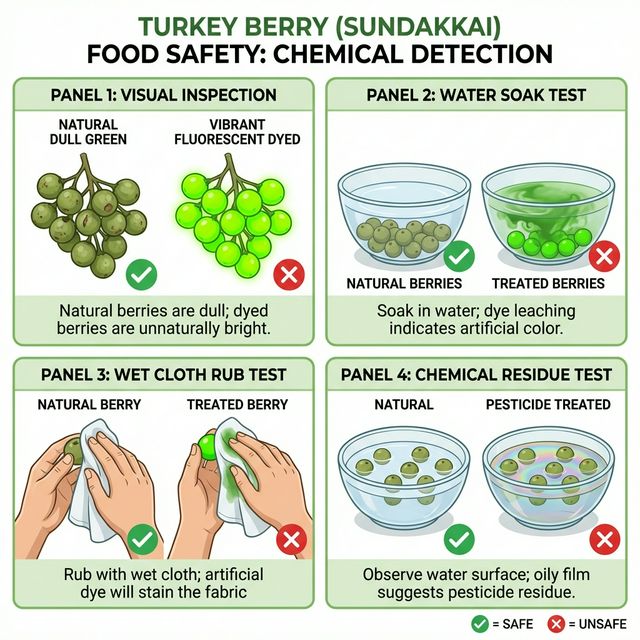
Click to enlarge
Turkey Berry (Sundakkai) Chemical Check
Turkey Berry is often intensively sprayed with pesticides due to pest susceptibility and treated with dyes to keep them look fresh.
1. The Chemical Film Wash:
Soak turkey berries in water with a pinch of baking soda. If an oily, iridescent film forms on the water surface, it indicates heavy pesticide residue (often organophosphates).
2. The Scent Analysis:
Fresh turkey berry has a mild, earthy, slightly bitter vegetable smell. If you detect a sharp, chemical, or "medicine-like" odor, it is likely contaminated with high pesticide residues.
3. The Cut & Oxidation Test:
Slice a berry. A natural berry will gradually oxidize and turn slightly brown. If the interior stays perfectly bright white or green for a long time, it may have been treated with sulfur-based preservatives.
4. The Color Rub Test:
Rub a few berries with a wet white cloth. If any green color transfers, they have been dyed with Malachite Green or other textile dyes to appear fresher than they are.
Quick Safety Tips
- Always crush slightly and soak in salt water to remove toxins
- Wash 3-4 times in running water
- Use baking soda wash for better pesticide removal
- Avoid berries with an unnatural chemical smell
Chemical Concerns
Step 1: AI Visual Scan
New to BioLens? Try a sample test