
Tapioca (Cassava) Safety Inspection
Detect vascular streaking and cyanide risks in Tapioca
Inspection Guide
Click to enlarge
Tapioca (Cassava) Safety Inspection
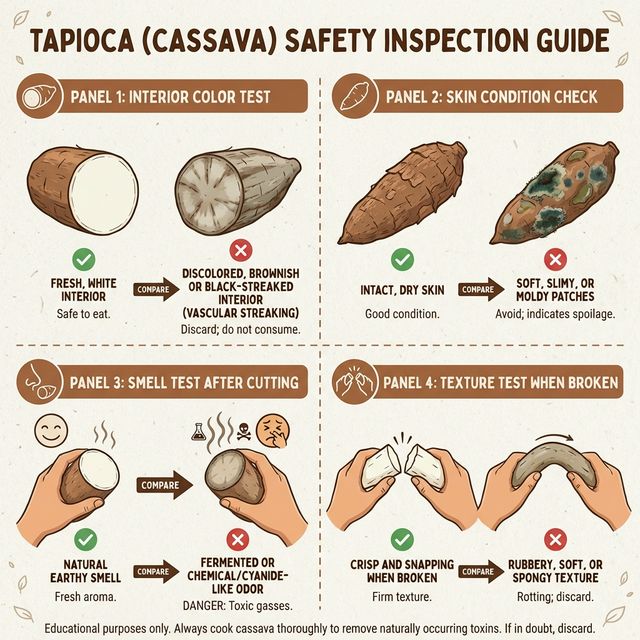
Tapioca roots must be fresh. Old or bruised roots develop vascular streaking and can increase cyanide precursor levels.
1. The Interior Cut Check:
Cut the root. The flesh should be pure, brilliant white. If you see black or bluish streaks (vascular streaking), it means the root is spoiled and potentially toxic.
2. The Smell Test:
Fresh tapioca has a clean, earthy smell. Any fermented, alcoholic, or sharp chemical odor is a sign of spoilage and should be discarded immediately.
3. Surface Firmness:
The root should be hard and dry. If the skin feels soft, slimy, or shows mold growth, the internal quality is compromised.
4. Storage check:
Tapioca spoils very fast (2-3 days after harvest). Don't buy roots that look like they've been sitting in the sun or have multiple bruises/breaks.
Quick Safety Tips
- Only buy roots with pure white interior
- Discard roots with black/blue streaks
- Always peel and boil thoroughly (discard water)
- Fresh roots are hard; soft ones are spoiled
Chemical Concerns
Step 1: AI Visual Scan
New to BioLens? Try a sample test