
Tamarind Safety Inspection
Detect coal tar dyes and excessive salt in Tamarind paste and blocks
Inspection Guide
Click to enlarge
Tamarind Quality & Dye Audit
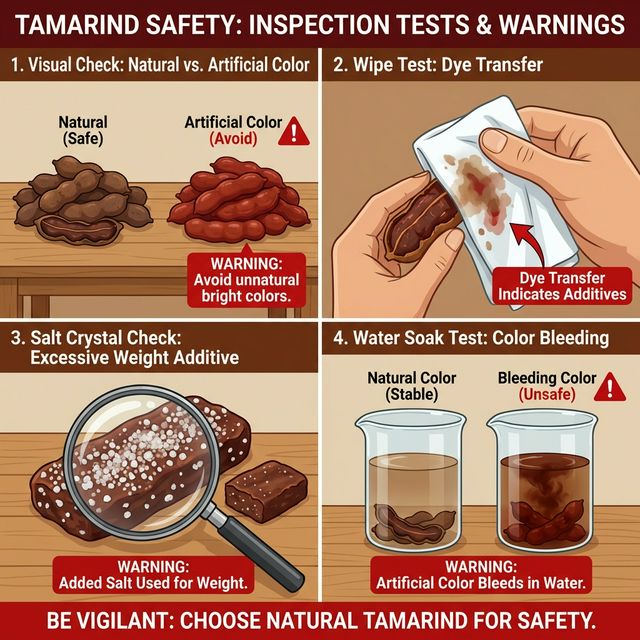
Tamarind is often treated with coal tar dyes to look dark and "aged" or loaded with excessive salt and seeds to increase weight.
1. The Water Bleed Test:
Take a small piece of tamarind and place it in a glass of water. Natural tamarind will gradually release a brownish tint. If the water turns bright red, orange, or yellow almost instantly, it contains artificial coal tar dyes.
2. The Salt Crystal Check:
Examine the block of tamarind for white crystalline deposits. While some salt is natural for preservation, excessive "rock salt" hidden inside the block is a sign of weight fraud.
3. The Seed Ratio:
High-quality tamarind is "seedless." If the block is more than 30% seeds and fibers by weight, it is poor quality.
4. The Stickiness Test:
Natural tamarind should be tacky but not "slimy." A slimy texture may indicate improper processing or the use of cheap liquid sweeteners as fillers.
Quick Safety Tips
- Check for rapid color release in water - indicates dye
- Soak and strain to remove hidden dirt or insect filth
- Look for excessive salt crystals used as fillers
- Avoid tamarind that feels unnaturally slimy
Multilingual Local Names
Hindiइमली (Imli)
Tamilபுளி (Puli)
Teluguచింతపండు (Chintapandu)
Kannadaಹುಣಸೆಹಣ್ಣು (Hunasehannu)
Malayalamപുളി (Puli)
Bengaliতেঁতুল (Tentul)
Gujaratiઆંબલી (Ambli)
Marathiचिंच (Chinch)
FrenchTamarin
ItalianTamarindo
RussianТамаринд
SpanishTamarindo
GermanTamarinde
Chinese罗望子
Japaneseタマリンド
Chemical Concerns
Step 1: AI Visual Scan
New to BioLens? Try a sample test