
Sweet Potato Safety Inspection
Detect Rhodamine B dye treatment in sweet potatoes
Inspection Guide
Click to enlarge
Sweet Potato Dye Detection
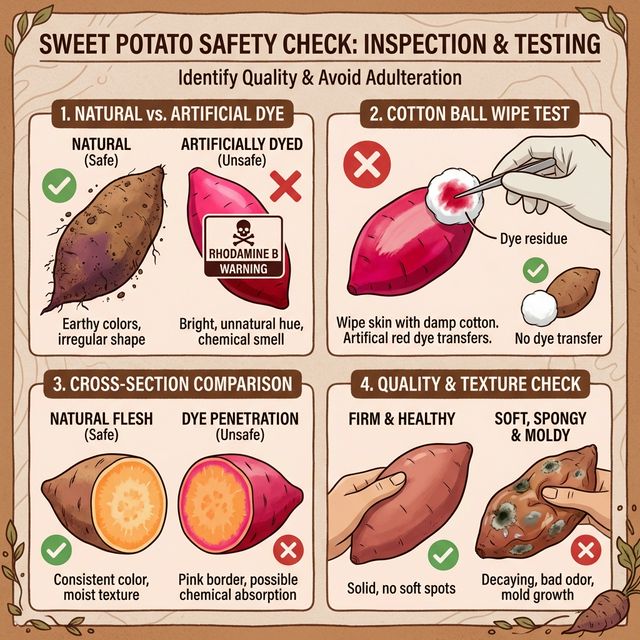
Sweet potatoes are sometimes treated with Rhodamine B, a toxic pink/red industrial dye, to make them look fresher.
1. The Cotton Ball Rub Test:
Soak a cotton ball in water or vegetable oil and rub the purple/red surface of the sweet potato. If the cotton turns pink or red, it confirms the presence of Rhodamine B.
2. The Visual Color Test:
Natural sweet potatoes have a dusty purple/brownish skin with dirt/soil marks. Dyed ones look unnaturally vibrant, magenta, or bright pink all over without natural variations.
3. The Cut Test:
Slice the sweet potato. Natural ones have uniform internal color. If you see pink/red dye seepage just under the skin or along the edges, it indicates surface dyeing.
Quick Safety Tips
- Rub with oil-soaked cotton to detect Rhodamine B
- Avoid unnaturally vibrant or fluorescent magenta skin
- Check for dye seepage under the skin when cut
- Wash and scrub or peel before cooking
Chemical Concerns
Step 1: AI Visual Scan
New to BioLens? Try a sample test