
Sweet Lime / Mosambi Safety Inspection
Detect calcium carbide and saccharine injection in sweet lime
Inspection Guide
Click to enlarge
Sweet Lime (Mosambi) Quality Inspection
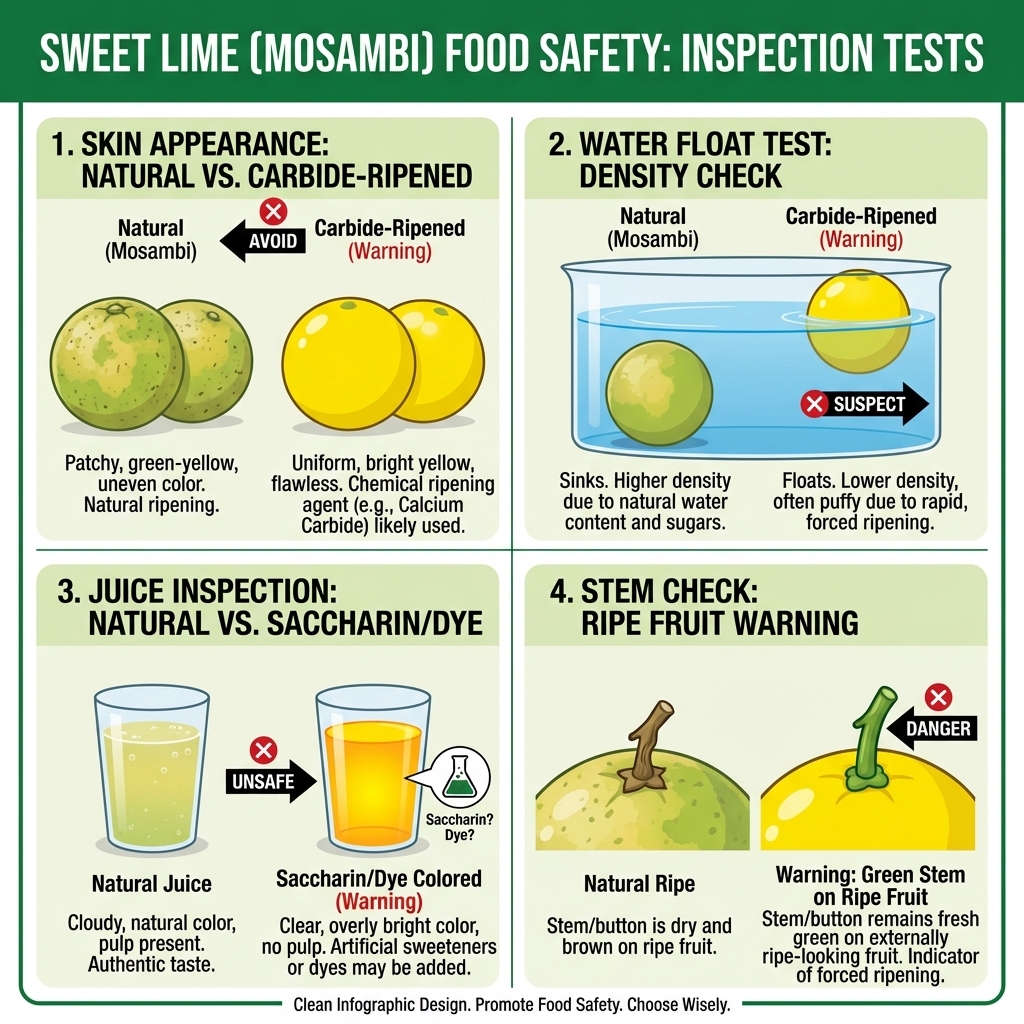
Sweet lime (Mosambi) is frequently ripened with carbide and its juice is sometimes adulterated with artificial sweeteners or dyes.
1. The Skin Color Check:
Natural sweet lime is usually greenish-yellow or has patchy yellow coloring. If the fruit is 100% uniform bright yellow with no green hint and feels very hard, it indicates carbide ripening.
2. The Float Test:
Naturally ripened sweet limes are dense and heavy with juice. When placed in water, they usually sink. Carbide-ripened or "puffy" old fruits often float on the surface due to air pockets.
3. The Juice Taste and Color Test:
Squeeze the juice. Natural Mosambi juice is a pale, slightly cloudy yellowish-green. If the juice is bright orange-yellow or tastes unnaturally sweet (like candy/sugar) without the natural citrus tang, it may have been injected with saccharin or dyes.
4. The Stem Check:
Look at the stem/button at the top. On a naturally ripened fruit, it is usually dry and brown. If the fruit looks fully yellow but the stem remains fresh green, it indicates forced ripening.
5. The Surface Shine (Wax Test):
Run your fingers over the skin. If it's unnaturally glossy or feels slippery/waxy, it has been coated with synthetic wax to extend shelf life. Natural skin is slightly textured and matte.
Quick Safety Tips
- Heavier fruit usually contains more natural juice
- Natural sweet lime sinks in water
- Avoid fruits with fresh green stems on fully yellow skin
- Wash thoroughly to remove surface wax and chemicals
Chemical Concerns
Step 1: AI Visual Scan
New to BioLens? Try a sample test