
Saffron (Kesar) Safety Inspection
Detect corn silk, plastic threads, and dyes in saffron
Inspection Guide
Click to enlarge
Saffron (Kesar) Purity Detection
Saffron is the world's most expensive spice, making it a prime target for adulteration with corn silk, plastic threads, or dyed imitation fibers.
1. The Cold Water Test (The Gold Standard):
Place 2-3 threads in a bowl of cold water.
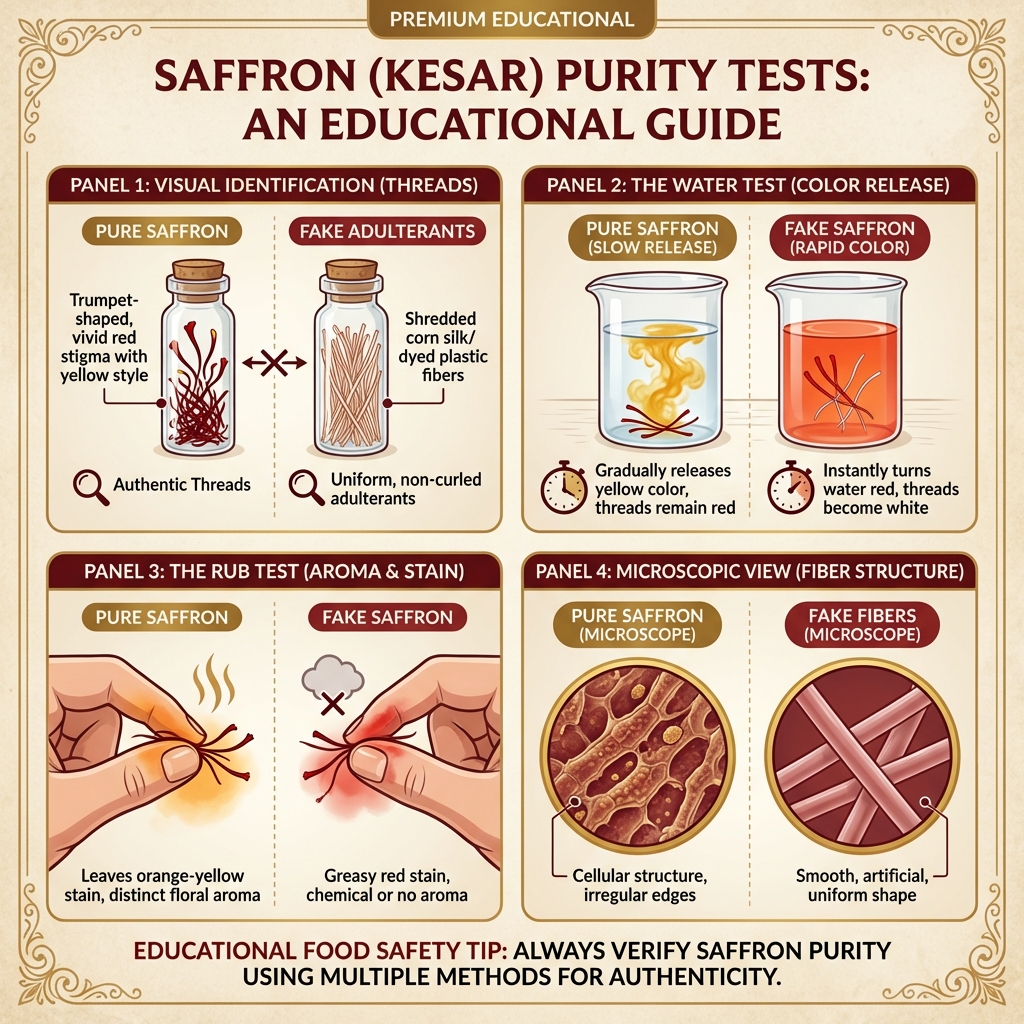
- Pure Saffron: Slowly releases a bright yellow/golden color. The thread itself remains red. This process takes 10-15 minutes.
- Fake Saffron: Instantly turns the water red or dark orange. The thread itself may turn white or lose its color quickly.
2. The Visual Thread Check:
Examine the threads carefully. Pure saffron threads are trumpet-shaped (flared at one end). They are not uniform; each thread has a unique shape. If the threads look like perfectly uniform shredded paper or plastic, it's fake.
3. The Smell and Taste Test:
Pure saffron has a very distinct, complex aroma (sweet, floral, yet earthy). It smells "sweet" but tastes "bitter." If it tastes sweet, it has been coated with honey or sugar to increase weight.
4. The Rub Test:
After soaking, take a thread and rub it between your fingers. Pure saffron threads will not break or disintegrate easily and will leave a yellow/orange stain on your skin. Fake threads will crumble or turn into a paste.
5. The Baking Soda Test:
Mix a bit of baking soda in water and add saffron. Pure saffron should turn the water yellow. Fake saffron (dyed with certain chemicals) might turn it red or pink.
Quick Safety Tips
- Pure saffron releases yellow color SLOWLY in water
- Threads should be trumpet-shaped, not uniform shreds
- Should smell sweet but taste bitter
- Fake saffron turns water red/orange immediately
Chemical Concerns
Step 1: AI Visual Scan
New to BioLens? Try a sample test