
Raisins (Dried Grapes) Safety Inspection
Detect artificial coating, dye treatment, and adulteration in raisins
Inspection Guide
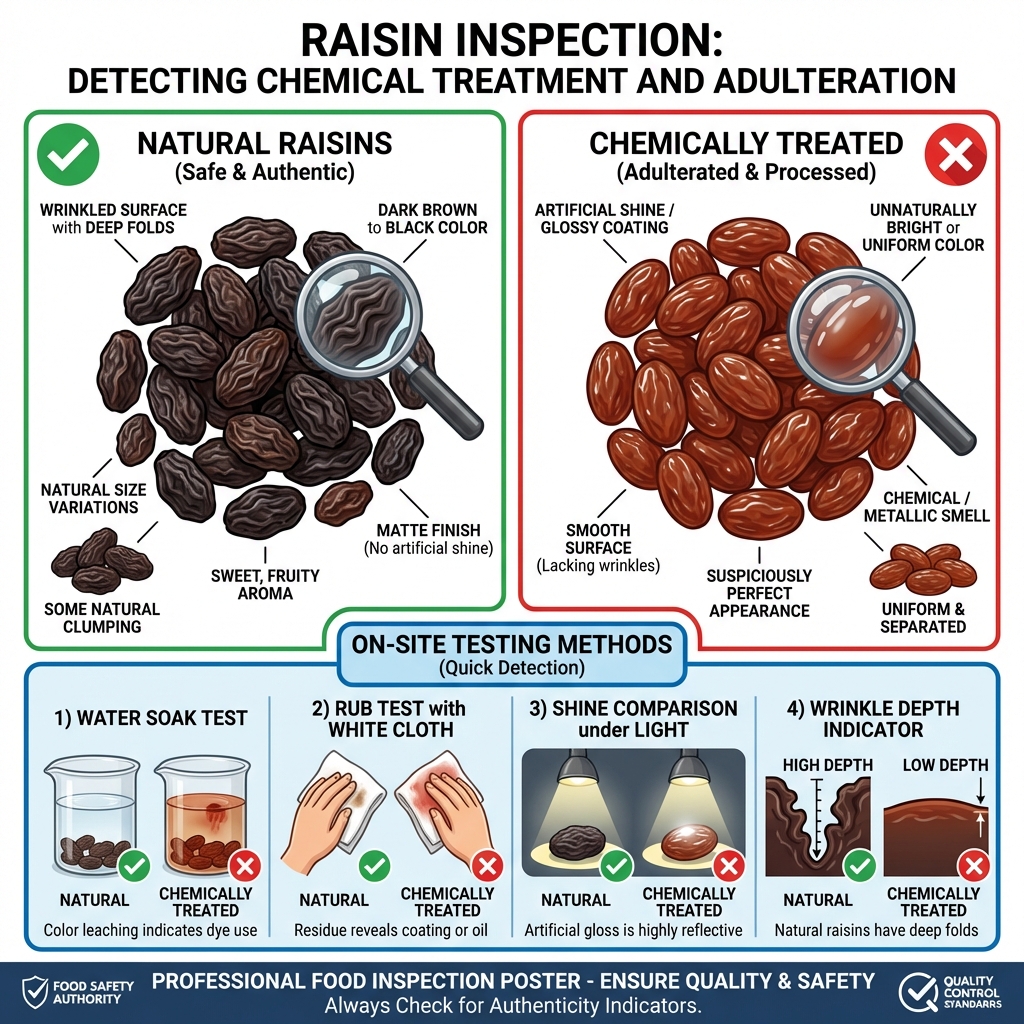
Click to enlarge
Raisin Chemical Treatment Detection
Raisins are treated with chemicals for appearance enhancement and preservation.
1. The Water Soak Test:
Soak a handful of raisins in water for 30 minutes. Natural raisins will swell and release minimal color (slight brown tint is normal). If the water turns:
- Bright/intense color
- Artificial looking shades
- Heavy color bleeding
It indicates artificial dye treatment.
2. The Rub Test with White Cloth:
Rub raisins vigorously with a wet white cloth. Natural raisins leave minimal residue. If you see:
- Color transfer to cloth
- Oily/waxy residue
- Glossy coating coming off
It indicates chemical treatment or coating.
3. The Shine Comparison (Under Light):
Natural raisins have a matte finish with deep wrinkles. Hold under bright light. Artificially treated raisins show:
- Unnatural glossy shine
- Reflective surface
- Lack of deep wrinkles (smoothed by coating)
- Wet appearance
4. The Wrinkle Depth Indicator:
Natural dried raisins have deep folds and wrinkles from natural drying process. Chemical-coated raisins have:
- Smooth surface lacking wrinkles
- Shallow wrinkles filled with coating
- Plump appearance (inflated with water/chemicals)
5. The Texture & Stickiness Test:
Natural raisins may stick together slightly from natural sugars. Excessively sticky or conversely too loose/separate raisins indicate:
- Glycerine or oil coating (sticky)
- Chemical anti-caking agents (too loose)
Quick Safety Tips
- Natural raisins have matte finish with deep wrinkles
- Water soak test for dye detection
- Wet cloth rub for coating detection
- Wash thoroughly before consumption
Chemical Concerns
Step 1: AI Visual Scan
New to BioLens? Try a sample test