
Radish Safety Inspection
Detect Rhodamine B dye (toxic) and synthetic colors in radishes
Inspection Guide
Click to enlarge
Radish Coloring Detection
Radishes are sometimes treated with Rhodamine B, a toxic red dye, to make them look vibrant red and hide decay or poor quality.
1. The Cotton Rub Test (Primary Test):
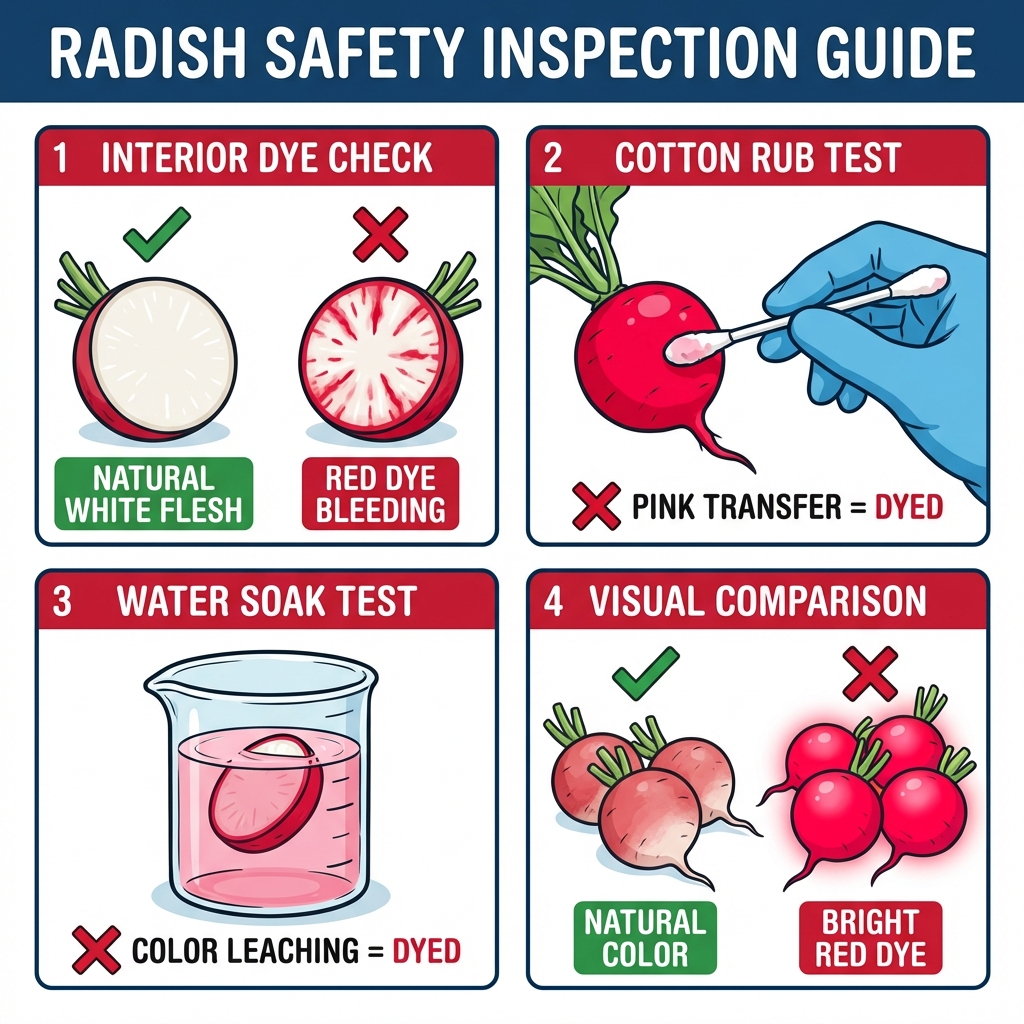
Take a piece of cotton wool soaked in water or vegetable oil and rub the red surface of the radish. If the cotton turns pink or red, it indicates the presence of Rhodamine B or other synthetic dyes. Pure radish color won't transfer.
2. The Water Soak Test:
Cut a slice of radish and soak it in a glass of water for 30 minutes. If the water turns pink or reddish, industrial dye has been used. Natural radish color stays contained within the skin cells.
3. The Interior Color Check:
Cut the radish in half. Natural red-skinned radishes are pure white inside. If you see reddish tints or streaks bleeding into the white flesh near the skin, it's a sign that dyes have penetrated the vegetable.
4. Surface Texture:
Natural radishes have a slightly rough skin with natural root marks. Dye-treated radishes may look "painted" or have an unnaturally glossy red color that covers natural blemishes.
Quick Safety Tips
- Rub with cotton to check for red dye transfer
- Interior should be pure white without red streaks
- Avoid radishes with unnaturally uniform bright red color
- Always peel radishes if you suspect chemical treatment
Chemical Concerns
Step 1: AI Visual Scan
New to BioLens? Try a sample test