
Poppy Seeds (Khus Khus) Safety Inspection
Detect stone dust, sand, and morphine residue in Poppy Seeds
Inspection Guide
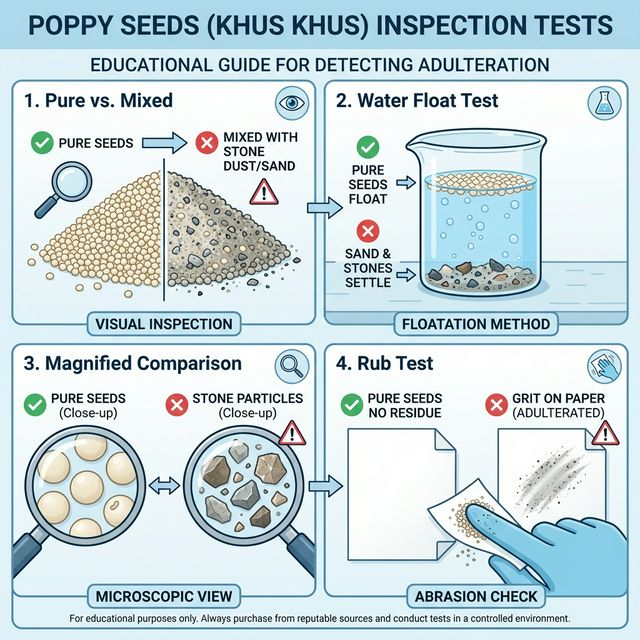
Click to enlarge
Poppy Seed (Khus Khus) Purity Check
Poppy seeds are often adulterated with fine white sand or stone dust to increase weight, and may contain unwashed opiate residues.
1. The Water Wash Test:
Put a tablespoon of poppy seeds in a glass of water and stir. Pure seeds will float on the surface or sink slowly. Any "dust" or "sand" will immediately sink to the bottom and form a distinct gritty layer.
2. The Texture Grit Test:
Take a few seeds and rub them between your teeth. If you feel a "crunch" that is harder than the seed itself (like sand or stone), the sample is adulterated with mineral dust.
3. The Color Clarity:
Pure poppy seeds should be consistent in color (white or slate blue/grey). If the mix looks "muddy" or has a lot of varying white particles that look like broken stones, avoid it.
4. The Smell Profile:
Pure poppy seeds have a mild, nutty aroma. If they smell musty or "medicine-like," they may be old, moldy, or have high chemical/opiate residues.
Quick Safety Tips
- Perform the water wash test - sand/stone dust sinks fast
- Always wash poppy seeds 2-3 times before cooking
- Check for grit or sand by rubbing a sample between fingers
- Avoid seeds with a musty or medicinal chemical odor
Multilingual Local Names
Hindiखसखस (Khaskhas)
Tamilகசகசா (Kasakasa)
Teluguగసగసాలు (Gasagasalu)
Kannadaಗಸಗಸೆ (Gasagase)
Malayalamകശകശ (Kasakasa)
Bengaliপোস্ত দানা (Posto dana)
Gujaratiખસખસ (Khaskhas)
Marathiखसखस (Khaskhas)
FrenchGraines de pavot
ItalianSemi di papavero
RussianСемена мака
SpanishSemillas de amapola
GermanMohnsamen
Chinese罂粟籽
Japaneseポピーシード
Chemical Concerns
Step 1: AI Visual Scan
New to BioLens? Try a sample test