
Pomegranate Safety Inspection
Detect artificial color enhancers and dye treatment in pomegranates
Inspection Guide
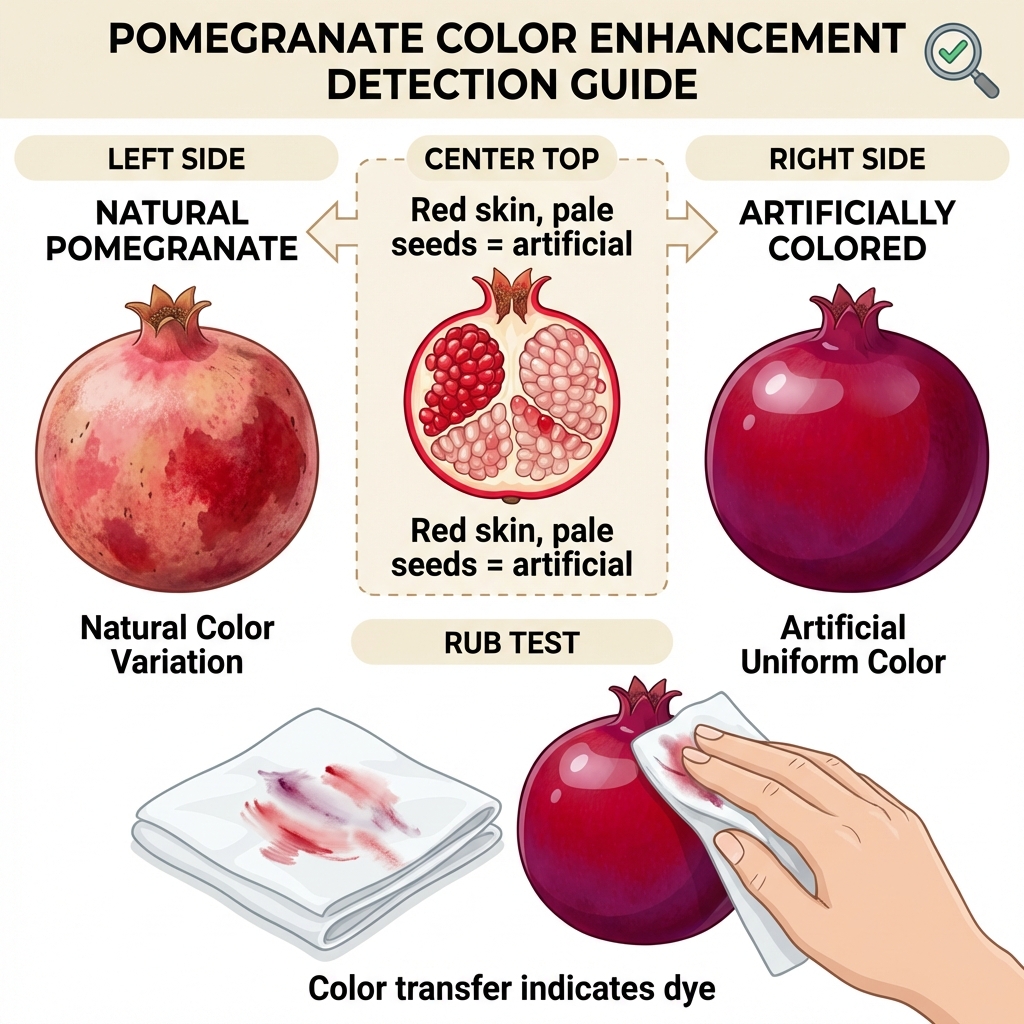
Click to enlarge
Pomegranate Color Enhancement Detection
Pomegranates are sometimes treated with color enhancers to make them appear deeper red and more attractive, or picked unripe and treated to develop color artificially.
1. The Color Intensity Check:
Natural pomegranates have color variation - some parts are brighter red, some are pinkish. If the entire fruit has an unnaturally uniform, deep red or purple color (especially on the hard skin), it may be dye-treated.
2. The Wet Cloth Rub Test:
Dampen a white cloth or tissue and rub the outer skin vigorously. If red or pink color transfers to the cloth, it indicates surface dye treatment. Natural pomegranates won't leave color stains.
3. The Seed Color-Taste Test:
Cut open the pomegranate. Natural ripe pomegranates have deep red, almost crimson arils (seeds) that taste sweet-tart. If the outer skin is bright red but arils inside are pale pink or whitish with sour/bland taste, it was picked unripe and artificially colored.
4. The Shine Check:
Natural pomegranates have a matte, slightly rough texture. If the skin looks unnaturally shiny or has a glossy finish, it may have been coated with chemicals.
5. The Crown Check:
Look at the crown (top part) where the flower was. Natural ripe pomegranates have a dried, brown crown. If the crown is still fresh/green but the fruit is deep red, it indicates artificial ripening.
Quick Safety Tips
- Check for uniform deep red color (natural has variation)
- Wet cloth rub test for dye transfer
- Cut open to verify aril color matches skin color
- Natural pomegranates have matte finish, not glossy
Chemical Concerns
Step 1: AI Visual Scan
New to BioLens? Try a sample test