
Plum Safety Inspection
Detect artificial color and wax coating in fresh plums
Inspection Guide
Click to enlarge
Plum Safety Inspection
Plums are often treated with artificial purple/red dyes and wax to improve their appearance and shelf life.
1. The Scrape Test (Wax Detection):
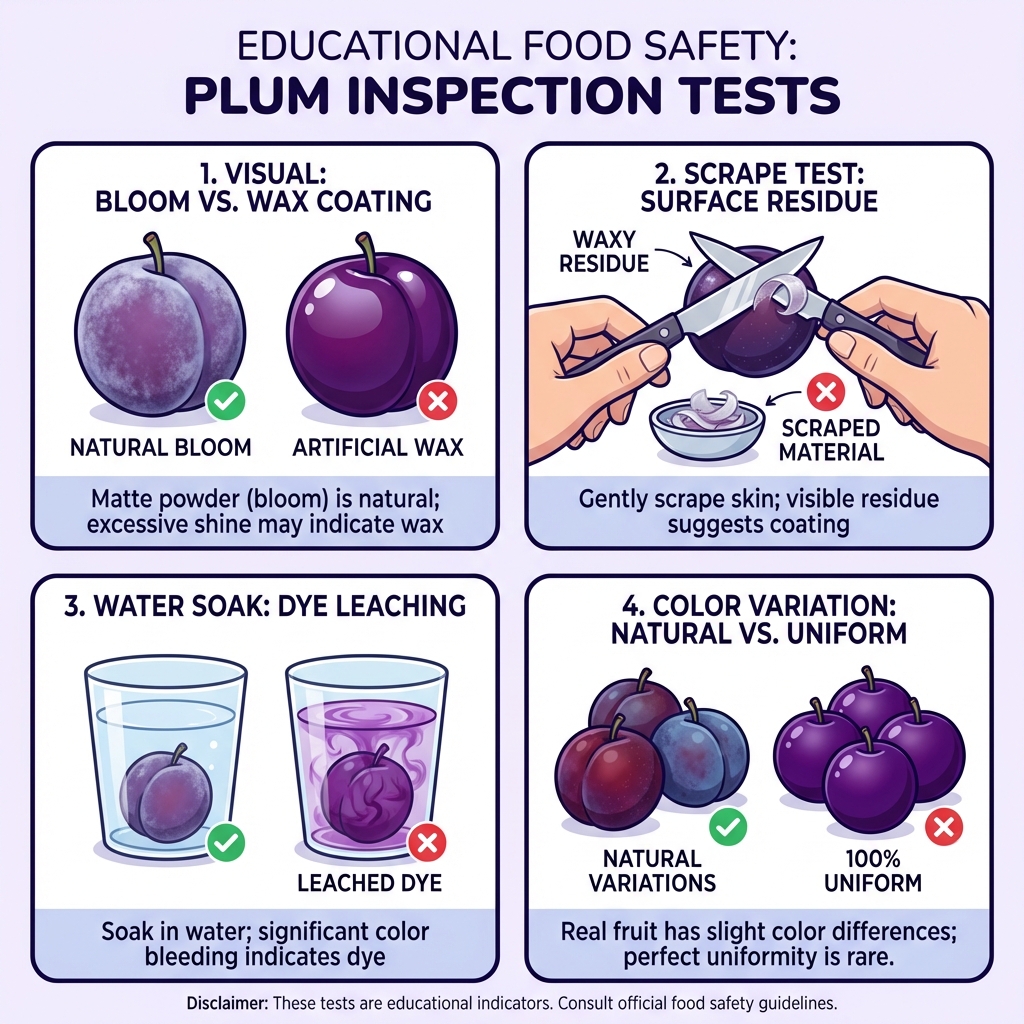
Gently scrape the plum surface with a knife. Natural plums have a thin natural bloom (waxy coating), but if a thick layer of white flaky residue comes off, it indicates artificial wax coating used to prevent moisture loss.
2. The Water Soak Test (Dye Detection):
Soak plums in a glass of water for 20 minutes. If the water develops a purple or red tint, the plums have been artificially colored. Natural plum color stays inside the skin and won't leach significantly.
3. The Texture and Firmness:
Feel the plum. Naturally ripe plums are soft yet firm with a characteristic yielding texture. Artificially ripened plums may be soft on the outside (from ethylene) but have hard, sour flesh near the stone.
4. Visual Uniformity:
Natural plums have color variations - some areas darker purple, some lighter or with reddish tints. If the whole batch is 100% uniform in a very deep, bright purple, be suspicious of dye treatment.
Quick Safety Tips
- Scrape surface for excess wax coating
- Soak in water to check for color leaching
- Natural plums show slight color variations
- Always wash thoroughly with warm water
Chemical Concerns
Step 1: AI Visual Scan
New to BioLens? Try a sample test