
Peaches Safety Inspection
Detect wax coating and artificial color enhancers in peaches
Inspection Guide
Click to enlarge
Peach Quality and Safety Inspection
Peaches are frequently treated with wax to maintain appearance and sprayed with dyes to look more vibrant.
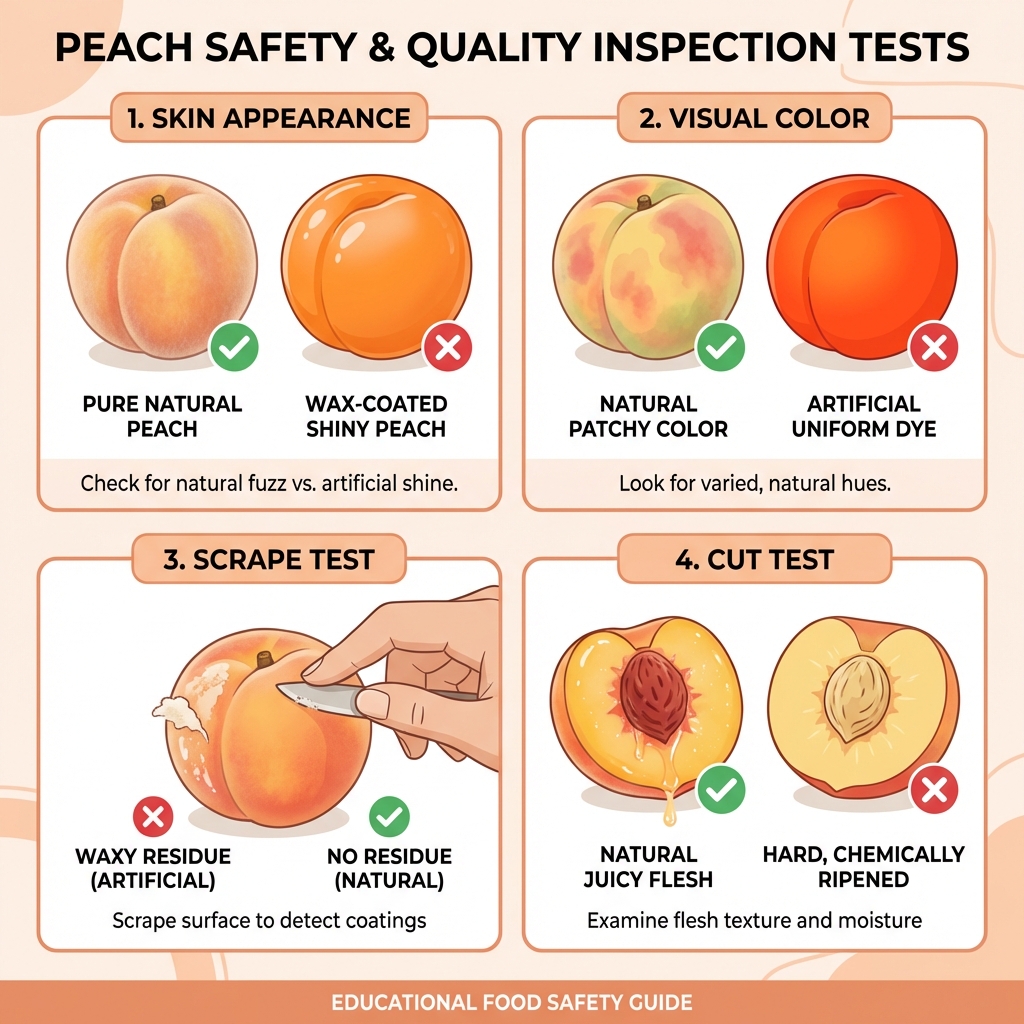
1. The Skin Fuzz Test (Appearance Check):
Natural fresh peaches have a characteristic "fuzzy" or velvety skin. If the peach looks unnaturally glossy, mirror-like, and lacks the typical fuzz, it has been heavily treated with wax.
2. The Scrape Test (Wax Detection):
Gently scrape the surface of the peach with a knife or your fingernail. If a white, waxy residue comes off, it indicates wax treatment. Pure peaches won't have this.
3. The Color Transition Check:
Natural peaches have patchy, varied color with gradual transitions between pink, red, and yellow. Artificially dyed peaches often have uniform bright red/orange color with sharp edges to the color zones or color pooling in skin pores.
4. The Cut Test (Flesh Check):
Cut the peach in half. A naturally ripened peach should be juicy and have consistent flesh color. Chemically ripened peaches may look red on the outside but be hard, dry, and pale near the pit.
Quick Safety Tips
- Check for natural fuzz vs. artificial glossy shine
- Scrape skin to detect waxy residue
- Look for natural patchy color variations
- Wash with warm water and baking soda to remove surface wax
Chemical Concerns
Step 1: AI Visual Scan
New to BioLens? Try a sample test