
Papaya Safety Inspection
Detect carbide/ethylene premature ripening in papayas
Inspection Guide
Click to enlarge
Papaya Ripening Truths
Papayas are delicate and often forced with chemicals to survive transport.
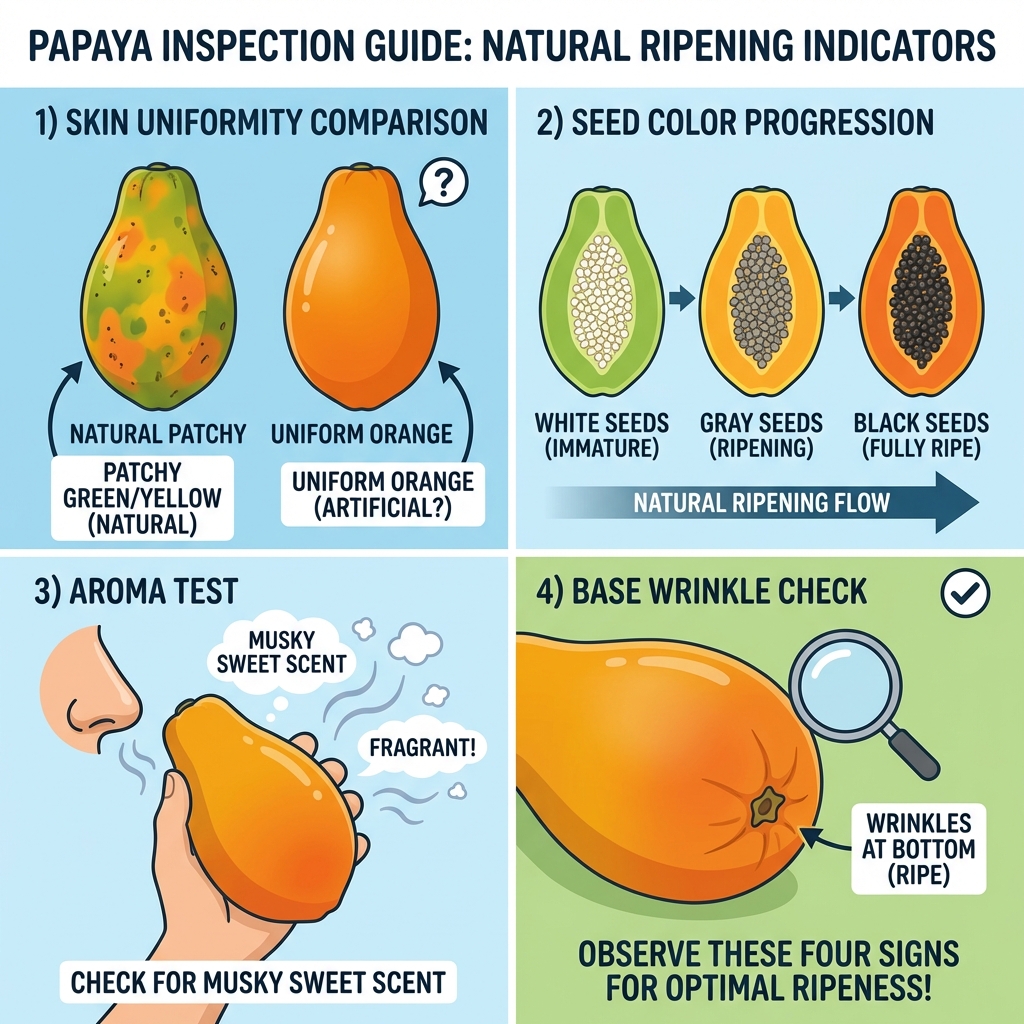
1. Skin Uniformity:
Natural papayas ripen in patches of green and yellow. A 100% uniform orange papaya with a rock-hard texture is a major warning sign.
2. The Seed Color Progression Test:
Cut the papaya and examine the seeds. Natural ripening progression:
• Green skin → White seeds
• Yellow/Orange skin → Light gray seeds
• Fully ripe → Black seeds
If the skin is fully orange but seeds are white, it's artificially ripened.
3. The Scent Test:
A ripe papaya has a musky, sweet fragrance. No scent usually means chemical intervention.
4. The Base (Bottom) Check:
Natural papayas show slight wrinkling at the base as they ripen. Completely smooth, taut skin at the base despite orange color indicates chemical ripening.
Quick Safety Tips
- Check seed color progression
- Look for patchy ripening (green + yellow)
- Smell test - should have musky sweet aroma
- Check base for natural wrinkling
Chemical Concerns
Step 1: AI Visual Scan
New to BioLens? Try a sample test