
Orange Safety Inspection
Detect red dye injection and wax coating in oranges
Inspection Guide
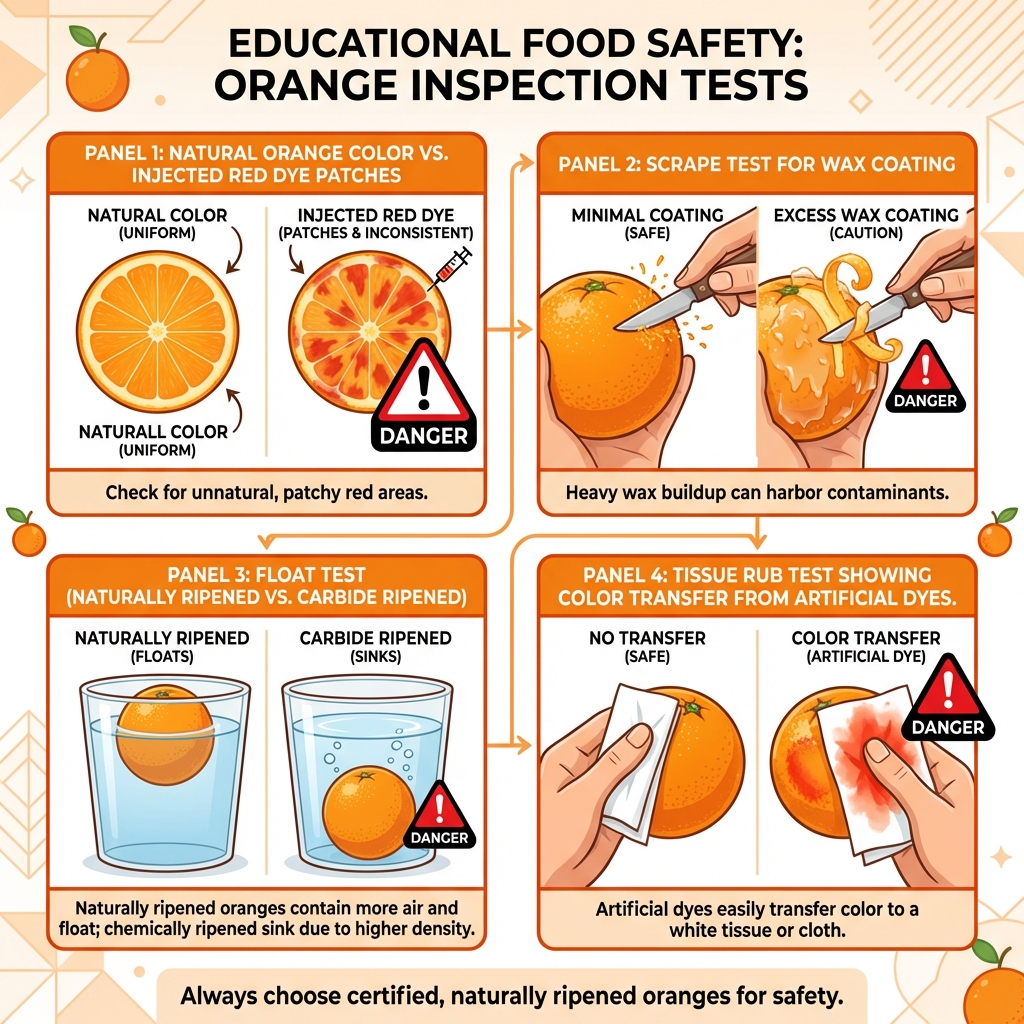
Click to enlarge
Orange Purity & Ripening Inspection
Oranges are often treated with dyes to fix color and coated with wax for a longer shelf life.
1. The Tissue Rub Test (Dye Detection):
Take a white tissue or cotton ball dipped in a bit of vegetable oil or water and rub the orange skin vigorously. If orange/red color transfers to the tissue, it indicates artificial surface coloring.
2. The Visual Color Check:
Look for unnatural color intensity. If an orange has deep red patches or the color seems to be concentrated in the skin pores, it may have been "color-fixed." Natural oranges have a gradual color transition.
3. The Scraping Test:
Use your fingernail to scrape the skin. If white waxy residue collects under your nail, it's wax-coated. Natural oranges have a porous skin that feels slightly oily but not waxy.
4. The Float vs Sink Test:
A naturally ripened, juicy orange is dense and will usually sink or stay mostly submerged. Carbide-ripened or old oranges often contain more air and will float high on the water.
5. The Internal Appearance:
Cut the orange. If the skin is deep orange but the fruit inside is pale or tastes bland, it was harvested early and artificially colored/ripened.
Quick Safety Tips
- Perform the tissue rub test for color dyes
- Check for white waxy residue by scraping the skin
- Naturally ripened oranges are usually heavier/denser
- Always wash thoroughly before peeling
Chemical Concerns
Step 1: AI Visual Scan
New to BioLens? Try a sample test