
Olive Oil Safety Inspection
Detect seed oil mixing and refinement chemicals in Olive Oil
Inspection Guide
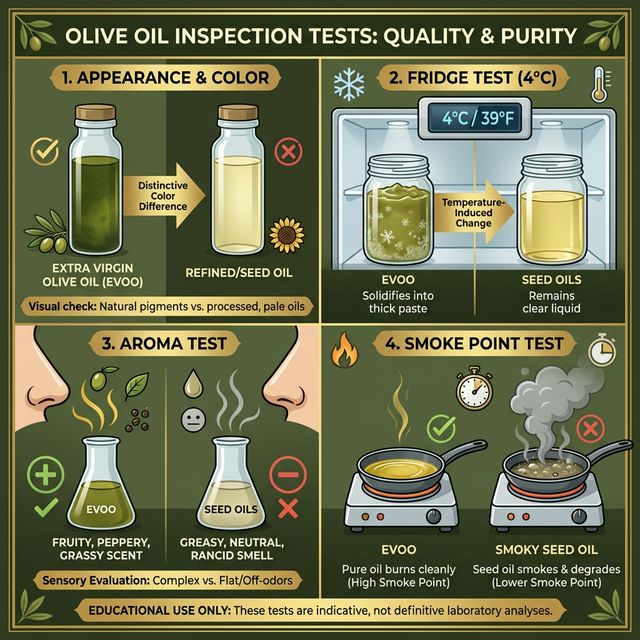
Click to enlarge
Olive Oil Purity Inspection
Olive oil, especially Extra Virgin (EVOO), is one of the most adulterated foods, often mixed with cheap seed oils and colored with artificial chlorophyll.
1. The Refrigerator Test:
Extra Virgin Olive Oil is high in monounsaturated fats and will turn cloudy and thicken/solidify in the refrigerator (4°C) after 24 hours. Cheap seed oils (sunflower, corn, canola) will remain completely liquid. If your oil doesn't solidify, it's likely a mix.
2. The Smell & Taste Test:
Pure EVOO should smell like olives (fruity) and have a distinct peppery finish that may make you cough. If it smells like nothing, or like old vegetable oil, or is greasy without any "kick", it's likely adulterated or refined.
3. The Lamp Test:
Pure EVOO contains enough oil to keep a wick burning without smoke. Lower-grade seed oil mixes will often produce more smoke or fail to maintain a steady flame.
4. The Color Trap:
Don't trust color alone. Green doesn't mean pure; many adulterated oils use added chlorophyll to mimic the look of premium oil. Focus on the taste and the fridge test.
Quick Safety Tips
- Look for Harvest Dates, not just Expiry Dates
- Check for PDO/PGI certifications (protected origin)
- Perform the 24-hour refrigerator solidification test
- Trust the "cough-inducing" peppery back-of-throat hit
Chemical Concerns
Step 1: AI Visual Scan
New to BioLens? Try a sample test