
Okra (Ladies Finger) Safety Inspection
Detect glycerine coating for fresh appearance in okra
Inspection Guide
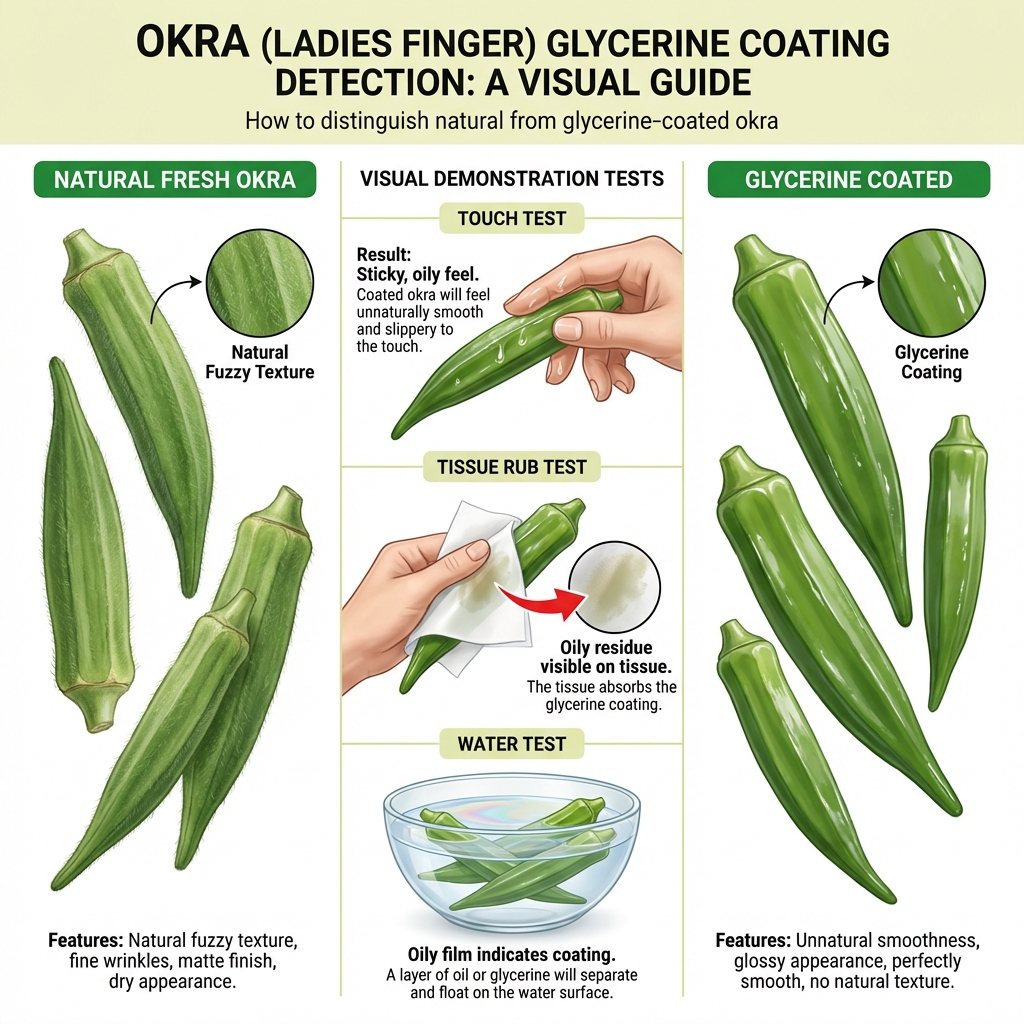
Click to enlarge
Okra Freshness Coating Detection
Ladies finger (okra) wilts and dries out quickly. To maintain a fresh appearance for days, vendors often coat them with glycerine or oil-based solutions.
1. The Touch Test:
Natural fresh okra has a slightly fuzzy, dry texture. If the okra feels unnaturally smooth, slippery, sticky, or oily to touch, it's been coated with glycerine or oil.
2. The Wash Water Test:
Place the okra in a bowl of plain water and swish them around for 1-2 minutes. If you see an oily film forming on the water surface or the water feels slippery, it indicates coating treatment.
3. The Tissue Rub Test:
Take a dry tissue or paper and rub the okra lengthwise. If the tissue picks up an oily residue or becomes translucent (like blotting paper absorbing oil), the okra is coated.
4. The Wrinkle Check:
Natural fresh okra has very slight, fine wrinkles and natural texture. Glycerine-coated okra looks perfectly smooth, shiny, and has no natural wrinkles - it looks "too perfect."
5. The Snap Test:
Fresh natural okra snaps cleanly when bent. Old okra treated with glycerine will bend without snapping (rubbery) or will snap but feel slimy inside.
Quick Safety Tips
- Check for sticky, oily, or slippery feel
- Wash water test for oily film
- Natural okra has slight fuzz and wrinkles
- Always wash thoroughly with warm water before cooking
Chemical Concerns
Step 1: AI Visual Scan
New to BioLens? Try a sample test