
Lychee Safety Inspection
Detect artificial colors, sulfur treatments, and growth chemicals in Lychees
Inspection Guide
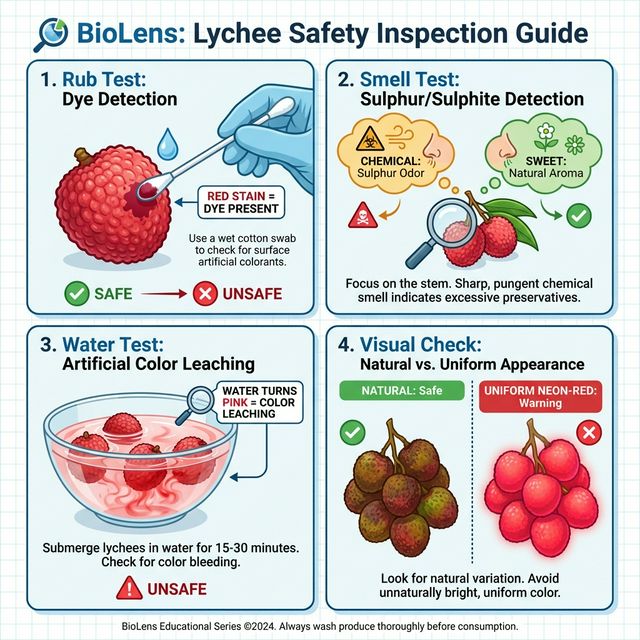
Click to enlarge
Lychee Purity Inspection Guide
Lychees are often treated with dyes or sulfur to maintain their bright red appearance.
1. The Dye Rub Test: Use a wet white tissue or cotton ball to rub the surface of a bright red lychee. If pink/red color transfers, it is artificially dyed with Rhodamine B.
2. Water Bleed Test: Soak lychees in a bowl of water for 5 minutes. If the water turns pinkish or reddish, the fruit has been colored.
3. Aroma Check: Smell the fruit. A natural sweet scent is safe. A pungent, sulfurous, or chemical smell indicates sulfur dioxide treatment or chemical ripening.
4. Skin Texture: Natural lychees are bumpy and slightly rough. An unnaturally glossy, oily, or waxy coating may indicate a chemical wash to prevent dehydration.
Quick Safety Tips
- Rub with wet cotton to check for artificial dyes
- Soak in water - check for color leaching
- Avoid unnaturally bright, neon-red fruits
- Reject fruits with a chemical or sulfurous odor
What CANNOT be Verified (Lab-Only)
Invisible Risks (Lab-Only):
* Pesticide Residue: Modern pesticides used in lychee orchards can only be detected via GC-MS or HPLC analysis.
* Sulfur Dioxide Levels: While high levels are detectable by smell, low residual amounts require specialized chemical titrations.
Chemical Concerns
Step 1: AI Visual Scan
New to BioLens? Try a sample test