
Lemon / Lime Safety Inspection
Detect wax coating and color dyes in lemons and limes
Inspection Guide
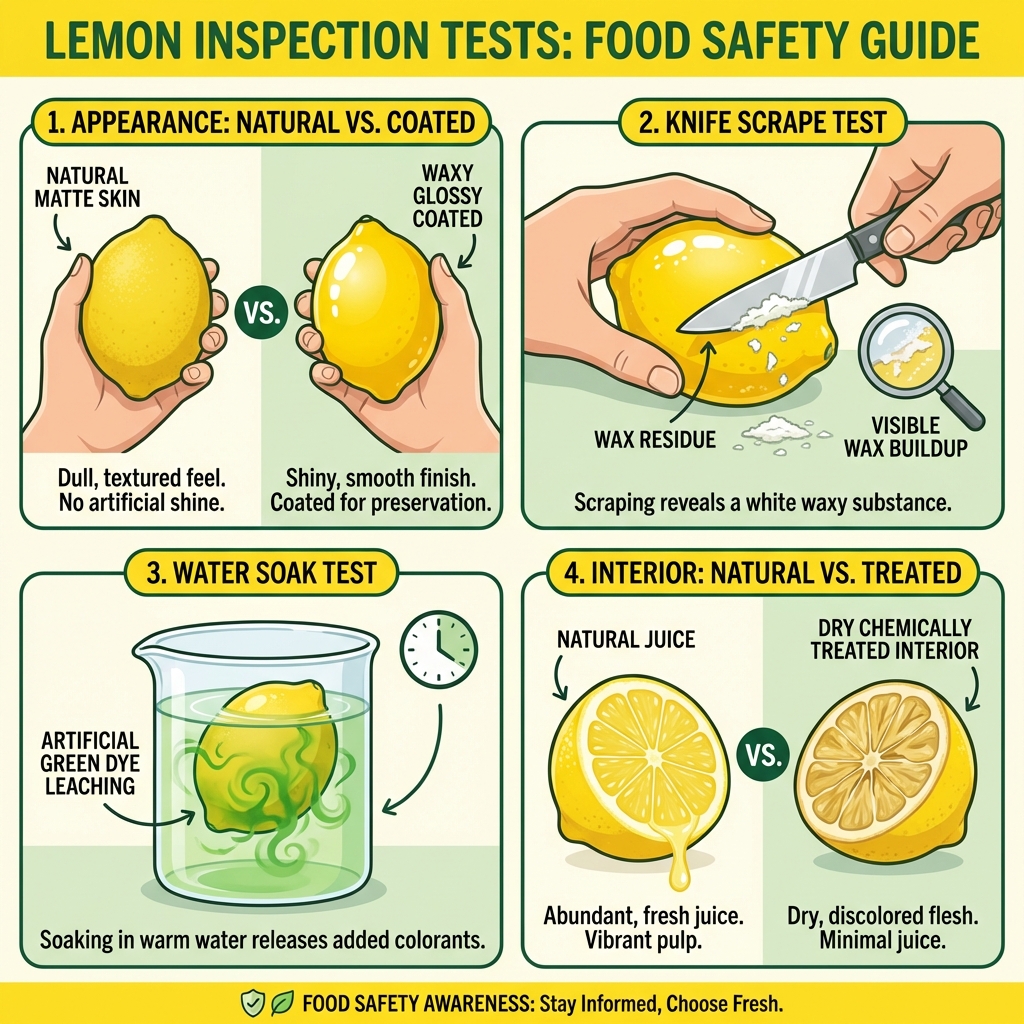
Click to enlarge
Lemon and Lime Safety Inspection
Lemons and limes are often coated with wax for shine and sometimes dyed to appear fresher (green for limes, bright yellow for lemons).
1. The Scrape Test (Wax Detection):
Gently scrape the surface of the lemon with a knife. If a white, flaky substance comes off, it's a wax coating. Natural lemons have a slight natural oil but don't produce white flakes when scraped.
2. The Water Soak Test (Dye Detection):
Soak the lemon/lime in warm water for 15-20 minutes. If the water turns greenish or yellowish, artificial dyes have been used. This is common for limes to maintain their "fresh green" look.
3. The Texture and Shine Check:
Natural lemons have a slightly pitted, matte texture (like skin pores). Wax-coated lemons look unnaturally smooth and have a glossy reflection.
4. The Interior Freshness Check:
Cut the lemon. A natural lemon should be juicy and have a vibrant aroma. If the inside looks dry, brownish, or has a chemical smell despite a "perfect" outside, it has been over-preserved with chemicals.
5. The Skin Color Consistency:
Look for unnaturally uniform color. Natural lemons often have slight green tinges or small freckles. Perfectly uniform "highlighter yellow" lemons are often dye-treated.
Quick Safety Tips
- Perform scrape test to detect waxy coating
- Soak in warm water with baking soda to remove surface chemicals
- Natural lemons are rarely "perfectly" uniform in color
- Avoid lemons that feel unnaturally hard or light
Chemical Concerns
Step 1: AI Visual Scan
New to BioLens? Try a sample test