
Khoya (Mawa) Safety Inspection
Detect starch and fine paper adulteration in Khoya
Inspection Guide
Click to enlarge
Khoya (Mawa) Purity and Safety Check
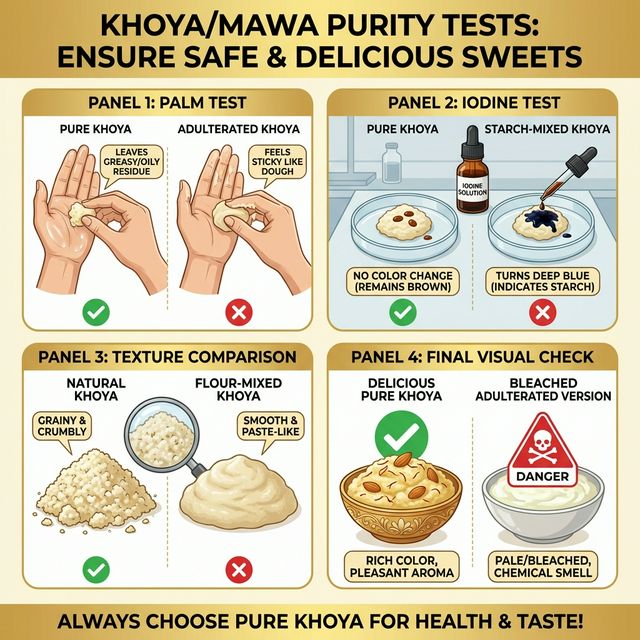
Khoya, common in Indian sweets, is often adulterated with starch, flour, and even fine paper to increase bulk.
1. The Palm Rub Test (Ghee Check):
Rub a small amount of khoya on your palm for 1-2 minutes. Pure khoya will release natural ghee and leave your palm greasy/oily with a pleasant aroma. Adulterated khoya feels sticky or dry and may leave a powdery residue.
2. The Iodine Test (Starch Detection):
Boil a small piece of khoya in water, cool it, and add iodine. A blue color indicates starch or flour.
3. The Texture and Taste:
Taste a small amount. Pure khoya has a natural mild sweetness and a granular texture. Adulterated khoya may taste flat, have a chemical aftertaste, or feel very smooth/sticky (paper/flour).
Quick Safety Tips
- Pure khoya leaves your palm oily when rubbed
- Check for natural granular texture
- Iodine test for starch/flour/paper detection
- Avoid khoya with an unnaturally long shelf life
Chemical Concerns
Step 1: AI Visual Scan
New to BioLens? Try a sample test