
Jackfruit Safety Inspection
Detect calcium carbide and artificial ripening agents in jackfruit
Inspection Guide
Click to enlarge
Jackfruit Artificial Ripening Detection
Jackfruit is sometimes artificially ripened with calcium carbide to accelerate the ripening process, especially for commercial distribution.
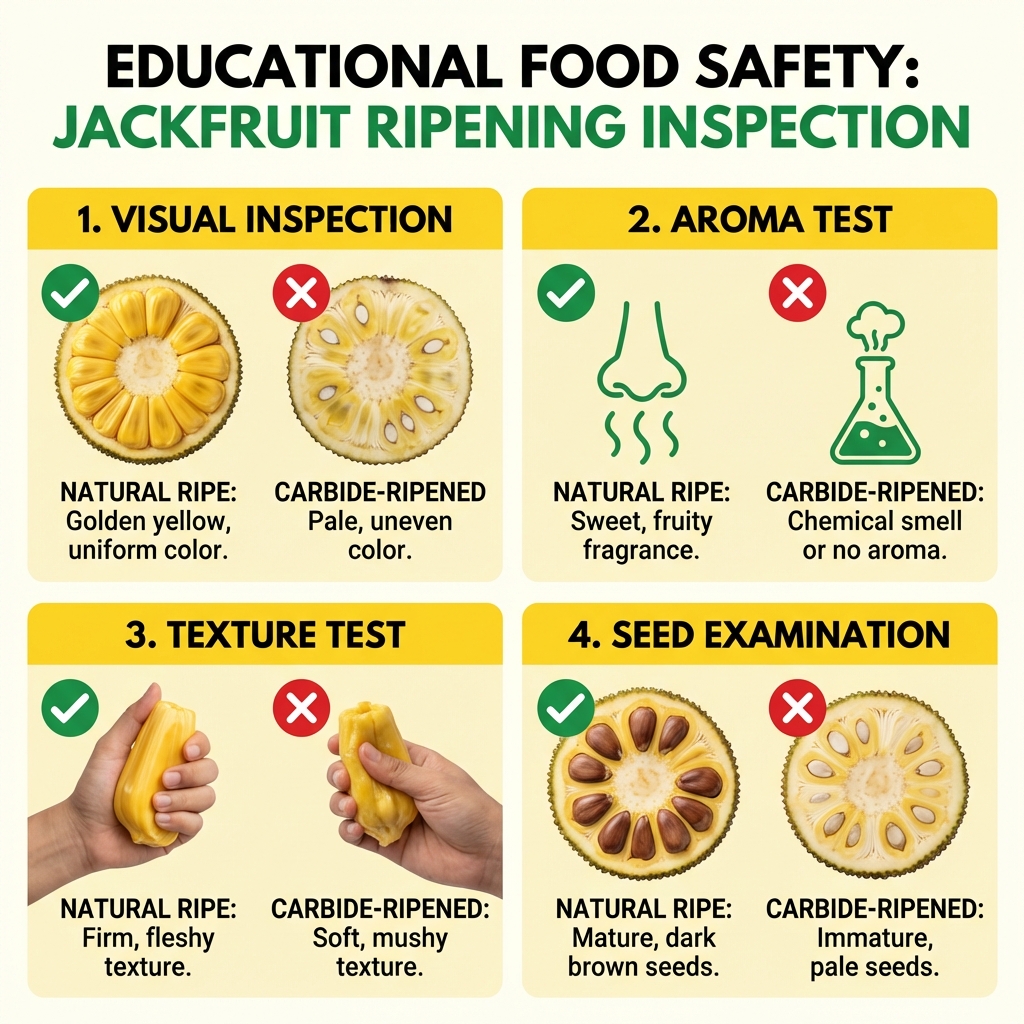
1. The Color Test (Visual Inspection):
Cut open the jackfruit and examine the pods. Naturally ripened jackfruit has deep golden yellow to orange-yellow pods with uniform color throughout each pod. Carbide-ripened jackfruit has pale yellow, uneven color - some parts darker, some lighter within the same pod, or overall washed-out yellow appearance.
2. The Aroma Test (Most Distinctive):
Natural ripe jackfruit has an unmistakably strong, sweet, fruity fragrance that fills the room. This aroma is characteristic and very pleasant. Carbide-ripened jackfruit has weak or no aroma, or may have a chemical smell. If you don't smell the strong sweet jackfruit fragrance, it's likely chemically ripened.
3. The Texture Test:
Feel and press the pods. Natural ripe jackfruit pods are firm yet fleshy and juicy - they have substance and aren't mushy. Chemically ripened pods are soft, mushy, or watery. They lack the characteristic firm-fleshy texture and may fall apart easily.
4. The Seed Examination:
Look at the seeds inside the pods. Naturally ripened jackfruit has mature, dark brown seeds that are fully developed. Carbide-ripened fruit has pale, immature seeds (whitish to light brown) because the ripening was forced before the seeds matured naturally.
5. The Taste Test:
Natural jackfruit is intensely sweet with complex fruity flavor. Chemical ripening produces fruit that's bland, has weak sweetness, or tastes "off" - not the characteristic rich jackfruit flavor.
Quick Safety Tips
- Strong sweet aroma is key indicator of natural ripening
- Pale yellow color and weak smell = carbide treatment
- Seeds should be dark brown, not pale
- Natural pods are firm-fleshy, not mushy
Chemical Concerns
Step 1: AI Visual Scan
New to BioLens? Try a sample test