
Ivy Gourd (Tindora) Safety Inspection
Detect Malachite Green dye and over-ripeness in Ivy Gourd
Inspection Guide
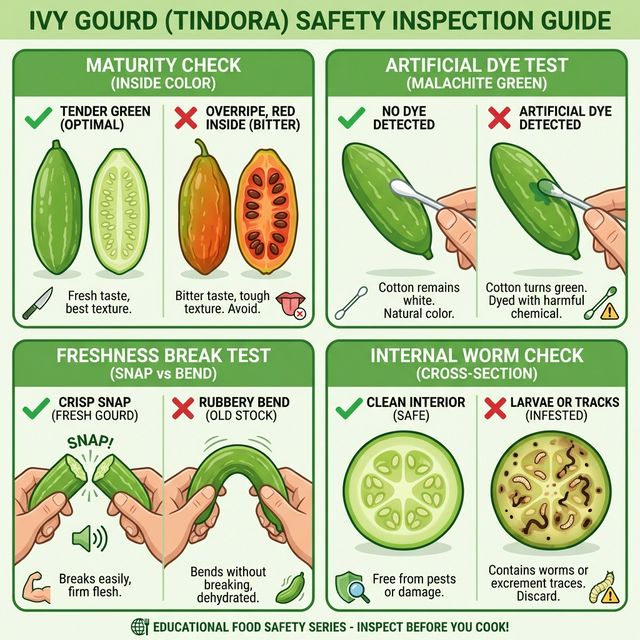
Click to enlarge
How to Inspect Ivy Gourd (Tindora)
Ivy Gourd (Tindora) is frequently dipped in Malachite Green to look fresh. Also, overripe gourds (seeds turned red) are less nutritious and have a different texture.
1. The Wet Cotton Test:
Rub the Tindora surface with a cotton ball soaked in water or oil. If the cotton turns green, it indicates Malachite Green dye. Natural Tindora shouldn't leave color.
2. The Snap Test:
Try to snap a Tindora in half. Fresh, tender ones snap cleanly. If it's rubbery and bends without snapping, it's old and likely chemically treated to look green.
3. The Interior Check:
Cut a few Tindora. They should be white/pale green inside with small tender seeds. If they are red/orange inside, they are overripe and may have a sour taste.
4. Visual Uniformity:
Look for unnatural uniform greenness. Natural Tindora has slight stripes or variation. A fluorescent, perfect green is a dye indicator.
Quick Safety Tips
- Perform rub test for green dyes
- Check for clean snap (not rubbery)
- Discard if inside is bright red/orange
- Soak in salt water for 20 minutes before use
Chemical Concerns
Step 1: AI Visual Scan
New to BioLens? Try a sample test