
Ice Cream Safety Inspection
Detect detergents and frothing agents in Ice Cream
Inspection Guide
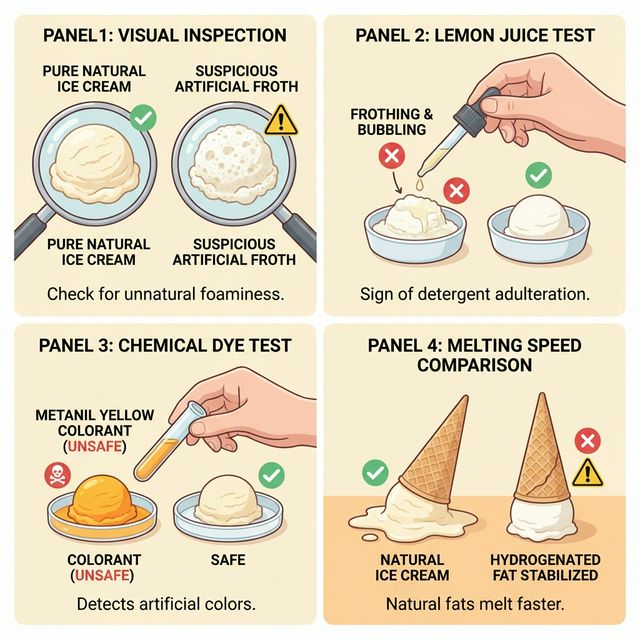
Click to enlarge
Ice Cream Safety & Purity Check
Ice cream can be adulterated with detergents and ethyl acetate to create an unnaturally smooth, frothy texture that feels "premium."
1. The Lemon Juice Test:
Squeeze 3-4 drops of lemon juice onto a spoonful of melting ice cream. If it starts to foam, bubble, or release tiny gas pockets, it contains detergents or washing powder. Pure ice cream will simply curdle or thin out without bubbling.
2. The Melt Profile:
Natural dairy ice cream melts into a liquid that resembles heavy cream. If your ice cream retains a "foamy" or "spongy" structure even after melting at room temperature, it likely contains excessive stabilizers or frothing chemicals.
3. The Taste Film:
Naturally made ice cream should melt clean on the tongue. If you detect a waxy or "soapy" film on the roof of your mouth after eating, it indicates the presence of detergents or low-grade hydrogenated fats.
4. Rapid Texture Verification:
Avoid ice cream that feels "too light" or "airy" for its volume, as this often indicates excessive air whipped in using chemical surfactants.
Quick Safety Tips
- Perform the lemon juice test - bubble/foam = detergent
- Check the melt profile - should turn into smooth liquid cream
- Avoid ice cream that leaves a soapy residue in the mouth
- Be wary of extremely vivid "neon" colored ice creams
Multilingual Local Names
Hindiआइसक्रीम (Ice Cream)
Tamilஐஸ்கிரீம் (Ice Cream)
Teluguఐస్ క్రీం (Ice Cream)
Kannadaಐಸ್ ಕ್ರೀಮ್ (Ice Cream)
Malayalamഐസ്ക്രീം (Ice Cream)
Bengaliআইসক্রিম (Ice Cream)
Gujaratiઆઈસ્ક્રીમ (Ice Cream)
Marathiआईस्क्रीम (Ice Cream)
FrenchCrème glacée
ItalianGelato
RussianМороженое
SpanishHelado
GermanSpeiseeis
Chinese冰淇淋
Japaneseアイスクリーム
Chemical Concerns
Step 1: AI Visual Scan
New to BioLens? Try a sample test