
Guava Safety Inspection
Detect calcium carbide artificial ripening in guavas
Inspection Guide
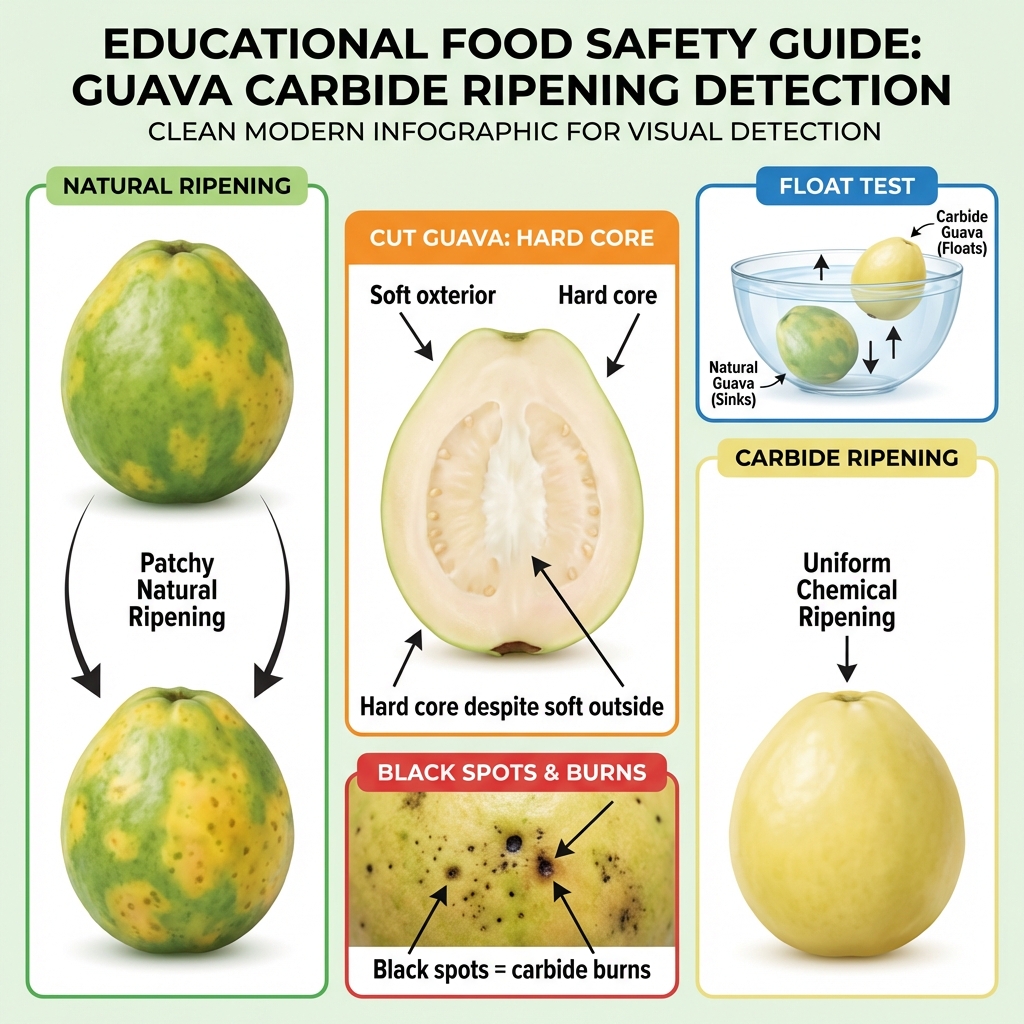
Click to enlarge
Guava Artificial Ripening Detection
Guavas are commonly ripened using Calcium Carbide in India, the same chemical used for mangoes. This is extremely harmful as carbide contains arsenic and phosphorus.
1. The Color Uniformity Test:
Natural guavas ripen in patches - you'll see green, light yellow, and deeper yellow areas on the same fruit as it ripens gradually. If the guava is uniformly pale yellow all over with no variation, it's carbide-ripened.
2. The Float Test:
Fill a bowl with water and gently place the guava in it. Naturally ripened guavas typically sink or stay submerged due to higher sugar density. Carbide-ripened guavas often float.
3. The Core Check (Cut Test):
Cut the guava in half. Natural guavas have a soft, pink/white interior when ripe, and the color extends evenly. Carbide-ripened guavas are soft on the outside but have a hard, unripe core in the center. The flesh also looks pale white instead of pink.
4. The Aroma Test:
Ripe natural guavas have an intense, distinctive sweet-musky fragrance that fills the room. Carbide-ripened guavas have very faint aroma or a slightly chemical smell, even when soft to touch.
5. The Black Spot Check:
Look for small black spots or patches on the skin. These often appear where carbide has chemically burned the fruit. Natural guavas develop brown spots from natural aging, not black chemical burns.
Quick Safety Tips
- Check for patchy color (green + yellow = natural)
- Perform float test - natural guavas sink
- Strong sweet-musky aroma indicates natural ripening
- Black spots indicate chemical burns from carbide
Chemical Concerns
Step 1: AI Visual Scan
New to BioLens? Try a sample test