
Ground nut (Peanuts) Safety Inspection
Detect Aflatoxin mold and mineral oil coating in groundnuts
Inspection Guide
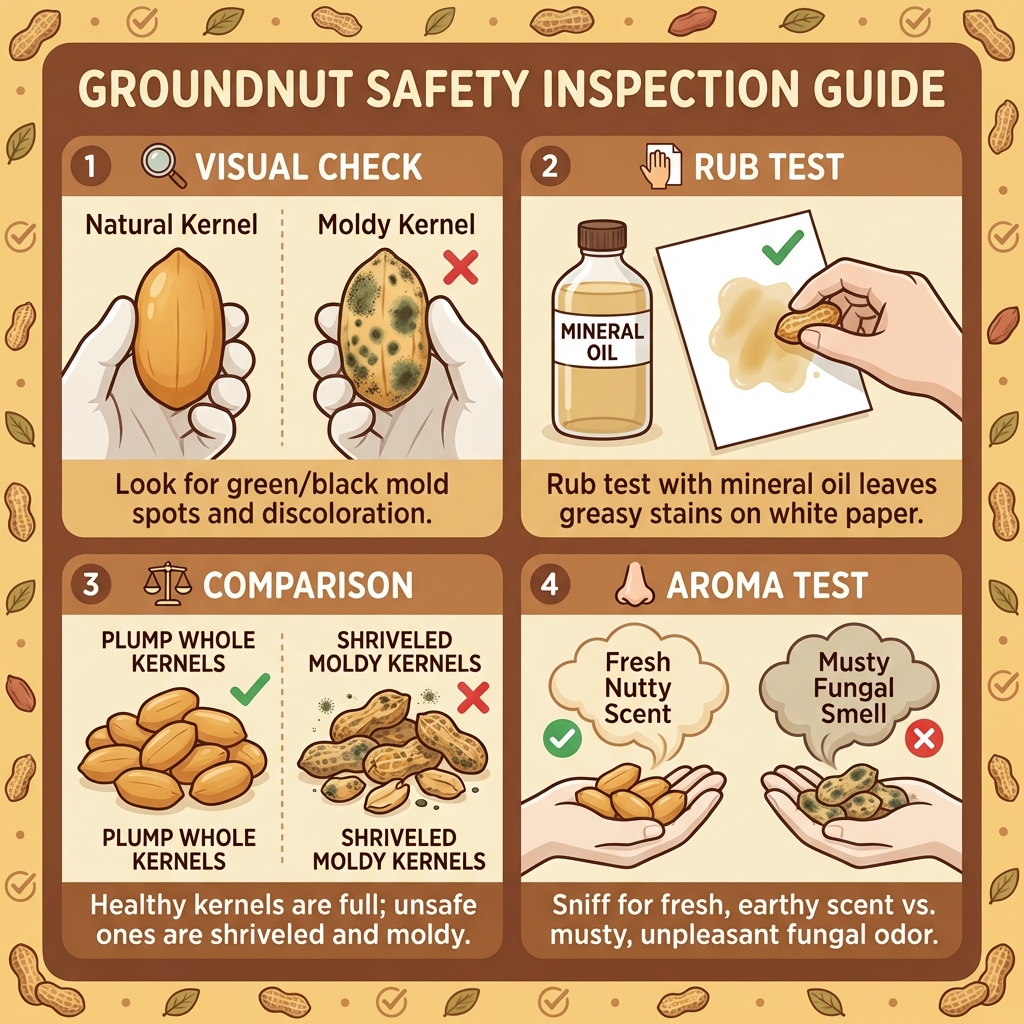
Click to enlarge
Ground nut Safety Inspection
Groundnuts (Peanuts) can contain highly toxic Aflatoxin mold or be coated with mineral oil to appear fresh and shiny.
1. The Visual Mold Check:
Examine the kernels carefully. If you see any greenish, blackish, or grayish mold growth, especially in the crevices of the kernel, discard the inner batch. Aflatoxin-producing mold (Aspergillus) is invisible in small amounts but often visible in heavily contaminated nuts.
2. The Mineral Oil Test (Rub Test):
Rub a few groundnut kernels between your palms or on a clean white paper. If the kernels leave a greasy, oily stain on the paper that has a chemical smell (not like peanut oil), it's likely coated with mineral oil to increase shine.
3. The Taste and Aroma Test:
Smell the kernels. Natural groundnuts have a pleasant, nutty aroma. Rancid or moldy nuts smell musty or "off." Taste a small piece - if it's bitter or has a sour aftertaste, it may contain high levels of Aflatoxin or be rancid.
4. The Kernel Integrity Check:
Choose kernels that are whole and plump. Shriveled, discolored, or damaged kernels are much more likely to contain Aflatoxin mold growth inside.
Quick Safety Tips
- Discard kernels with visible mold (green/black)
- Avoid shriveled or discolored kernels
- Rub kernels to check for greasy mineral oil coating
- Musty smell indicates toxic fungal growth
Chemical Concerns
Step 1: AI Visual Scan
New to BioLens? Try a sample test