
Grapes Safety Inspection
Detect Ethrel/Ethephon spray for uniform ripening in grapes
Inspection Guide
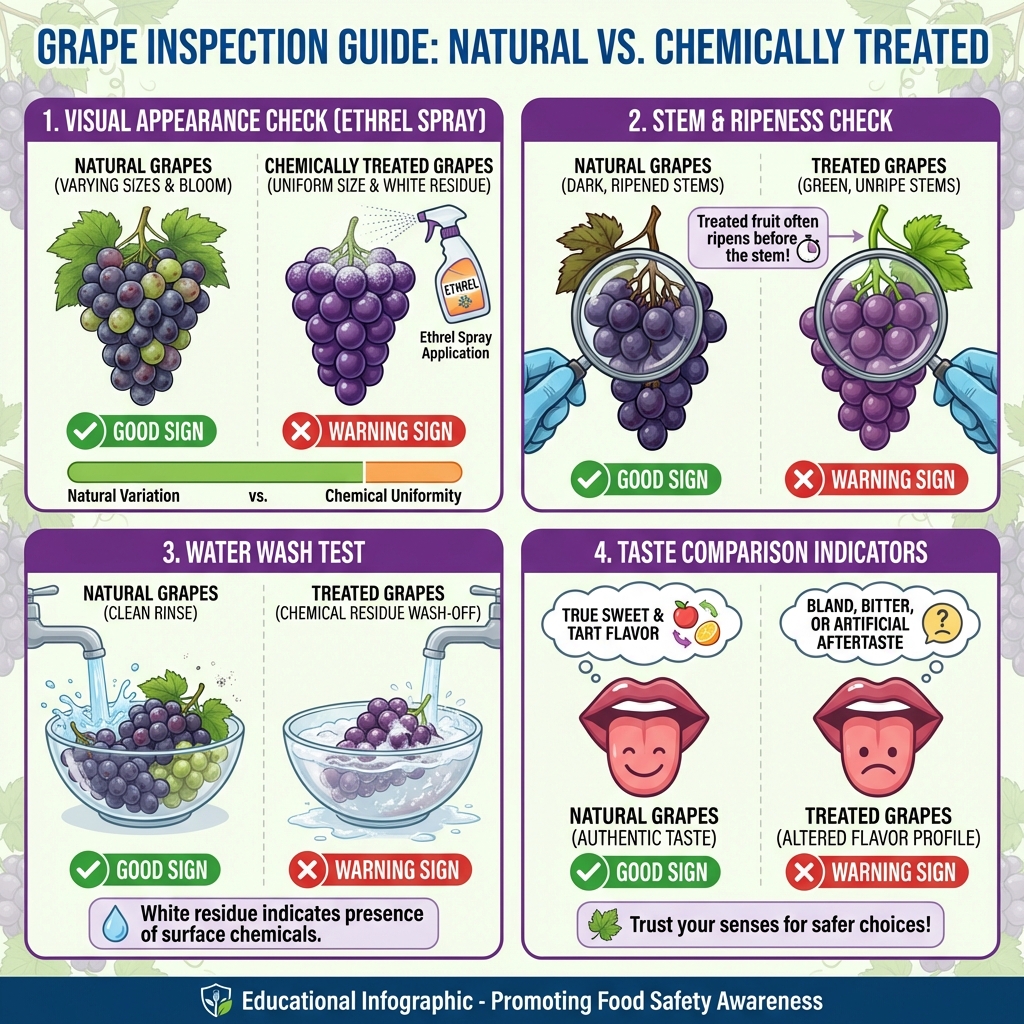
Click to enlarge
Grape Chemical Treatment Detection
Grapes are commonly treated with Ethrel/Ethephon spray for uniform ripening and color enhancement.
1. The White Residue Check:
Examine the grape surface and stems carefully. If you see white powdery residue on the grapes or stems, it indicates Ethrel spray treatment. Natural grapes have a thin natural bloom (waxy coating) but no white powder.
2. The Stem Color Test:
This is a critical indicator. Natural grapes ripen gradually - when the fruit is ripe, the stems should also turn brown/dark. If the grapes are fully ripe (dark purple/red) but the stems are still bright green, it's a clear sign of chemical treatment.
3. The Wash Test:
Wash the grapes under water and observe the runoff. If white or yellowish residue washes off easily, creating a cloudy wash water, it indicates chemical coating. Natural grapes' bloom doesn't wash off this easily.
4. The Size and Shape Uniformity:
Chemically treated grapes often have abnormally uniform size - every grape looks identical. Natural grape bunches have size variations with some smaller and some larger grapes.
5. The Taste Test:
Natural ripe grapes are sweet and tart with authentic grape flavor. Chemically ripened grapes often taste bland, bitter, or have an artificial aftertaste despite looking ripe.
Quick Safety Tips
- Check for white powdery residue on surface
- Green stems with ripe fruit = chemical treatment
- Always wash thoroughly under running water
- Natural grapes have size variations in bunch
Chemical Concerns
Step 1: AI Visual Scan
New to BioLens? Try a sample test