
Gooseberry (Amla) Safety Inspection
Detect Malachite Green dye and chemical whitening in Amla
Inspection Guide
Click to enlarge
Gooseberry (Amla) Purity Check
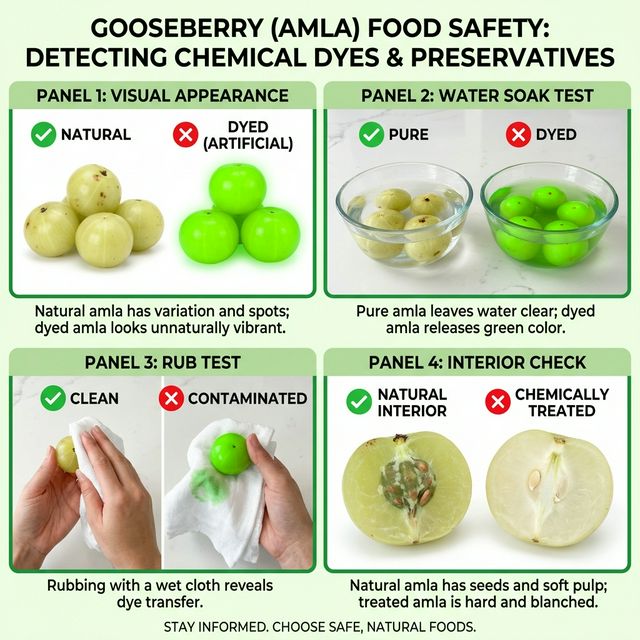
Amla is often treated with Malachite Green dye to look vibrant green or bleached with sulphur to appear whiter when dried.
1. The Rub Test (Dye Detection):
Take an amla and rub it vigorously with a wet white cloth or piece of cotton soaked in liquid paraffin. If the cloth turns green, it indicates the presence of Malachite Green, a toxic carcinogenic dye used to hide aging.
2. The Water Color Test:
Soak the gooseberries in a bowl of water for 30 minutes. If the water gets a green tint, it's a sign of artificial coloring. Natural amla will not color the water.
3. The Dried Amla Check:
If buying dried amla, natural ones are dark brown or blackish. If they are unnaturally light or white, they have likely been bleached with Sulphur Dioxide, which can cause respiratory issues.
4. The Texture & Aroma Check:
Natural amla is firm and has a characteristic astringent earthy aroma. If it feels mushy or has a chemical/metallic smell, avoid it. Bruises are natural and often a sign of fewer chemicals.
Quick Safety Tips
- Perform the wet cloth rub test for Malachite Green
- Natural amla is pale green/yellowish, not neon green
- Avoid unnaturally white dried amla
- Soak in warm salt water for 20 mins to remove residues
Chemical Concerns
Step 1: AI Visual Scan
New to BioLens? Try a sample test