
Ghee (Clarified Butter) Safety Inspection
Detect Vanaspati, starch, and coal tar dyes in Ghee
Inspection Guide
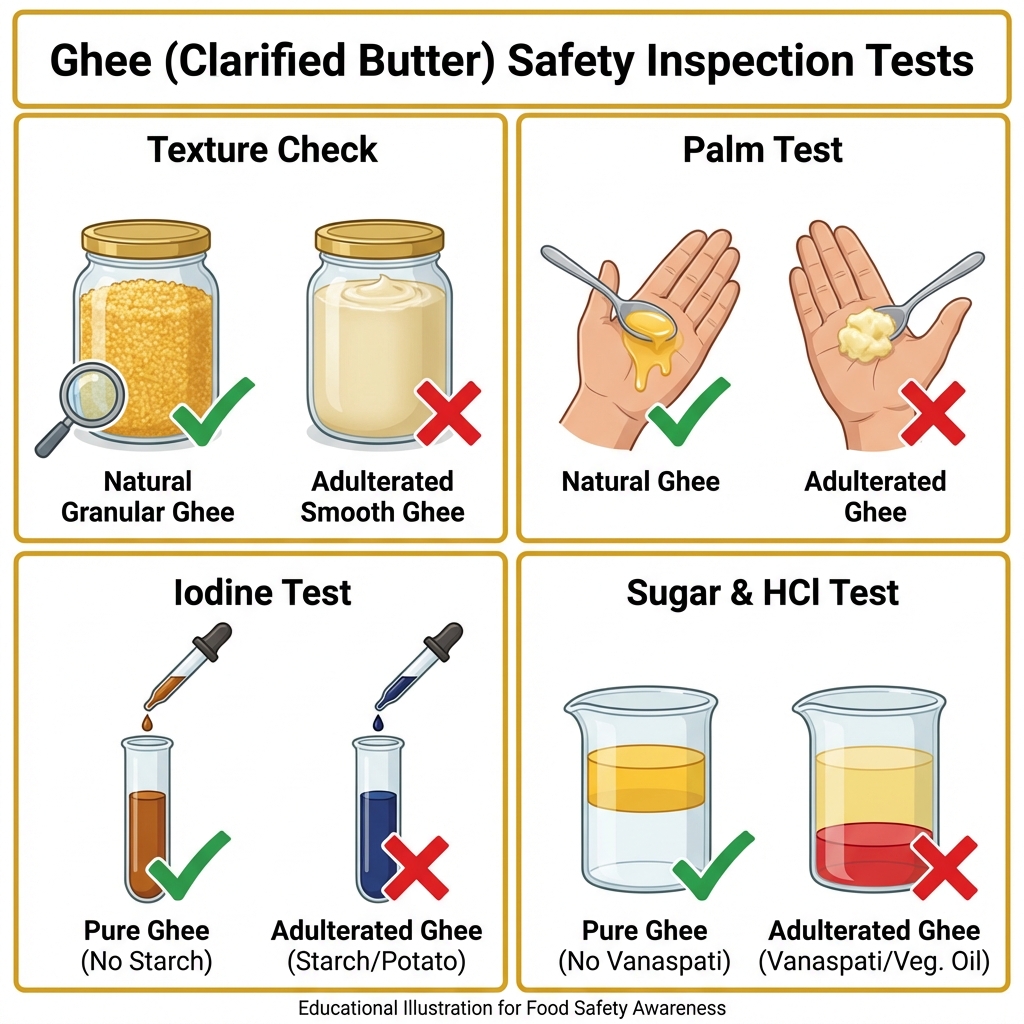
Click to enlarge
Ghee (Clarified Butter) Purity Detection
Ghee is frequently adulterated with Vanaspati (vegetable oil), starch (potatoes), and toxic coal tar dyes for color.
1. The Palm Test (Melting Point):
Put a small amount of ghee on your palm. Pure ghee melts instantly at body temperature. If it takes time to melt or remains solid on your palm, it contains Vanaspati or other fats.
2. The Texture Check:
Pure ghee has a characteristic "granular" (daanedaar) texture when it solidifies. Adulterated ghee often feels smooth, pasty, or wax-like without the natural granules.
3. The Iodine Test (Starch Detection):
Melt a bit of ghee and add a drop of iodine solution. If it turns blue-black, it indicates the presence of starch (added potatoes or flour). Pure ghee will stay brown/yellow.
4. The Sugar and HCl Test (Vanaspati Detection):
Mix a spoonful of ghee with a bit of sugar and 10ml of HCl (Hydrochloric acid). Shake well and wait. If a red color appears in the lower layer, it indicates the presence of Vanaspati (sesame oil mixed in Vanaspati reacts).
Quick Safety Tips
- Pure ghee melts instantly on your palm
- Check for natural granular texture
- Perform iodine test for starch detection
- Avoid ghee with unnatural bright yellow color
Chemical Concerns
Step 1: AI Visual Scan
New to BioLens? Try a sample test