
Fig (Anjeer) Safety Inspection
Detect sulfites, mold, and insect infestation in dried Figs
Inspection Guide
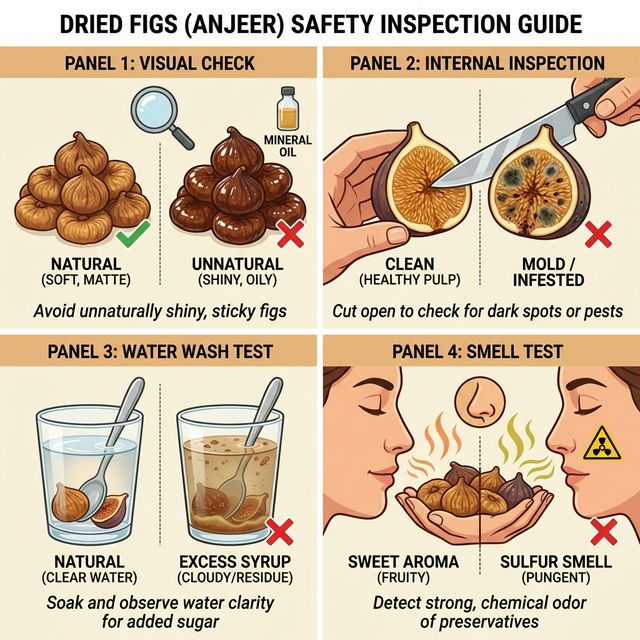
Click to enlarge
Dried Fig (Anjeer) Safety Audit
Dried figs are highly susceptible to mold and insect infestation, often hidden behind heavy sulfur treatments to preserve color.
1. The Internal Inspection:
Always break open a dried fig before eating. Look for white, fuzzy mold growth or tiny insects/mites deep inside the fruit. Natural figs should be clean inside.
2. The Sulfite Warning:
If a dried fig looks exceptionally bright orange or golden-yellow, it has been treated with Sulfur Dioxide. Natural dried figs turn dark brown or even blackish as the sugars oxidize.
3. The Smell Profile:
Natural dried figs have a sweet, fruity, honey-like aroma. If they smell sharp, acidic, or like "burnt matches," it indicates excessive sulfur preservatives.
4. The Texture Test:
Pure figs should be soft and pliable. If the skin is extremely tough or has a "chemical" gloss, avoid it.
Quick Safety Tips
- Always rip open and check for internal mold/insects
- Natural dried figs are dark brown, not bright yellow
- Avoid figs with a sharp, matchstick-like sulfur smell
- Wash or soak briefly to remove surface sulfites
Multilingual Local Names
Hindiअंजीर (Anjeer)
Tamilஅத்திப்பழம் (Athipazham)
Teluguఅంజీర పండు (Anjeera pandu)
Kannadaಅಂಜೂರ (Anjoora)
Malayalamഅത്തിപ്പഴം (Athippazham)
Bengaliডুমুর (Dumur)
Gujaratiઅંજીર (Anjeer)
Marathiअंजीर (Anjeer)
FrenchFigue
ItalianFico
RussianИнжир
SpanishHigo
GermanFeige
Chinese无花果
Japaneseイチジク
Chemical Concerns
Step 1: AI Visual Scan
New to BioLens? Try a sample test