
Cucumber Safety Inspection
Detect wax coating and pesticide residues in cucumbers
Inspection Guide
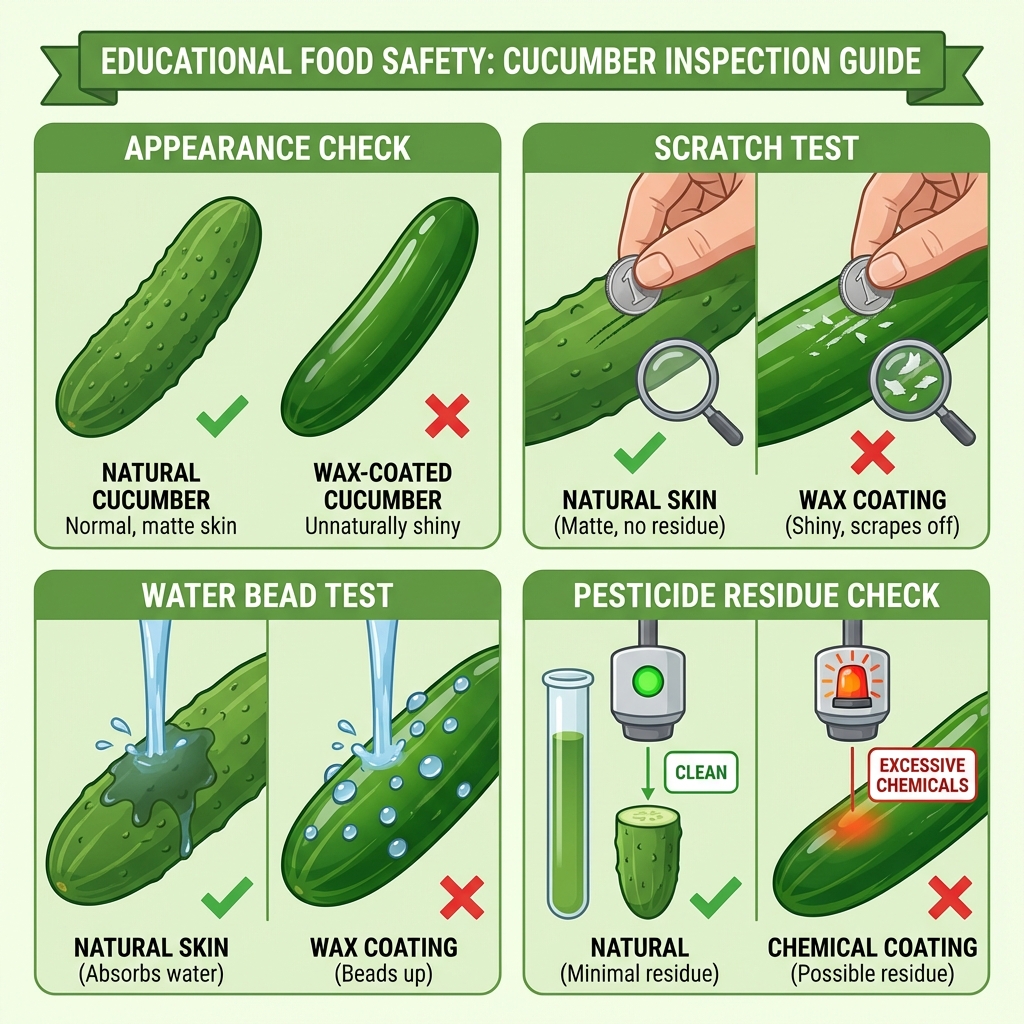
Click to enlarge
Cucumber Wax Coating and Chemical Detection
Cucumbers are often coated with wax to improve appearance, reduce moisture loss, and increase shelf life. They also may have pesticide residues.
1. The Visual Shine Test:
Look at the cucumber surface under light. Natural cucumber has a matte, slightly dull green skin - not shiny. Wax-coated cucumbers have an unnatural glossy, shiny appearance like they've been polished. The shine is uniform across the entire surface.
2. The Scratch/Scrape Test:
Gently scratch the cucumber skin with your fingernail or a knife edge. Natural cucumber skin is matte and your nail won't scrape off anything except maybe dirt. Wax-coated cucumber will have the wax scrape off - you'll see white waxy residue under your nail or on the knife. The wax comes off in flakes or as a white coating.
3. The Water Bead Test:
Sprinkle or spray water on the cucumber surface. Natural cucumber skin will absorb water gradually - water spreads and wets the surface. Wax-coated cucumber causes water to bead up into droplets on the surface (like water on a waxed car). The water doesn't spread or wet the surface easily.
4. The Feel Test:
Run your hand over the cucumber. Natural cucumber feels slightly rough, has natural texture. Wax-coated cucumber feels unnaturally smooth, slippery, or slick to touch. It's like feeling a polished surface.
5. The Warm Water Test:
Rinse the cucumber under warm/hot water and rub with your hand. If wax is present, it will start to melt and you'll feel a slippery, waxy layer. Natural cucumber won't have this effect - just feels clean after washing.
Quick Safety Tips
- Shiny glossy appearance indicates wax coating
- Water bead test - beading = wax present
- Always peel wax-coated cucumbers before eating
- Soak in warm water with vinegar/baking soda to remove residues
Chemical Concerns
Step 1: AI Visual Scan
New to BioLens? Try a sample test