
Coriander Seeds (Dhania) Safety Inspection
Detect horse dung powder and ergot seeds in coriander seeds
Inspection Guide
Click to enlarge
Coriander Seeds Purity Detection
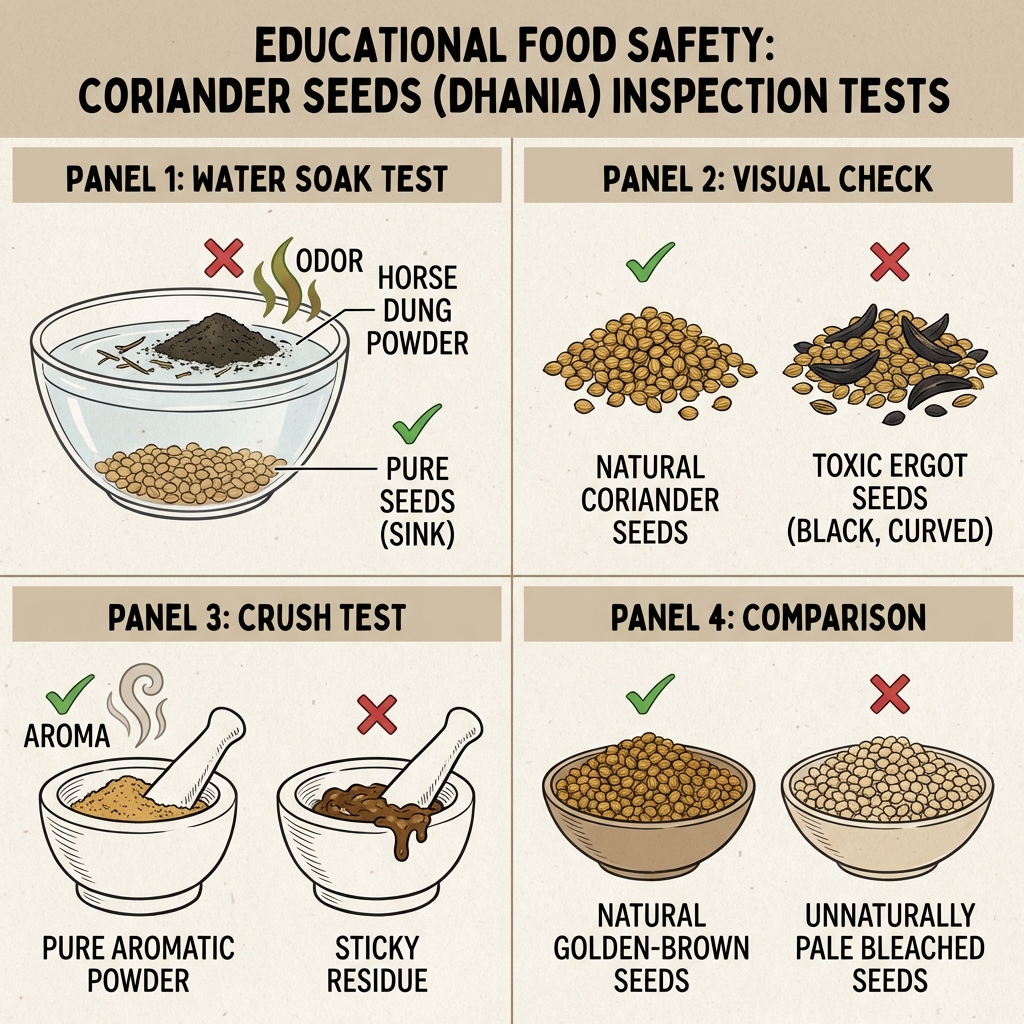
Coriander seeds (Dhania) are sometimes mixed with horse dung powder to increase weight or ergot seeds which contain toxic alkaloids.
1. The Water Soak Test (Dung Detection):
Soak coriander seeds in a bowl of water for 30 minutes. If horse dung powder is present, it will float on the surface and emit a characteristic foul odor. Pure coriander seeds will mostly stay submerged and smell natural.
2. The visual Ergot Check:
Spread the seeds on a white surface and look for ergot seeds. Ergot is a parasitic fungus that appears as black, curved, or cigar-shaped grains that are slightly larger than coriander seeds. Ergot is highly toxic and must be removed.
3. The Texture and Crush Test:
Crush a few seeds between your fingers. Pure coriander seeds crush into a dry, aromatic powder. Adulterated seeds with dung or fillers may feel sticky, damp, or leave a suspicious residue on your fingers.
4. The Visual Purity Check:
Examine the seeds for uniformity. Natural coriander seeds are light brown to golden-beige with distinct ridges. Watch for suspiciously pale seeds (bleached with sulfur) or excessive dust/dirt mixed in.
Quick Safety Tips
- Soak in water - dung powder floats and smells
- Visual check for black curved ergot seeds
- Crush test - should be dry and aromatically fresh
- Avoid excessively pale or bleached-looking seeds
Chemical Concerns
Step 1: AI Visual Scan
New to BioLens? Try a sample test