
Colocasia Safety Inspection
Check for Malachite Green dye and chemical growth enhancers in Colocasia (Taro)
Inspection Guide
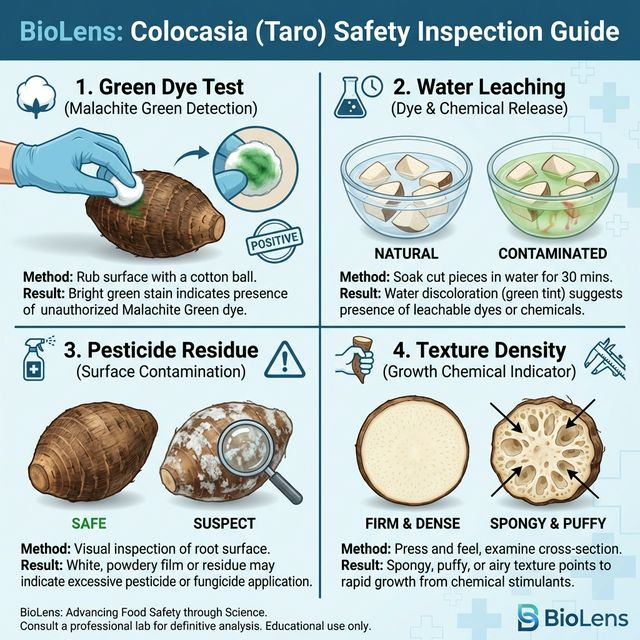
Click to enlarge
Colocasia (Taro) Safety Guide
Colocasia can be treated with toxic green dyes to look fresh or chemicals to induce rapid growth.
1. Green Dye Test: Rub the skin and cut ends with a cotton ball soaked in water or oil. If the cotton turns green, it has been treated with Malachite Green, a toxic industrial dye.
2. Water Leaching: Slice a small piece and place it in water. If a green or blue tint starts bleeding into the water, it is chemically dyed.
3. Pesticide Residue: Inspect the hairy skin for white, powdery, or chalky deposits. These are often residues of harmful organophosphate pesticides used in farming.
4. Texture Density: Naturally grown colocasia is firm and heavy. If the root feels light, "spongy," or unnaturally puffy, it may have been treated with chemical growth enhancers.
Quick Safety Tips
- Use wet cotton to test for Malachite Green dye
- Avoid roots with a visible green/blue tint on the skin
- Thoroughly wash and peel to remove surface pesticide residues
- Select firm, heavy roots over spongy or light ones
What CANNOT be Verified (Lab-Only)
Invisible Risks (Lab-Only):
* Systemic Pesticides: Chemicals absorbed into the flesh of the root require HPLC or GC-MS testing.
* Malachite Green Traces: Low concentrations that don't bleed visually involve specialized residue extraction.
Chemical Concerns
Step 1: AI Visual Scan
New to BioLens? Try a sample test